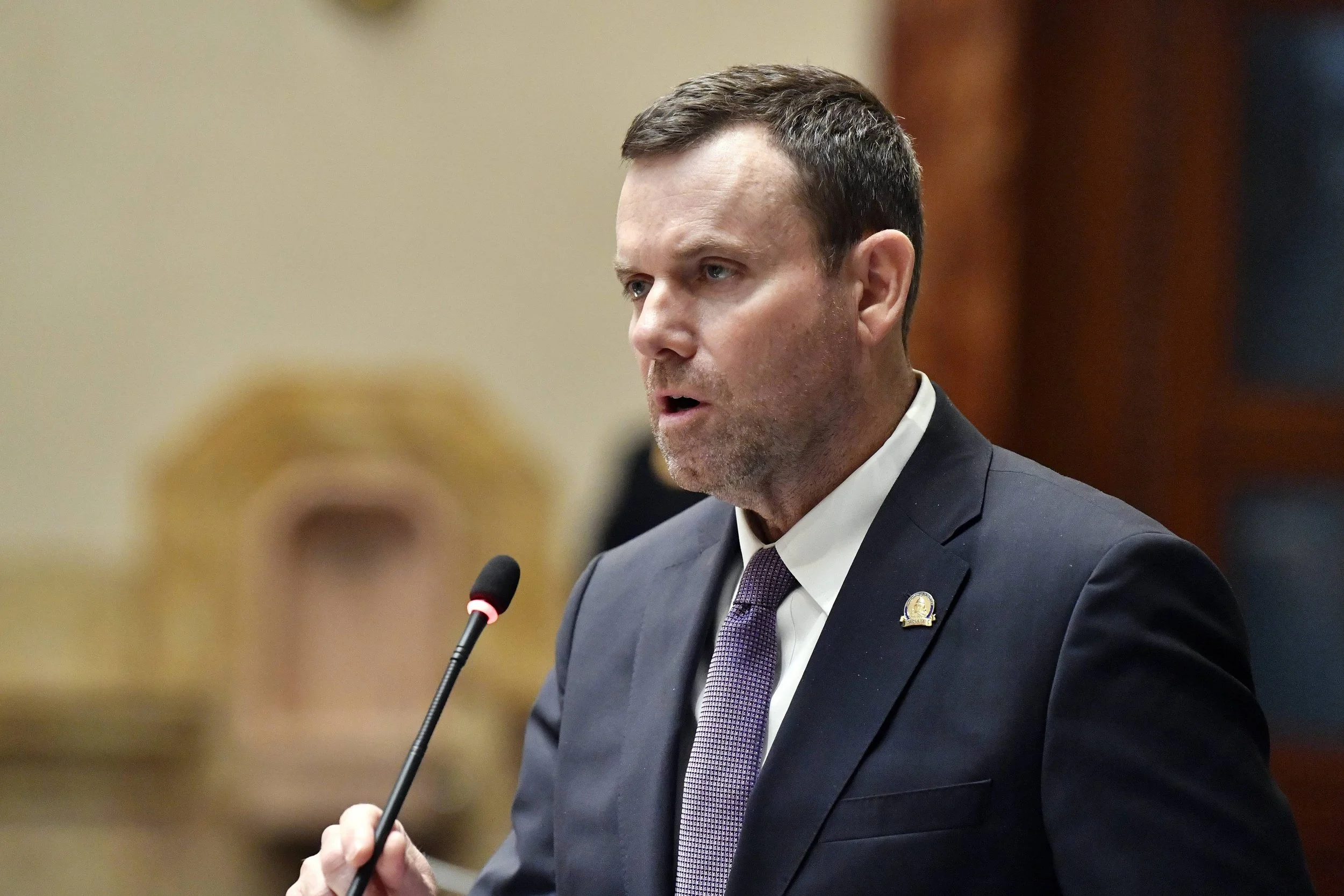
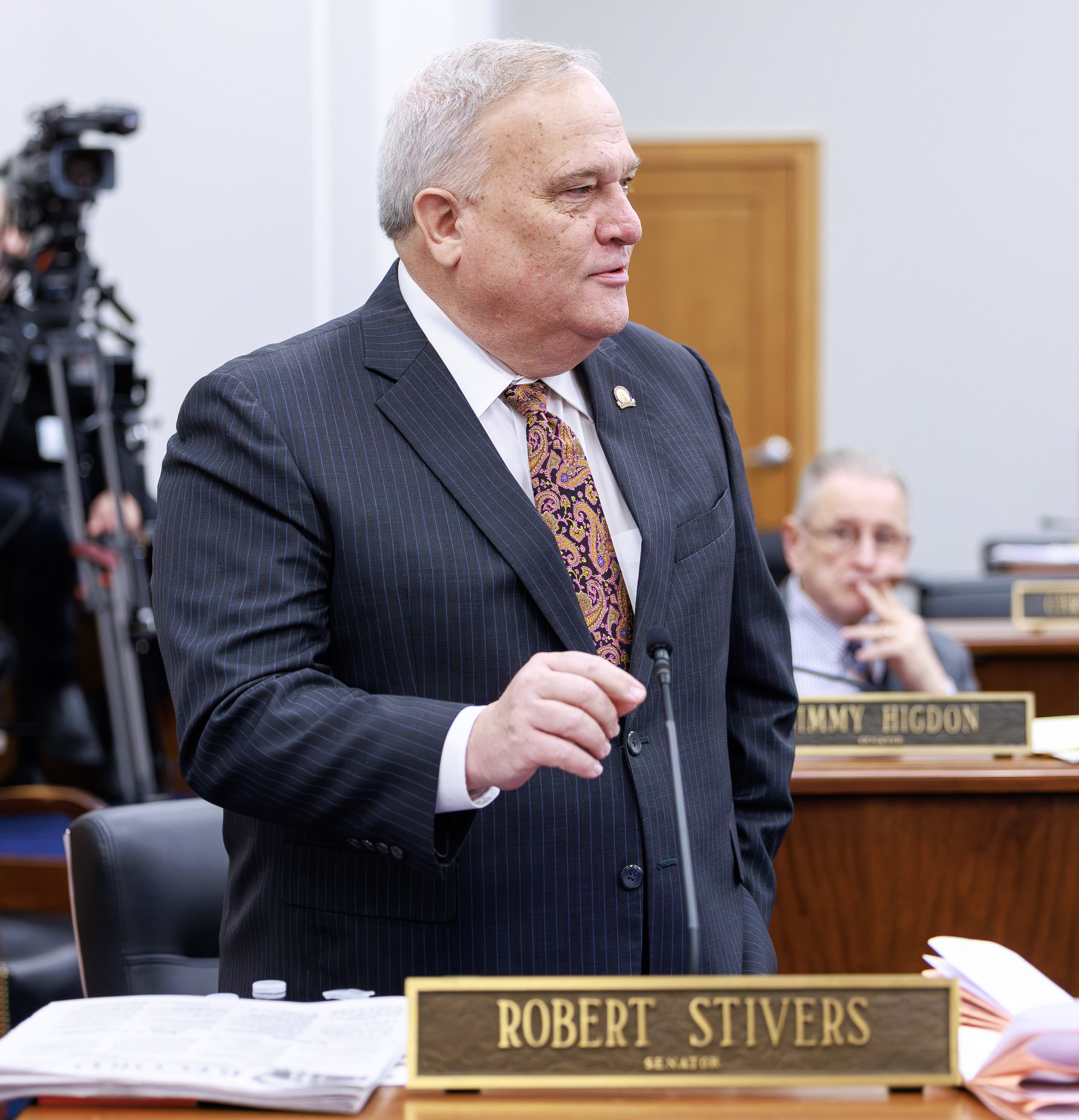
STATEMENT FROM SENATE PRESIDENT ROBERT STIVERS REGARDING JUDGE JULIE MUTH GOODMAN’S IMPEACHMENT PROCEEDINGS

STATEMENT FROM SENATE PRESIDENT ROBERT STIVERS REGARDING JUDGE JULIE MUTH GOODMAN’S IMPEACHMENT PROCEEDINGS

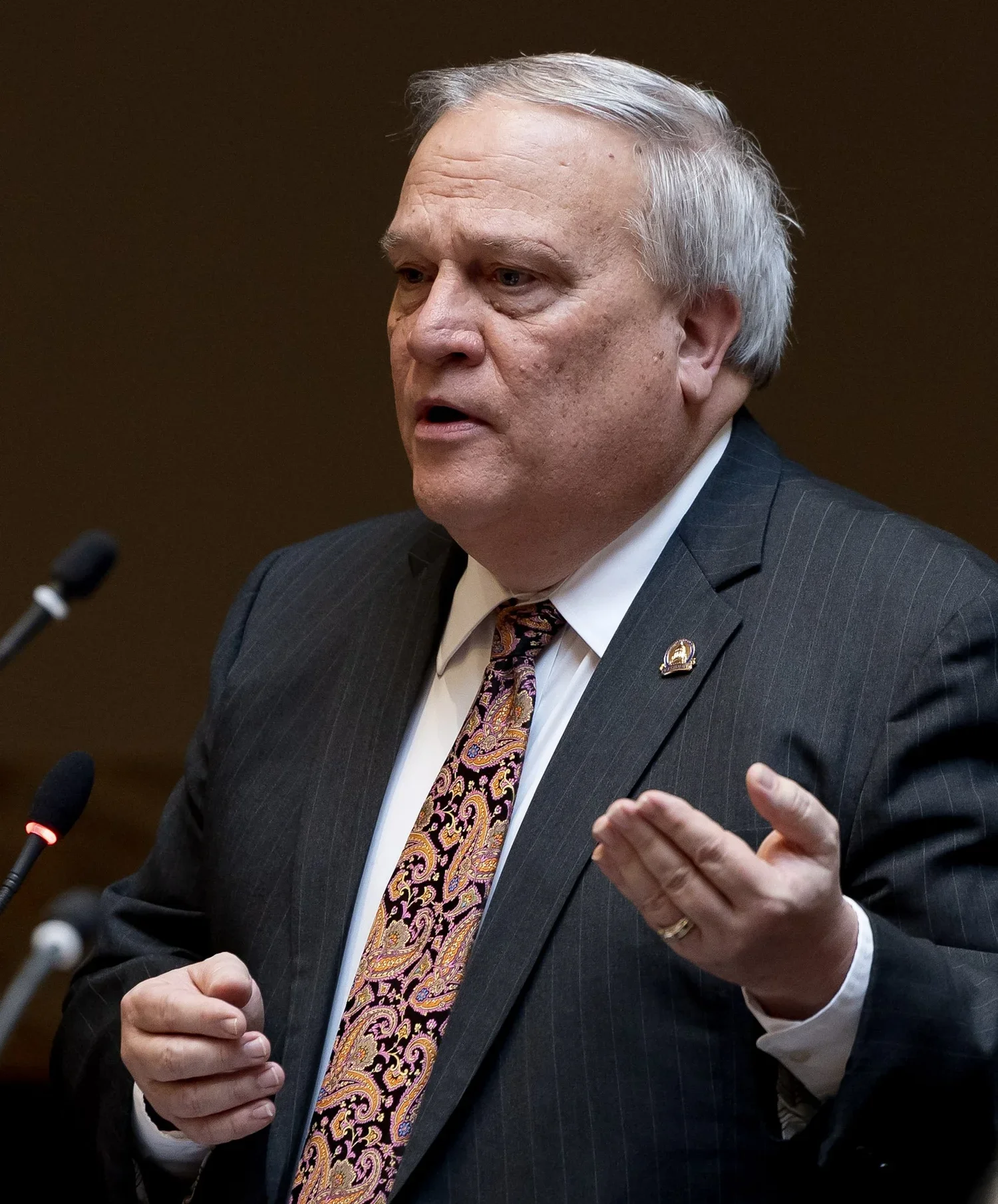
FRANKFORT, Ky. (April 15, 2026)Senate President Robert Stivers, R-Manchester, released the following statement after the committee meeting regarding the impeachment of Fayette Circuit Judge Julie Muth Goodman.

“As clearly established in the Constitution of Kentucky, the Kentucky Senate holds the sole authority to conduct impeachment proceedings in the commonwealth. That authority is exclusive, fundamental, and must remain free from interference. The April 6 opinion issued by the Kentucky Supreme Court represents an inappropriate encroachment on that constitutional responsibility.

“The Impeachment Committee convened today for the sole, limited purpose of receiving the articles of impeachment from the House and determining the next step. The committee made a determination that it was the best course to delay any further action. 

“The Supreme Court has, in its order, made the Kentucky Senate aware of an investigation by the Judicial Conduct Commission. The Senate implores the Judicial Conduct Commission to conclude a comprehensive and prompt investigation and provide a report of its findings to the Kentucky General Assembly. At such time, it may be proper for the General Assembly to proceed further. 

“Above all, the Senate remains committed to upholding the integrity of the Constitution of Kentucky and preserving the balance among our three independent, co-equal branches of government.”

STATEMENT FROM SENATE PRESIDENT ROBERT STIVERS ON THE KENTUCKY SUPREME COURT OPINION REGARDING JUDGE JULIE MUTH GOODMAN’S PENDING IMPEACHMENT

STATEMENT FROM SENATE PRESIDENT ROBERT STIVERS 

ON THE KENTUCKY SUPREME COURT OPINION REGARDING JUDGE JULIE MUTH GOODMAN’S PENDING IMPEACHMENT

FRANKFORT, Ky. (April 8, 2026)Senate President Robert Stivers, R-Manchester, released the following statement after the Kentucky Supreme Court’s April 6 opinion regarding Fayette Circuit Judge Julie Muth Goodman’s impending impeachment articles referred by the House of Representatives to the Senate.


“The Senate is aware of the opinion issued by the Kentucky Supreme Court and is carefully reviewing its implications.

“There have been longstanding concerns within the legal community about the conduct at issue, and I am encouraged that the judicial branch, per the opinion, is now taking a more active role in examining those concerns. That level of accountability is essential to maintaining public confidence in our courts.

“Over time, I have heard directly from attorneys who have expressed serious hesitation about filing formal complaints against judges. Many fear professional repercussions or believe doing so could negatively impact their ability to effectively represent their clients. That is a troubling dynamic, and it underscores why transparency and trust in the disciplinary process are so important.

“The Senate’s focus remains on carrying out its duties as outlined in the Constitution of Kentucky, that each branch of government operates with integrity and that concerns about judicial conduct can be raised and addressed without fear of retaliation."

BACKGROUND

The 2026 Senate Impeachment Committee is scheduled to convene on April 16 to receive evidence and hear testimony in the impeachment case against Julie Muth Goodman, circuit judge for the 22nd Judicial Circuit in Fayette County.

The Kentucky House of Representatives issued articles of impeachment against Goodman on March 20. The articles allege that Goodman abused the powers of her office; defied binding precedents established by the highest courts of the commonwealth; defied statutes enacted by the general assembly; defied rules of the Kentucky Court of Justice; and interfered with the rights and powers of the grand jury, trial court jurors, attorneys, and others to perform their respective roles within the Kentucky Court of Justice.

The Senate, which will serve as the court of impeachment, has appointed a seven-member committee to receive and review the evidence and report its findings to the full Senate for a decision on whether to find Goodman guilty of the charges. 

The Senate has allotted three days, April 16, 17 and 20, for the House prosecution to present the case against Goodman. Goodman will have three days on April 21, 22, and 23 to present her defense. The impeachment committee will present its findings to the full Senate on April 24. All dates are subject to change as determined by the Senate or committee. 

The Kentucky Supreme Court issued an opinion and order against the Senate continuing with the proceedings on April 6. 

According to the Constitution of Kentucky, the Kentucky General Assembly is the only body with the power to impeach elected officials. The Constitution of Kentucky may be found here.

RAWLINGS RESPONDS TO BESHEAR’S VETO OF SB 59

RAWLINGS RESPONDS TO BESHEAR’S VETO OF SB 59

FRANKFORT, Ky. (April 7, 2026) — In response to the governor’s veto of Senate Bill 59, Sen. Steve Rawlings, R-Burlington, issued the following statement:

“This veto misses the mark and misrepresents what Senate Bill 59 actually does. The bill does not silence anyone’s First Amendment rights; it reinforces a basic principle that taxpayer dollars should never be used for political advocacy. Public officials are free to speak, campaign and express their views, but they should not be doing so on the taxpayer’s dime.

“SB 59 simply puts enforcement behind a law that already exists. Right now, Kentucky prohibits the use of public funds to influence ballot questions, but without real consequences, that law has no teeth. This legislation ensures accountability when public resources are misused, while preserving the ability of individuals to speak in their personal capacity.

“Kentuckians expect their tax dollars to be used for legitimate public purposes not political campaigns. This bill protects that trust and keeps the focus where it belongs: on fair, transparent elections where voters, not government-funded messaging, decide the outcome.”

WISE HELPS SECURE $123 MILLION TO BOOST INFRASTRUCTURE ACROSS 16TH SENATE DISTRICT

WISE HELPS SECURE $123 MILLION TO BOOST INFRASTRUCTURE ACROSS 16TH SENATE DISTRICT

FRANKFORT, Ky. (April 6, 2026)—Senate Majority Floor Leader Max Wise, R-Campbellsville, has secured more than $123 million in road funding to improve infrastructure across the 16th Senate District as part of the state’s newly approved biennium road plan and local assistance programs.

The investment supports critical transportation upgrades in Adair, Allen, Metcalfe, Monroe, Taylor and Warren counties. Projects focus on improving safety, reducing congestion and strengthening connectivity for families, businesses and economic development.

“We are bringing the resources need to help this region grow even stronger,” Wise said. “These are targeted investments to improve the roads people rely on every day while also looking ahead to all of our future potential.”

PROJECTS BY COUNTY

Adair County

  • Improve KY Highway 55 near Tom Andrews Road

  • Address flooding on Rice Drive and Watson Street in Columbia

  • Reconstruct KY Highway 61 from Columbia Bypass to the Green County line

  • Conduct planning study for the Eastern Columbia Bypass

Allen County

  • Reconstruct KY Highway 100 from Simpson County to east of Sulphur Fork Creek

  • Improve connectivity within Allen Springs Industrial Park

  • Improve KY Highway 100 near Stony Point Road to Alonzo Long Hollow Road

Metcalfe County

  • Develop the Summer Shade Bypass

Monroe County

  • Reconstruct or realign KY Highway 163 from the Tennessee state line to Tompkinsville Bypass

Taylor County

  • Improve safety on KY Highway 210 from Corinth Church to KY Highway 883

  • Extend KY Highway 3350, Campbellsville Bypass, to U.S. Highway 68

  • Reduce congestion and improve intersections along KY Highway 210 in Campbellsville

Warren County

  • Extend Three Springs Road from Flealand to the Natcher Parkway, including a new bridge

  • Widen U.S 31 West from the Warren-Simpson County line to Buchanon Park

  • Improve mobility and reduce congestion on U.S. Highway 31 West from Mizpah Road to Freeport Road

Funding is allocated through the biennium road plan and the Local Assistance Road Program. Together, these investments will support major reconstruction projects, safety improvements, congestion relief efforts and long-term planning studies.

Communities across the district will see improvements to key corridors, industrial access routes and local roads that serve as vital links for commerce and daily travel.

Wise said the projects reflect ongoing collaboration with local leaders, transportation officials and community stakeholders to prioritize the region’s most pressing infrastructure needs.

“Strong infrastructure makes economic growth possible and enhances safety on our roadways,” Wise said. “These projects will help ensure our region remains competitive and connected for years to come. It’s been a pleasure to work with Reps. Amy Neighbors, Sarge Pollock, Shawn McPherson and our Warren County delegates this session to bring so many great things to Adair, Allen, Metcalfe, Monroe, Taylor and Warren Counties. ”

STATEMENT RELEASE CRITTENDON COUNTY SHERIFF DEPUTY COYLE SHOT IN THE LINE OF DUTY

STATEMENT RELEASE

CRITTENDON COUNTY SHERIFF DEPUTY COYLE 

SHOT IN THE LINE OF DUTY

 Howell asks for prayers, applauds local law enforcement's quick response

FRANKFORT, Ky. (April 3, 2026)—The following is a statement from Sen. Jason Howell, R-Murray, following a shooting on Thursday, April 2, where Crittenden County Sheriff’s Deputy Rick Coyle was critically injured.

“We should all join in thoughts and prayers for Crittenden County Sheriff’s Deputy Rick Coyle, who was critically injured in the line of duty last night.  Every time our law enforcement puts on their uniform and takes to our roads, streets, and highways they put themselves at great personal risk. 

“I applaud the quick reaction of the Kentucky State Police who were assisted at the scene by the Caldwell County Sheriff’s Office, Livingston County Sheriff’s Office, Union County Sheriff’s Office, Marion Police Department, Crittenden County EMS and Crittenden County Coroner’s Office.“

BACKGROUND

The preliminary Kentucky State Police investigation indicates that officers from the Crittenden County Sheriff’s Office, along with staff from the Kentucky Department of Community Based Services, responded to 2807 KY-365 in Sturgis, Ky., to serve emergency guardianship paperwork. During the incident, gunfire was exchanged with the suspect, Ronnie Phillips, age 60, who was fatally wounded. Crittenden County Sheriff’s Deputy Rick Coyle was struck by gunfire from the suspect, airlifted to the hospital, and remains in critical condition at Deaconess Midtown Hospital in Evansville, Indiana. A female victim was safely removed from the residence. No other injuries were reported.

KSP was assisted at the scene by the Caldwell County Sheriff’s Office, Livingston County Sheriff’s Office, Union County Sheriff’s Office, Marion Police Department, Crittenden County EMS and Crittenden County Coroner’s Office. The investigation remains ongoing. 

KSP has statewide jurisdiction and investigates officer-involved shootings throughout the commonwealth as requested by local, state and federal law enforcement agencies.

KSP is committed to being transparent while ensuring the integrity of the investigation. To protect the integrity of an ongoing investigation, it is KSP’s standard operating procedure not to release specific details until vital witnesses have been interviewed and pertinent facts gathered. Timelines for completing investigations vary depending on the complexity of the case.

JOINT STATEMENT RELEASE SEN. ROBIN WEBB 'S SPECIAL NEEDS TRUST LEGISLATION SIGNED INTO LAW

JOINT STATEMENT RELEASE

SEN. ROBIN WEBB 'S SPECIAL NEEDS TRUST LEGISLATION SIGNED INTO LAW

FRANKFORT, Ky. (April 3, 2026) — On Good Friday, Sen. Robin Webb, R-Grayson, and Sen. Danny Carroll, R-Paducah, along with Rep. Patrick Flannery, R-Olive Hill, issued the following joint statement after the Governor signed Senate Bill (SB) 85 into law.

“Senate Bill 85 represents an important step forward for Kentucky families planning for the long-term care and financial security of loved ones with disabilities. By allowing special needs trusts to be used within our state-administered retirement systems, this law provides greater flexibility and protection for some of our most vulnerable citizens.

“For many families, ensuring that a child with special needs is cared for well into the future requires careful planning and thoughtful safeguards. This legislation helps remove barriers that have historically made that planning more difficult, while preserving access to critical benefits.

“We are proud to see this unifying measure become law, and on Good Friday no less, and we are grateful to our colleagues in the General Assembly, as well as the many advocates and families who shared their experiences and helped shape this policy. Their voices were instrumental in getting this across the finish line. We appreciate the governor taking the time to place his signature on this good piece of legislation.

“Ultimately, this law is about peace of mind and giving families the tools they need to protect their loved ones and plan with confidence for the years ahead.”

___

SB 85 updates Kentucky’s public retirement statutes to recognize and allow the use of a special needs trust (SNT) across multiple state-administered retirement systems, including the State Police Retirement System, Kentucky Employees Retirement System, County Employees Retirement System, Teachers’ Retirement System and the Judicial Retirement Plan.

Webb is the primary sponsor of SB 85, and Carroll, chair of the Senate Families and Children Committee, signed on as the primary co-sponsor. Flannery carried the bill to final passage in the House.

STATEMENT RELEASE ADAMS CELEBRATES GOVERNOR'S APPROVAL OF MEASURE ESTABLISHING AN AUTISM SPECTRUM DISORDER TRUST FUND

STATEMENT RELEASE

ADAMS CELEBRATES GOVERNOR'S APPROVAL OF MEASURE ESTABLISHING AN AUTISM SPECTRUM DISORDER TRUST FUND

FRANKFORT, Ky. (April 3, 2026) — Sen. Julie Raque Adams, R-Louisville, issued the following statement after Governor Andy Beshear signed Senate Bill (SB) 69 into law on Good Friday. The measure creates an Autism Spectrum Disorder Trust Fund to support evidence-based research, services and workforce development benefiting Kentuckians across the autism spectrum.

“Today marks an important step forward for Kentucky families and individuals affected by autism spectrum disorder. With autism now affecting one in 31 children, the need for stronger, more coordinated support has never been greater.

“Senate Bill 69 is about responding to that need and facilitating investment in better understanding, expanding support and helping ensure individuals on the autism spectrum have the opportunity to thrive at every stage of life.

“I’m grateful to the families, advocates and professionals who helped bring attention to this issue. Their voices matter, and I look forward to the benefit this new trust fund will have across the commonwealth.”

___

The trust fund is established within the state treasurer’s office. The trust fund may receive appropriations, grants, and other public or private contributions. Funds are protected from lapsing, ensuring long-term investment and continuity of support. Resources will be distributed through a competitive grant process, guided by a comprehensive statewide needs assessment to prioritize areas of greatest impact.

SB 69 also creates a governing council, administratively attached to the Office of Autism within the Cabinet for Health and Family Services, to oversee the distribution and use of funds. The council is required to develop a written plan for fund allocation by Oct. 1 each year and to update it annually.

The bill includes an emergency clause, allowing it to take effect immediately upon filing with the Kentucky Secretary of State’s Office.

GENERAL ASSEMBLY APPROVES MADON MEASURE TO MODERNIZE PHYSICIAN ASSISTANT PRACTICE

GENERAL ASSEMBLY APPROVES MADON MEASURE TO MODERNIZE PHYSICIAN ASSISTANT PRACTICE

Bill aims to improve patient access and help healthcare teams operate more efficiently

FRANKFORT, Ky. (April 1, 2026)—The General Assembly has given final approval to Senate Bill (SB) 116, legislation sponsored by Sen. Scott Madon, R-Pineville, that updates Kentucky law governing physician assistants and strengthens physician-led healthcare teams.

The House of Representatives passed the measure with House Floor Amendment 2, which made technical corrections and permits credentialed physician assistants to sign completed driver’s license vision testing forms. The Senate later concurred with the House changes, clearing the legislation for final passage and sending it to the governor for consideration.

SB 116 updates several statutes governing physician assistants (PAs) to help healthcare teams operate more efficiently while maintaining physician oversight. The legislation allows healthcare practices to determine a PA’s scope of practice based on the needs of the practice and the experience of the provider.

The bill also authorizes physician assistants to prescribe Schedule II controlled substances within the parameters of their collaboration agreement with a physician and permits credentialed PAs to perform driver’s license vision testing.

Madon said the legislation helps modernize healthcare delivery while preserving the physician-led team model that patients rely on.

“In many parts of Kentucky, especially in rural communities, access to healthcare providers remains a real challenge,” Madon said. “This legislation helps ensure physicians and physician assistants can work together effectively so patients receive timely, high-quality care while maintaining strong physician oversight.”

Rep. Robert Duvall, R-Bowling Green, who carried the measure in the House, said the bill improves efficiency for healthcare providers while maintaining important patient protections.

“Senate Bill 116 updates Kentucky law to give physician assistants more flexibility while maintaining physician oversight, allowing health care teams to operate more efficiently,” Duvall said. “By letting PAs sign driver’s licensing vision tests and tailoring their scope of practice to experience and patient needs, this legislation expands access to care and ensures patients receive timely services without sacrificing quality or safety.”

SB 116 establishes requirements for collaboration agreements between physician assistants and physicians and clarifies the services physician assistants may provide under Kentucky law.

The legislation does not create independent practice for physician assistants, does not limit a physician’s ability to define practice parameters, and does not allow physician assistants to bill patients independently.

SB 116 now awaits action by the governor.

Learn more about bills, committees and other important updates on the 2026 Regular Session at www.kylegislature.gov.

SENS. BRANDON STORM, ADAMS HIGHLIGHT NEED FOR CERTAINTY IN JUSTICE WHILE APPROVING HOUSE BILL 422

SENS. BRANDON STORM, ADAMS HIGHLIGHT NEED

FOR CERTAINTY IN JUSTICE WHILE

APPROVING HOUSE BILL 422

Proposed legislation honors memory of those lost to violent crime

FRANKFORT, Ky. (April 1, 2026) — On Tuesday, the Senate approved House Bill (HB) 422, which strengthens and updates Kentucky law to strengthen parole ineligibility periods for certain serious offenses. The bill is sponsored by Rep. Dan Fister, R-Versailles, and was strengthened in the Senate by Sen. Brandon Storm, R-London and chair of the Senate Judiciary Committee, who was inspired by the case of the 23-year-old Jordan Wells, who was shot and killed in 2024 while walking down the street near Dairy Kastle.

“The loss of Jordan Wells in Louisville is a tragic reminder of the devastating impact violent crime has on families and communities,” Storm said. “When lives are taken, there must be clarity and certainty in how our justice system responds. This legislation is about reinforcing that principle, ensuring accountability is consistent and that the law reflects the seriousness of these crimes.” 

“As the Senate considered this bill, we focused on strengthening the framework around violent offenders, closing gaps and making sure the system works as intended. Families should not be left questioning outcomes or whether justice will be carried through. Our responsibility is to provide a system that is clear, consistent and worthy of public trust.”

HB 422, as amended by Senate Committee Substitute 1 and a Senate floor amendment, strengthens Kentucky’s criminal justice statutes and increases minimum parole ineligibility periods for certain serious offenses. It clarifies that mandatory reentry supervision does not apply to inmates who are ineligible for parole, those convicted of capital, Class A or Class B felonies or violent offenders denied discretionary parole. The legislation also revises standards related to criminal responsibility and ensures sentencing records clearly reflect parole eligibility, improving transparency for victims and the justice system.

Sen. Julie Raque Adams, R-Louisville, supported the measure.

“It’s devastating when young lives are taken in such violent manners, and for no reason whatsoever,” Adams said. “I was happy to support HB 422, and I will continue to support measures such as this to ensure justice for Kentucky families, especially those who endure the unimaginable loss of a child.” 

HB 422 was also inspired by the 2015 killing of Logan Tipton in Woodford County. The bill was carried in the Senate by Sen. Amanda Mays Bledsoe, who represents Woodford County and who spoke on the Tipton case and its impact on the victim’s family.

ELKINS' LEGISLATION PASSES GENERAL ASSEMBLY, HEADS TO GOVERNOR’S DESK

FRANKFORT, Ky. (April 1, 2026) — The Kentucky General Assembly has passed three pieces of legislation sponsored by Sen. Greg Elkins, R-Winchester, focused on improving consumer transparency, enhancing public safety and streamlining waste management practices. The measures now head to the governor’s desk for consideration.

Senate Bill 226 clarifies administrative practices related to preneed burial contracts by establishing clear guidelines for assessing and disclosing costs. The legislation allows agents who guarantee prices under these contracts to charge a one-time administrative fee of up to 15 percent upon payment in full, applying only to new agreements moving forward.

“Preneed contracts are about planning and giving families peace of mind during difficult times,” Elkins said. “This bill brings clarity and transparency to the process so Kentuckians know exactly what to expect.”


Senate Bill 49 addresses the growing risk of fires caused by improperly discarded batteries by establishing a statewide battery stewardship program. The measure supports public education efforts and expands safe collection and recycling opportunities, while prohibiting certain batteries from being disposed of in household trash and standard recycling systems.

“This is about common sense and public safety,” Elkins said. “Batteries don’t belong in the trash, and this bill provides a practical way to handle them more safely and responsibly.”

Senate Bill 29 improves efficiency in Kentucky’s waste management system by preventing counties and waste districts from imposing duplicative fees, permits or regulations on facilities located outside their jurisdiction. The legislation ensures facilities are regulated where they operate, reducing unnecessary burdens and promoting consistency across the state.

“SB 29 is about fairness and cutting red tape,” Elkins said. “It ensures a more efficient system while protecting local decision-making and keeping waste management operations running smoothly.”

All three measures—Senate Bills 226, 49 and 29—now head to the governor’s desk for his signature.

SEN. MIKE NEMES ON I-65 TEMPORARY CLOSURE

SEN. MIKE NEMES ON

I-65 TEMPORARY CLOSURE 

Closure will save an additional year of construction delays

FRANKFORT, Ky. (April 1, 2026) – Interstate 65 in Louisville is now within two months of a planned temporary closure that will allow contract crews to accelerate the replacement of three key bridges in and around Kentucky's largest city.  

Five miles of I-65 are scheduled to close between the Watterson Expressway (I-264) and downtown Louisville (Jefferson Street) around 12:01 a.m. Monday, June 1. It’s expected to reopen to traffic on Saturday, Aug. 1. 

“I-65 is a critical artery for business owners, students, residents and tourists in and through Kentucky, “ said Sen. Mike Nemes, R-Shepherdsville. “These are much-needed improvements along this well-travelled corridor. While the shut-down means rerouting around the municipality, it will alleviate a great deal of anxiety in the long-run.” 

A two-mile section of southbound I-65 is expected to reopen to two lanes of traffic by Wednesday, July 1. It stretches from University Boulevard to the Watterson Expressway (I-264). Reopening this section of roadway will reopen four ramps: Crittenden Drive on- and off- ramps and the on-ramps from Eastern Parkway and University Boulevard to southbound I-65.     


During the closure, the I-65 bridges over Kentucky Street/Brook Street, Hill Street/CSX Railroad/Burnett Avenue, and Bradley Avenue near the fairgrounds will be replaced. All three bridges were constructed in the late 1950s as part of the original construction of the interstate.

The old structures will be removed, and new bridges will be built in their place. Sidewalks will be reconstructed and improved, and modernized lighting will be installed under and adjacent to the new bridges.

Approximately 125,000 drivers rely on these bridges daily. The full interstate closure will greatly accelerate replacing the three bridges. The two-month closure will save more than a year of additional interstate restrictions. In addition to greatly shortening the construction timeline, the temporary closure is the most efficient construction and fiscal approach.

With the closure, crews are able to address three bridges as quickly as possible. The closure also gives contract crews the room they need to work safely and efficiently in the area.

Crews are doing as much work as possible in advance of closing the bridges, including relocating utilities, constructing the substructures, prefabricating bridge deck panels and steel girders, moving supplies on site, and staging equipment.

Getting around during the closure

During the closure, through traffic will be detoured to I-264 (Georgia Davis Powers Expressway) on the west side of Louisville. Detour routes were developed based on extensive traffic studies done over the past two years. The signed detour route is the shortest distance, using roadways with the most available capacity, and creating the least traffic impacts.

Traffic accessing downtown Louisville will use the Jefferson Street exit from southbound I-65. Traffic will also be able to access downtown Louisville via I-64.

Traffic leaving downtown will use the ramp from East Liberty Street to access northbound I-65.

Some ramps to and from I-264 (Watterson Expressway) are being temporarily widened to help accommodate additional traffic during the closure. This includes the ramp to southbound I-65 from eastbound and westbound I-264, the ramp from northbound I-65 to eastbound I-264, and the eastbound I-264 ramp to the eastbound I-264 collector distributor near the airport.

What to expect

A total of nine bridges on the I-65 corridor are being replaced or rehabilitated as part of the project. The first three bridges are those most in need of repair.

When the closure ends, I-65 will be open to two lanes of traffic in each direction. Restrictions will continue through the end of the project. Substantial completion is expected in late 2027.

The closure this summer will save a full year of additional restrictions on the interstate.

Staying informed

Project information and updates can be found at I65CentralCorridor.com. While on the site, users can sign up to have project and traffic updates delivered to their inboxes or by text to their phones.

Project updates will now be shared on KYTC District 5 (D5) Facebook and X pages. Anyone who followed project updates on the I-65 Central Corridor Facebook or X pages should follow or like the KYTC D5 pages.

LAWMAKERS FINALIZE RESPONSIBLE, FULLY FUNDED ROAD PLAN TO DELIVER PROJECTS AND STRENGTHEN KENTUCKY INFRASTRUCTURE

LAWMAKERS FINALIZE RESPONSIBLE, FULLY FUNDED ROAD PLAN TO DELIVER PROJECTS AND STRENGTHEN KENTUCKY INFRASTRUCTURE

Legislation represents the final road plan under the leadership of Sen. Jimmy Higdon

FRANKFORT, Ky. (April 1, 2026)—Kentucky lawmakers have finalized a comprehensive transportation package, consisting of multiple legislative measures, that combines a fully funded road plan with a strategic operating budget, delivering billions of dollars in infrastructure investment while prioritizing accountability, efficiency and real progress on projects across the commonwealth.

The plan includes a $4.6 billion biennial road plan alongside a $7 billion transportation operating budget, ensuring that projects can move forward without delays or overpromising state resources. Together, the measures reflect a disciplined approach focused on delivering projects ready for construction and improving infrastructure across communities statewide.

“This road plan is about being honest with taxpayers and making sure every dollar delivers results, especially during a time when our road revenues are not going as far as they used to,” said Senate Transportation Committee Chair Jimmy Higdon. “We are prioritizing projects that can move forward now and making meaningful investments in communities across the commonwealth.”

This year’s road plan will be the final crafted under the careful guidance of Higdon, who will retire from the legislature at the conclusion of the calendar year. 

“This responsible road plan is one crafted in no small part because of the great work of our friend Jimmy Higdon,” said Senate President Robert Stivers. “We simply would not have the quality of product we have were it not for the work of Jimmy and the incredible legislative staff who support the effort. When Kentuckians are on roadways, highways and bridges, and they see the moving of earth and construction that are improving infrastructure and safety, Sen. Higdon is one of the most notable people we can thank for that. On behalf of the entire Senate, I want to commend him on another sound road plan and thank him for his tireless efforts on behalf of all of Kentucky.” 

A key component of the plan is a $230 million investment from the budget reserve trust fund, which helps stabilize the highway construction program and accelerate shovel-ready projects. By aligning funding with project readiness, lawmakers are reducing delays related to right-of-way, utilities and external approvals while improving overall project delivery timelines.

Delivering a fully funded road plan

The biennial road plan is fully funded with no overprogramming of state dollars, ensuring that projects included in the plan can be completed within the budget cycle. The road plan proposed by the governor overprogrammed the budget by more than 400 percent, which Higdon and lawmakers called unacceptable and unmanageable. An overprogrammed road plan means more projects are listed than there is existing revenue to support. The legislature's final road plan aims to ensure that projects that receive funding support and are ready to move forward do so as intended.

Kentucky continues to use about $1.1 billion in federal transportation funding, matched with state dollars to maximize investment while staying fiscally responsible.

The plan also continues funding for major infrastructure priorities, including the Interstate 69 Ohio River Crossing in Henderson, the Brent Spence Bridge in northern Kentucky and the Mountain Parkway expansion—each supported by significant general fund investments.

Investing in local communities

The legislation makes substantial investments in local roads, bridges and infrastructure, including:

  • $190 million for county and city road projects over the biennium.

  • $25 million annually for local bridge improvements.

  • Expanded funding ($70 million in fiscal year 2027) for resurfacing through the Local Assistance Road Program (LARP), ensuring all high-priority routes rated 8, 9 and 10 (on a scale of 1-10 designating severity of need) are addressed. Additional funds are set aside to be determined for specific projects next legislative session for fiscal year 2028.

  • $2 million to support county projects that have associated costs of less than $15,000

  • Additional funding distributed directly to counties and cities to support local transportation needs

These targeted investments will help improve road conditions, enhance safety and support economic development in both rural and urban areas.

Strengthening project delivery and accountability

The plan includes several policy reforms designed to modernize and streamline transportation project delivery, such as:

  • Expanding the use of design-build contracting to accelerate construction timelines

  • Increasing transparency through reporting on excess and surplus property 

  • Providing flexibility for CDL testing to allow employees to choose their medical provider and

  • Implementing workforce policies to ensure accountability and operational efficiency.

These changes are aimed at reducing delays, improving oversight and ensuring taxpayer dollars are used effectively.

Improving access to driver services

Lawmakers also included measures to improve access to driver services across the state by:

  • Funds three new regional driver licensing offices in Bullitt, Oldham and Barren counties,

  • New offices will not have driver testing but will offer all other licensing services. 

  • Adds staffing support for existing licensing offices and

  • Provides $125,000 to support a new partnership with public libraries, championed by Higdon, to provide free vision testing for license renewals, expanding access to required services—especially in rural communities

"I can’t thank my House colleagues, including Rep. Ken Upchurch and so many others, enough for their collaboration to make sure we do right by the Kentuckians who rely on stable and safe roadway, highway and bridge infrastructure," Higdon added. "It's been such an honor to serve in this capacity, and I'll always be grateful to my friends in the legislature and my constituents for entrusting me to do so.”

Focused on results

By combining strategic funding with policy improvements, lawmakers have crafted a plan that emphasizes results—moving projects forward now rather than years down the road.

“This plan reflects years of work to build a system that delivers,” Higdon said. “It’s focused, it’s responsible and it puts Kentucky in a strong position for the future.”

Transportation funding legislation now moves forward in the final stages of the legislative process before heading to the governor’s desk. 

Respective bill and resolution numbers related to the road plan are as follows:

  • House Bill (HB) 501 - KYTC Operating Budget

  • HB 502 - Road Plan (Biennium)

  • HJR 75 - Road Plan (Out Years)

  • HJR 76 - LARP Projects

CONSTITUTIONAL AMENDMENT OFFERING REASONABLE RESTRICTIONS AND TRANSPARENCY RELATED TO GUBERNATORIAL PARDONS TO GO BEFORE THE VOTERS

CONSTITUTIONAL AMENDMENT OFFERING REASONABLE RESTRICTIONS AND TRANSPARENCY RELATED TO GUBERNATORIAL PARDONS  TO GO BEFORE THE VOTERS

Sen. Chris McDaniel’s proposed constitutional amendment, Senate Bill 10, reaches final passage

FRANKFORT, KY (April 1, 2026) Sen. Chris McDaniel’s proposal to restrict a governor’s pardon powers 60-days before a gubernatorial election and up until the inauguration of the next gubernatorial term, Senate Bill (SB) 10, was approved by the state House of Representatives on Wednesday. The proposed constitutional amendment will now head to a future general election ballot.


Designated as a priority bill by Senate leadership, the pardon reform proposal, if adopted by a simple majority of Kentucky voters, would amend the Constitution of Kentucky.

“After years of persistence, I am incredibly grateful to my colleagues for sending this proposal to the ballot so that the voting public can determine if they, like myself, want unchecked gubernatorial pardon power to operate with greater accountability and within more reasonable parameters,” McDaniel said. 

“My message to Kentucky voters is simple: If you were outraged by the heinous late-hour pardons of the past, take those motivations to the ballot box. Let’s reform our state constitution to better respect the will of Kentucky’s justice system.”

A House revision to the bill removed section 3 of McDaniel’s original version of the bill. The Senate is expected to concur with the change.

Proposed constitutional amendments require three-fifths support in the Senate and do not require the governor's action. 

Find more details on McDaniel’s proposed constitution amendment by clicking here.

GENERAL ASSEMBLY FINALIZES DISCIPLINED, BALANCED TWO-YEAR STATE BUDGET

GENERAL ASSEMBLY FINALIZES DISCIPLINED, 

BALANCED TWO-YEAR STATE BUDGET

Lawmakers reach agreement on responsible spending plan that protects taxpayers, strengthens accountability and prioritizes essential services

FRANKFORT, Ky. (April 1, 2026) — The Kentucky General Assembly has finalized the state’s two-year operating budget, advancing a fiscally responsible plan that maintains strong investments in education, protects essential services, and prepares for long-term financial challenges driven by rising Medicaid costs and economic uncertainty.

The final version of House Bill 500 reflects agreement between the House and Senate through the free conference committee process, resolving differences while maintaining a disciplined approach to spending.

“This budget continues the progress we’ve made over the past decade, restoring fiscal stability, strengthening pensions and making responsible investments without overcommitting taxpayer dollars,” said Sen. Chris McDaniel, R-Ryland Heights, chair of the Senate Appropriations and Revenue Committee. “It avoids the budgeting gimmicks proposed by the governor, who attempted to shift the use of funding items around in a manner that indicated he was filling funding gaps when he truly was not, and on one of the more egregious cases, offered a supposed pay raise for teachers that he had no plan to continue paying for in the future. 

“The agreed-upon spending plan between the House and Senate stops the political gamesmanship. It acknowledges and appreciates the value of every taxpayer dollar while stating that unsustainable government spending cannot be tolerated. As our commonwealth proceeds into the next fiscal year, I am going to challenge the governor to, in the final months of his administration, be a willing partner in identifying true costs and ways to best promote essential government programs while respecting precious taxpayer dollars.” 

FISCAL DISCIPLINE AND RESERVES

  • Maintains strong reserves while still allocating $1.77 billion from the fund to invest in another round of transformative on-time statewide and regional investments. 

  • This continued commitment builds on years of disciplined budgeting that have replenished the budget reserve trust fund, stabilized state finances, improved Kentucky’s credit rating and attracted record levels of outside business investment over multiple years.

  • Avoids ongoing spending commitments that could strain future budgets amid economic uncertainty and the lapsing of COVID-19-era spending in Washington, D.C.

  • Continues full funding of pension obligations, which has allowed for one of the most significant public pension turnarounds in the country.

  • Includes additional funding over the biennium of nearly $500 million more compared to the previous two-year budget.

Note: Unless otherwise stated, funding amounts reflect the total over the biennium and any items listed include only decisions on budget areas where the House and Senate budget proposals did not align. The details below do not reflect the areas of agreement between the two versions of the bill.  

EDUCATION (K-12)

  • The Dolly Parton Imagination Library maintains a total allocation of $5 million over the biennium.

  • Includes language directing the Kentucky Cabinet for Health and Family Services (CHFS) to research ways to increase enrollment in the program by children from low-income households and those living in foster care. 

  • Increases per-pupil funding by two percent in both fiscal years, making the seventh consecutive biennium under Republican supermajority leadership with increased funding for the state’s SEEK formula.

  • Total SEEK funding equates to over $7 billion from the state’s general fund revenues. This does not include funding within the budget’s learning and results services program (LARS).

  • Continues record-level education funding compared to prior budgets.

  • Teachers’ retirement system receives more than $2.23 billion over the biennium to provide over and above the actuarial determined employer contribution

  • More than $213 million over the biennium is allocated to support the state’s share of health insurance coverage for retired teachers who are not yet eligible for Medicare.

  • Includes more than $46 million total to support school resource officers statewide, with up to $20,000 in reimbursement per officer.

  • A total of $30 million is maintained to support the Center for School Safety.

  • LARS: 

  • Almost $170 million for the Preschool Program

  • Nearly $98 million for the Family Resource and Youth Services Centers Program

  • Almost $48 million for the Extended School Services Program

  • $25 million for the Kentucky Educational Collaborative for State Agency Children

  • Over $24 million for the Read to Achieve Program

  • $22 million for the Read to Succeed Program, established by legislation sponsored by Senate Education Chair Steve West in a past legislative session

  • $20 million for the Gifted and Talented Program

  • Over 10 million for the Mathematics Achievement Fund

  • $6 million for Dataseam

  • $3.8 million for Advance Kentucky

  • $3.7 million for the Community Education Program

  • Almost $2.8 million for Local School District Life Insurance

  • $3 million for We Lead CS

  • $2 million to support Math Nation

  • $4 million for Save the Children

  • $2.4 million for Statewide Reading Research Center

  • $1 million for the Visually Impaired Preschool Services Program

  • $1 million for the Kentucky Alliance of Boys & Girls Clubs

  • $1.4 million for Teach for America

  • $200,000 for the Hearing and Speech Center

  • $200,000 for the Heuser Hearing and Language Academy

  • Supports career and technical education with more than $254 million total, including over $140 million to strengthen locally operated and state-run technical centers.

  • Provides $2 million over the biennium to support principal leadership development and strengthen school-level outcomes as part of the implementation of Sen. Steve West’s Senate Bill 4, which creates a structured, statewide leadership development system for school principals. 

  • Provides $2 million over the biennium to support Sen. Danny Carroll’s Senate Bill 191, which establishes the Kindergarten Readiness Performance-based Childcare Incentive Pilot Program at the University of Kentucky’s College of Education.

Language included under the Department of Insurance (DOI) section of the Public Protection Cabinet (PPC) in the state budget seeks to determine the adequacy of insurance coverage for each local school district. The language requires DOI to submit a report using information from the Kentucky Department of Education to the Interim Joint Committee on Appropriations and Revenue no later than November 1.

POSTSECONDARY EDUCATION

  • Holds Kentucky State University (KSU) and Morehead State University (MSU) at base-level funding.

  • Applies a debt service offset for institutions receiving capital projects:

  • Base funding is reduced by the amount of debt service tied to those projects.

  • Exception: MSU and KSU receive capital projects without base reductions.

  • Maintains base-level funding for performance-based funding.

  • Allocates nearly $12 million over the biennium for cancer research and screening, shared equally between the University of Kentucky and the University of Louisville. 

  • Allocates lottery funds to increase the Kentucky Education Excellence Scholarship (KEES) to more than $187 million over the biennium.

  • A total of $49.2 million is authorized in restricted fund use to support KEES.

  • Raises Kentucky Education Excellence Scholarship (KEES) eligibility minimum GPA to 2.75 and increases funding support to over $187.3 million over the biennium.

  • Provides $11.6 million total for veterinary medicine contract spaces, and $1.6 million to support optometry scholarships 

  • Budget language is included to strengthen Kentucky’s veterinary and optometry scholarship programs and to add a clear workforce requirement tied to the investment. The budget provides ongoing funding for contract spaces and scholarships, but beginning with new recipients in the 2027-2028 academic year, it requires students who receive this support to practice in Kentucky for at least one year for each year of assistance provided. If recipients do not meet that commitment, the support is converted into a loan, with interest that must be repaid to the commonwealth. 

MEDICAID AND HEALTH

  • Establishes a Medicaid “lockbox” of approximately $290 million, requiring legislative approval before funds can be accessed.

  • Ensures transparency and legislative oversight if projected shortfalls materialize.

  • Recognizes Medicaid as the fastest-growing area of state spending at an unsustainable level and as a key long-term budget pressure.

  • Medicaid benefits receive over $6 billion in general fund revenues and over $36 billion in federal dollars. 

  • Includes additional Medicaid funding while promoting cost control and sustainability for those who rely on the program most.

  • Effectuates a 2.5 percent annual reduction in managed care organization payments in plan year 2028 and protects providers from reimbursement rate reductions.

  • Requires savings to be redirected to patient care through increased fee-for-service reimbursement rates.

  • Expands Medicaid waiver slots compared to the previous budget.

  • Supports behavioral health and hospital systems through targeted investments, including more than $14.6 million in general fund support annually for Appalachian Regional Hospital, $6.8 million in restricted funds, and approximately $85 million in federal funds each year to expand access to care in eastern Kentucky.

  • Provides additional funding for Medicaid disproportionate share hospital payments and cost settlements, including $6 million in restricted funds and $14 million in federal funds in the first year, along with $28.7 million in restricted funds and $86 million in federal funds to address prior cost obligations.

  • Rebases Medicaid dental services to better align with actual costs, supported by approximately $16 million in state funding and $63.2 million in federal funds over the biennium to improve provider reimbursement.

  • Increases support for specialized care facilities, including $5.4 million total in general fund and $12.6 million in federal funds to raise reimbursement rates for ventilator-dependent care.

  • Provides more than $14.1 million in general fund support for the Youth Villages Intercept Program, in addition to the $15.3 million allocated from federal funding.

  • Requires the cabinet to reimburse organizations for delayed reimbursement for providing therapeutic services to youth in state custody. 

FAMILY SERVICES AND CHILD WELFARE

  • Provides $6 million each fiscal year alongside guiding language to pull down sufficient federal funds for the full implementation of 2024’s Senate Bill 151.

  • Language added to the CHFS section of the state budget requires that a child’s biological or legal parents must continue to provide support for a child in the state’s custody. Any support collected by the state must be applied only for the benefit of the child. 

  • Allocates $44 million in total general fund support for foster care and out-of-home placement services, offsetting federal funding changes.

  • Language included alongside funding requires the Department for Community Based Services to submit quarterly reports detailing expenditures and fund sources for all services provided beginning Nov. 1. 

  • Maintains overall child care funding levels while reallocating funds to areas of highest demand.

  • Provides targeted support for community mental health providers, including one-time funding increases to stabilize services.

Kentucky’s largest executive branch cabinet, CHFS, will see a grand total of nearly $55 billion flow through it over the next two years when factoring in all funding sources. 

PUBLIC SAFETY AND JUSTICE

  • Provides funding to support law enforcement, including additional support for Kentucky State Police (KSP) overtime in place of compensatory time.

  • KSP is supported with nearly $500 million over the biennium from the state’s general fund revenues, and a total of over $435 million when factoring in federal, restricted and road funding support. 

  • Directs approximately $26 million in total for county jails' programming and reentry services.

  • Includes over $3.6 million in the first fiscal year and over $5.4 million in the second fiscal year to support annual salary increases for attorneys with a caseload in the Department of Public Advocacy who are classified pursuant to the provisions of House Bill 762 of the 2026 Legislative Session. 

  • Includes funding adjustments for prosecutors tied to pension calculation corrections.

  • Authorizes the Justice and Public Safety Cabinet to utilize $15 million in the first fiscal year and $10 million in the second fiscal year to support the city of Middletown in constructing a firing range for statewide law enforcement use. 

  • Provides $5 million in the first fiscal year to the city of Louisville to support the construction of a driving track for statewide law enforcement training use. 

  • Juvenile Justice: 

  • Authorizing bond funding in year two to support the design of a female youth detention facility

  • Language supporting the advancement of a high-acuity mental health facility directs the Justice and Public Safety Cabinet, working with the Department of Juvenile Justice, to gather information by July 1 on how Kentucky can better provide intensive mental health treatment for youth, including whether a new facility may be needed. The cabinet will seek input from qualified health care providers that meet certain Medicaid standards and review options for delivering these services. It must then report back with a summary of what it learned, how it evaluated the options and any recommendations for funding.

ENERGY

  • Identifies $75 million in total funding to support Carroll’s Nuclear Reactor Site Readiness Pilot Program, which is established through Senate Bill 57. Three projects under the program are deemed necessary government expenses. Each expenditure requires prior written approval from the state budget director and is limited to $25 million. Projects remain subject to final authorization by the legislature. 

  • Provides $15 million of previously authorized 2024 funding to the Energy Planning and Inventory Commission, also known as EPIC, which is administratively attached to the University of Kentucky. 

GENERAL GOVERNMENT AND OPERATIONS

  • Allows the use of various restricted funds requested by state agencies and other executive branch offices.

  • Identifies legislative intent and funding included in agencies' base funding. 

  • Provides additional funding to ensure full operation of the Bowling Green Veterans Center, correcting earlier funding assumptions.

  • Restores traditional funding distribution language for the Department for Local Government, addressing concerns from local officials.

  • Includes continued support for veterans’ programs, emergency response, and disaster preparedness funding structures.

  • Strengthens government accountability through required financial audits of school districts and improved statewide property valuation systems to increase transparency and efficiency.

Language in the budget requires property valuation administrators (PVA), by June 30, 2028, to utilize the commonwealth’s statewide aerial imagery and mapping program called KyFromAbove, as the source of aerial mapping and imagery services used in PVA functions.

IN SUM

Total general fund dollars expended in HB 500 exceed $31 billion. 

BUDGET RESERVE TRUST FUND

The final state budget maintains healthy levels of reserves to allow for another round of transformative one-time statewide and regional investments conducive to return on investment, continued economic growth and supporting public services and infrastructure

LONG-TERM OUTLOOK

Lawmakers emphasized that while the state is in a stronger financial position than in previous decades, significant challenges remain.

“This budget reflects a clear understanding that we cannot spend as if the current conditions will last forever,” McDaniel said. “Medicaid growth is rising at an unsustainable pace and economic uncertainty requires us to stay disciplined and focused on core priorities, but our fiscal discipline and wise investments in transformative areas and supporting critical government services, accompanied by sound pro-business policies, will keep Kentucky on the right track toward an even brighter future.”

The free conference committee report on HB 500 has been approved by both chambers and the budget has officially been delivered to the governor for consideration. The governor may issue line-item vetoes on portions of the budget bill, but each will be subject to legislative override.

GIVENS BILL ESTABLISHING MEDICAID STATE HEALTH PLAN REVIEW PASSES GENERAL ASSEMBLY

GIVENS BILL ESTABLISHING MEDICAID STATE HEALTH PLAN REVIEW PASSES GENERAL ASSEMBLY

Measure establishes formal oversight process for amendments submitted to federal regulators

FRANKFORT, KY. (April 1, 2026)—A measure sponsored by Sen. David Givens, R-Greensburg, to establish legislative review of changes to Kentucky’s state health plan has passed the General Assembly and now heads to the governor.

Senate Bill (SB) 173 creates a formal process for lawmakers to review amendments to the state health plan submitted to the federal Centers for Medicare and Medicaid Services (CMS). Under the bill, the General Assembly may examine those amendments and determine whether specific components should be deemed deficient, using a process similar to Kentucky’s existing administrative regulation review framework.

Givens said the bill reflects the General Assembly’s constitutional role as the policymaking branch of government and ensures lawmakers remain engaged in major health policy decisions that carry significant fiscal and long-term implications.

“Decisions tied to the state health plan affect Medicaid policy, access to care and the long-term fiscal outlook for the commonwealth,” Givens said. “SB 173 creates a thoughtful and transparent process that allows policymakers to review significant amendments and ensure they align with the policy direction set by the General Assembly.”

The legislation establishes a structured mechanism for legislative review while maintaining the executive branch’s responsibility for administering Kentucky’s Medicaid program and related health initiatives.

Rep. Kim Moser, R-Taylor Mill, chair of the House Health Services Committee and the House floor presenter for the bill, said the measure provides lawmakers with an important tool to better understand and evaluate major health policy changes.

“This legislation strengthens transparency and accountability by giving the General Assembly a clear process to review changes to the state health plan and ensure they serve the best interests of Kentuckians,” she said. “I appreciate Senator Givens for his thoughtful leadership in advancing a measure that promotes oversight while respecting the proper role of the legislature.”

SB 173 now awaits action from the governor.

Learn more about bills, committees, and other important updates on the 2026 Regular Session at www.kylegislature.gov

LEGISLATURE ADVANCES TRANSFORMATIONAL INVESTMENT IN KENTUCKY’S FUTURE THROUGH HB 900

LEGISLATURE ADVANCES TRANSFORMATIONAL INVESTMENT IN KENTUCKY’S FUTURE THROUGH HB 900

FRANKFORT, KY (April 1, 2026) — Senate Budget Chair Chris McDaniel, R-Ryland Heights, presented the Free Conference Committee Report on House Bill 900 in the Senate on Wednesday, a comprehensive measure appropriating funds from Kentucky’s Budget Reserve Trust Fund to strengthen infrastructure, drive economic development and support communities across the commonwealth. The measure was given final passage in the House and Senate.

Building on prior responsible use of one-time funds, including significant past investments in infrastructure and approximately $450 million directed to the road fund in recent years (2024’s HB 1), HB 900 represents the next phase of Kentucky’s long-term fiscally disciplined strategy to make transformational investments without creating recurring obligations.

McDaniel and fellow lawmakers say putting these dollars to immediate use will create a churning effect throughout the bluegrass, ultimately generating lasting economic activity far beyond the initial investment.

“It’s amazing to hear naysayers of the budgeting philosophy and policy priorities of the Kentucky General Assembly constantly spell doom and gloom, only to be met with greater total revenues and stronger reserves,” McDaniel said. “We were told numerous times that income tax reduction would blow a hole in our state budget, yet since 2017 we’ve managed to reduce the income tax by half while simultaneously making record investments in education and pensions and creating a robust budget reserve trust fund that has created opportunity for game-changing statewide and regional investments not just once, but now twice.”

ECONOMIC DEVELOPMENT AND SITE READINESS

HB 900 makes targeted investments to enhance Kentucky’s competitiveness and attract job-creating projects:

  • $40 million in each fiscal year 2026–2028 to support mega-development economic projects and site readiness

  • $25 million in each fiscal year 2026–2028 for the Kentucky Product Development Initiative

  • $50 million in each fiscal year 2026–2028 for the Government Resources Accelerating Needed Transformation Program

  • $3 million in each fiscal year 2026–2028 to support innovation through Blue North

  • $10 million in each fiscal year 2026–2028 for the Central Kentucky Business Park regional collaboration

  • $5 million in each fiscal year to the Agriculture budget unit to support economic development initiatives within the agriculture industry

  • $2.5 million in each fiscal year 2026–2028 for the Kentucky Enterprise Fund

  • $1 million in each fiscal year 2026–2028 for space economy development initiatives

These investments position Kentucky to compete for large-scale economic opportunities while strengthening regional economies across the state.

ADDITIONAL EDUCATION SUPPORTS

In addition to the $7+ billion allocated over the biennium toward education in the state.

  • $9.1 million in fiscal year 2027-2028 to the Warren County Board of Education to support the IMPACT Center for Leadership and Innovation

  • $1.5 million in fiscal year 2027-2028 through the Council on Postsecondary Education to the Lexington Fayette Urban County Government to fund scholarships through the Ed Brown Society

  • $250,000 in fiscal year 2026-27 to support a rural workforce study conducted in collaboration with the Kentucky Community and Technical College System, the Education and Labor Cabinet and other strategic partners to identify and develop strategies addressing the commonwealth’s long-term rural workforce needs

  • Numerous line items are dedicated to local schools for facilities and various projects

WATER AND WASTEWATER INFRASTRUCTURE

HB 900 prioritizes critical water and wastewater infrastructure needs, particularly in rural communities, including $45 million in each fiscal year 2026–2028 for the Kentucky Water and Wastewater Assistance Program. Numerous other cities in counties receive support for water line extensions, sewer upgrades and system modernization projects through funding allocated through the Kentucky Infrastructure Authority (KIA).

TRANSPORTATION AND LOGISTICS

HB 900 builds on previous infrastructure investments and strengthens Kentucky’s transportation network, boosting the commonwealth's role as a hub for industry and travel:

  • $75 million in fiscal year 2026–2027 and $155 million in fiscal year 2027–2028 to the biennial road plan for construction-ready road projects

  • $7.5 million in each fiscal year 2026–2028 for the Short Line Infrastructure Preservation Pilot Project, supporting the modernization of Kentucky’s rail system

  • $15.1 million in fiscal year 2026–2027 and $14.5 million in fiscal year 2027–2028 for riverport improvements

  • $10 million in fiscal year 2026–2027 for commercial airport incentives, including airline revenue guarantees

  • $11.4 million in fiscal year 2026–2027 for general aviation airport grants

  • $5 million in fiscal year 2026–2027 for the Bluegrass Airport control tower relocation

  • $17.3 million in fiscal year 2026–2027 for airfield capacity improvements in Louisville

These investments enhance connectivity, support logistics and position Kentucky as a national leader in transportation infrastructure.

WORKFORCE EDUCATION AND INNOVATION

HB 900 invests in education, workforce development and research to support long-term economic growth:

  • $37.5 million in fiscal year 2026–2027 for university research collaboration through the Endowed Research Fund championed by Senate President Robert Stivers, R-Manchester

  • $14 million in each fiscal year 2026–2028 for community and technical education supplemental funding

  • $2.5 million in fiscal year 2026–2027 and $5 million in fiscal year 2027–2028 for schools of innovation championed by Senate Education Chair Steve West, R-Paris.

  • $8 million in fiscal year 2026–2027 for start-up costs and $42 million escrow support for an osteopathic medicine program at Eastern Kentucky University

  • $7.7 million in each fiscal year 2026–2028 for information technology upgrades at Western Kentucky University

HOUSING AND COMMUNITY DEVELOPMENT

HB 900 addresses housing supply and community infrastructure needs:

  • $5 million in each fiscal year 2026–2028 for the Residential Infrastructure Revolving Loan Fund and $2.5 million in each fiscal year 2026–2028 for the Affordable Housing Trust Fund as a result of advocacy by Senate Majority Caucus Chair Robby Mills, R-Henderson and co-chair of the legislative Housing Task Force

  • $5 million in fiscal year 2027–2028 for Community Development Financial Institutions

  • Over $1.6 millin in fiscal year 2027-2028 to the Connect Community Village to support the continued development of veteran housing

REGIONAL AND COMMUNITY INVESTMENTS

The legislation includes significant investments in communities across Kentucky:

  • $20 million in fiscal year 2026–2027 and $70 million in fiscal year 2027–2028 for downtown Louisville revitalization

  • $11 million in fiscal year 2027–2028 for the Frankfort Convention Center

  • $8 million in each fiscal year 2026–2028 for Bowling Green riverfront development

  • $10 million in each fiscal year 2026–2028 for regional business park development in Central Kentucky

  • $4 million in fiscal year 2026-27 to the KIA to support the U.S. Highway 150 corridor project to promote long-term economic growth in Lincoln, Rockcastle and Garrard Counties.

HEALTH AND RESEARCH

  • $2.5 million in each fiscal year 2026–2028 for the Kentucky BioInnovation Fund

  • $6 million in each fiscal year to the Life Learning Center to support an integrated pathway to treatment, rehabilitation and community reintegration in partnership  with a nonprofit

  • $1 million in fiscal year 2026-27 and $500,000 in fiscal year 2027-2028 to the Department for Public Health to provide funding for a Kentucky Parkinson’s Disease research registry

  • $1 million in fiscal year 2026-27 to the Attorney General’s Office to support procurement of a vendor to utilize data analytics to provide fraud and waste prevention and detection services, where information shall be utilized by the Office of Medicaid Fraud and Abuse Control for the investigation of potential fraud

  • $500,000 in each fiscal year for Down Syndrome of Louisville to support operations

  • $250,000 each fiscal year to  support the implementation of cardiopulmonary resuscitation training to students

  • Specific line-items for certain local health departments

In addition to these major investments, HB 900 includes funding for more than 100 individual projects across Kentucky, supporting local infrastructure, public safety, tourism and community development initiatives. Lawmakers say these investments will further churn dollars through local economies, amplifying the impact of this one-time funding.

A FOUNDATION BUILT ON FISCAL DISCIPLINE

Sen. Chris McDaniel emphasized that these investments are only possible because of years of responsible budgeting and conservative fiscal management.

“This level of transformational investment is only possible because of the discipline and commitment demonstrated by the supermajorities in the Kentucky General Assembly. By making responsible decisions year after year, we have put Kentucky in a position to make strategic one-time investments that will strengthen our infrastructure, grow our economy and benefit communities across the commonwealth for generations.”

ELKINS' BILL MODERNIZING COUNTY TREASURER LAW PASSES GENERAL ASSEMBLY

ELKINS' BILL MODERNIZING COUNTY TREASURER LAW PASSES GENERAL ASSEMBLY

FRANKFORT, Ky. (April 1, 2026) — Legislation sponsored by Sen. Greg Elkins, R-Winchester, updating Kentucky law governing county treasurers has passed the Kentucky General Assembly and now heads to the Governor's Desk.


Senate Bill 149 modernizes statutes related to the appointment and service of county treasurers while providing counties with clearer procedures for filling vacancies and maintaining continuity in financial oversight.

“County governments depend on strong financial management,” Elkins said. “This legislation clarifies existing law and ensures counties have the flexibility and tools they need to maintain responsible oversight of public funds.”

The legislation updates state law to align with current practices for appointing county treasurers and clarifies the process for appointing an acting treasurer if the position becomes vacant or if the treasurer is temporarily unable to perform the duties of the office.

SB 149 also confirms that fiscal courts may appoint a deputy county treasurer to assist with the responsibilities of the office and maintain continuity of operations when needed.

Elkins said the bill reflects a common-sense effort to ensure county governments have clear statutory guidance when managing key financial positions.

“This is about clarity and stability for local government,” Elkins said. “When counties are handling taxpayer dollars, they need clear processes in place to make sure operations continue smoothly.”

Senate Bill 149 now moves to the House of Representatives for further consideration.

MILLS’ SB 100 PASSES GENERAL ASSEMBLY, HEADS TO GOVERNOR TO STRENGTHEN KENTUCKY ENERGY PLANNING

MILLS’ SB 100 PASSES GENERAL ASSEMBLY, HEADS TO GOVERNOR TO STRENGTHEN KENTUCKY ENERGY PLANNING

FRANKFORT, Ky. (April 1, 2026) — The Kentucky General Assembly has given final passage to Senate Bill 100, legislation sponsored by Sen. Robby Mills, R-Henderson, to strengthen Kentucky’s long-term energy planning efforts and ensure state leaders have the information necessary to maintain reliable and affordable electricity for the commonwealth. The measure now heads to the governor for consideration.


The legislation updates the structure and operations of the Energy Planning and Inventory Commission (EPIC), aiming to revitalize the commission’s original mission of evaluating Kentucky’s energy resources and developing a long-term strategy for meeting future demand.

“Reliable energy is essential to Kentucky’s economy and quality of life,” Mills said. “Senate Bill 100 helps ensure the Legislature has the data, expertise and long-term planning tools needed to make sound energy policy decisions that protect ratepayers and support economic growth.”

Mills said the commission’s statewide planning role has faced challenges in recent years due to delays in appointments, bureaucratic hurdles and limited engagement from industry stakeholders. Senate Bill 100 is designed to strengthen the commission’s ability to carry out its mission and provide the Legislature with independent analysis of Kentucky’s energy needs.

Under the bill, EPIC will operate with a stronger executive leadership structure, making the organization more executive-director-driven, with the commission board and executive committee serving in advisory roles. The legislation also reinforces the commission’s independence so it can produce objective analysis and recommendations for lawmakers while remaining administratively attached to the University of Kentucky for support services.

Senate Bill 100 also makes several operational updates, including adjustments to the structure of the commission’s executive committee, the maintenance of Senate confirmation authority for key appointments and greater flexibility for the commission to recruit specialized energy professionals to conduct technical studies.

The bill also clarifies that certain commission work products may be exempt from public disclosure due to the sensitive nature of energy planning information.

Mills said the legislation is intended to help Kentucky develop a long-term energy strategy that ensures reliability while supporting economic development.

“The goal is to ensure Kentucky has a strong, independent energy planning process that lawmakers can rely on as we prepare for future growth and rising electricity demand,” Mills said. “This bill helps position Kentucky to remain a leader in energy production while protecting the interests of our citizens and ratepayers.”

DOUGLAS’ SB 77 ESTABLISHING IBOGAINE RESEARCH FRAMEWORK PASSES GENERAL ASSEMBLY, HEADS TO GOVERNOR’S DESK

DOUGLAS’ SB 77 ESTABLISHING IBOGAINE RESEARCH FRAMEWORK PASSES GENERAL ASSEMBLY, HEADS TO GOVERNOR’S DESK

FRANKFORT, Ky. (April 1, 2026) — The Kentucky General Assembly has passed Senate Bill 77, legislation sponsored by Sen. Donald Douglas, R-Nicholasville, to establish a research framework for ibogaine-based treatments. The measure now heads to the governor’s desk for consideration.

Senate Bill 77 creates a structured pathway for Kentucky to explore the clinical potential of ibogaine in treating opioid use disorder and other substance use disorders, with future applications for conditions such as post-traumatic stress disorder, traumatic brain injury and additional neurological or mental health challenges.

The legislation allows the commonwealth to partner with qualified drug developers conducting FDA-approved clinical trials, while establishing clear standards for patient safety, transparency and regulatory oversight.

“This legislation takes a responsible, science-driven approach to exploring new treatment options for addiction and mental health challenges,” Douglas said. “We’re creating a framework that prioritizes patient safety while allowing Kentucky to be part of cutting-edge medical research that could save lives.”

Douglas said the bill reflects the need to pursue innovative solutions as communities continue to grapple with the impact of addiction.

“Kentucky families know the toll addiction takes, and we cannot afford to ignore emerging therapies that show real promise,” Douglas said. “This framework ensures we can study these treatments carefully, responsibly and with the highest standards in place.”

Senate Bill 77 now heads to the governor’s desk for his signature.

GENERAL ASSEMBLY APPROVES ADDITIONAL BUDGET-RELATED MEASURES, SENDS TO GOVERNOR FOR CONSIDERATION

GENERAL ASSEMBLY APPROVES ADDITIONAL BUDGET-RELATED MEASURES, SENDS TO GOVERNOR FOR CONSIDERATION

FRANKFORT, Ky. (April 1, 2026)—During a busy day 57 of the 2026 Legislative Session, along with final legislative approval of the two-year state executive branch budget and biennial road plan, lawmakers also approved additional budget related measures, including the state revenue budget, House Bill (HB) 757, and the legislative branch (HB 503) and judicial branch (HB 504) budgets. The measures were carried in the Senate by Senate Budget chair Chris McDaniel, R-Ryland Heights.

REVENUE BILL

Honoring U.S. Senator Mitch McConnell

A provision of HB 757 authorizes the placement of a privately funded statute in the State Capitol Building honoring Mitch McConnell in recognition of his consequential and unprecedented longstanding service to Kentucky, the United States and his historic leadership at the national level.

Modernizes Kentucky’s tax system and reporting rules

  • Removes outdated rules, like the 200-transaction threshold for sales tax collection

  • Allows taxpayers to fix estimated tax payment mistakes without filing a new return

  • Updates reporting requirements for major entities, such as the Tennessee Valley Authority.

  • Maintains sales tax exemptions for religious institutions, provided they are not directly competing with private businesses

Decouples Kentucky from federal tax changes, with one exception

  • Kentucky will no longer automatically follow certain updates to federal tax law, allowing state leaders to keep Kentucky’s tax rules stable and predictable.

  • The one exception is for new federal child savings accounts, commonly called “Trump Accounts,” which are a type of Individual Retirement Account (IRA) designed for kids.

  • An IRA is a special savings account that helps people set aside money over time, often with tax benefits.

  • Under this federal program, parents can save up to $5,000 per year for a child under 18.

  • The federal government also contributes $1,000 for children born between 2025 and 2028.

  • By staying connected to these accounts, Kentucky families can still take advantage of this new savings opportunity while the state maintains control over its broader tax system.

  • Kentucky does not adopt certain new federal tax exemptions, including those related to tips, overtime pay, and vehicle interest deductions

Creates new taxes and closes gaps in existing ones

  • Establishes a tax on fantasy sports operators and limits participation to those 21 and older (starting 2027)

  • Applies sales tax to data broker services and payphone transactions

  • Creates a 14.25 percent tax on prediction market platforms, while clarifying treatment to avoid conflicts with federal law

  • Caps taxes on premium cigars at 6 percent of the distributor’s price

Phases out or ends outdated tax breaks

  • Ends state participation in certain Tax Increment Financing (TIF) programs over time, while permanently stabilizing existing projects by adjusting the revenue formula tied to income tax changes

  • Eliminates tax credits that saw little use, like:

  • Hiring unemployed workers

  • GED completion incentives

  • Ends certain energy-related tax exemptions, including for fluidized bed energy facilities

  • Sunsets the film sales tax refund program in 2030

Supports housing and redevelopment projects

  • Sets aside 15 percent of historic tax credits for owner-occupied housing and 85 percent for other projects

  • Defines and prioritizes workforce and affordable housing in redevelopment incentives

  • Allows longer-term development agreements for certain economic projects

  • Expands support for the redevelopment of the Humana Building by advancing additional tax credit provisions to facilitate its conversion into a large-scale hotel and convention space, strengthening Kentucky's ability to compete for major national events

Supports tourism and major events

  • Creates a targeted sales tax exemption for on-site sales at Valhalla Golf Club during major golf tournaments, helping Kentucky to attract high-profile events that drive tourism and local economic activity

Adjusts local and regional tax authority

  • Allows regional industrial districts to collect occupational license taxes from workers and businesses

  • Relevant to a partnership between Madison, Fayette and Scott Counties

  • Lets cities choose which local tax rate to apply within those districts

  • Adds expiration rules and guardrails on those taxes

Improves tax fairness and compliance

  • Requires third-party buyers of delinquent property taxes to notify taxpayers every six months

  • Extends the inheritance tax filing deadline from 18 to 24 months

  • Expands early payment discounts for estates

  • Clarifies that closing costs associated with tax-exempt equipment purchases are not subject to sales tax, providing consistency and preventing unexpected costs for businesses and local governments

Updates energy, agriculture and infrastructure policy

  • Establishes governance and limitations for certain industrial gas pipeline systems, including prohibiting service to residential customers

  • Adds fluorspar to the list of taxed natural resources under severance taxes

  • Requires inspection and regulation of electric vehicle charging stations

  • Defines ethanol types and includes fuel-grade ethanol in gasoline definitions

  • Removes certain fuel tax refunds for taxi companies

Increases transparency and accountability in government

  • Requires publication of the state’s tax expenditure report

  • Requires agencies using federal funds to pay for their own audits

  • Requires KSP to charge for security at non-state events

  • Allows executive branch agencies to help fund the Personnel Board

Supports infrastructure and public programs

  • Creates a housing infrastructure loan fund through the Kentucky Infrastructure Authority

  • Establishes funding structures for out-of-home care and hospital support programs

  • Keeps funding tied to jail canteen accounts within those accounts

Makes changes to education and school tax transparency

  • Requires public notice for school tax increases, including online posting

  • Sets limits on how long certain school-related tax rates can remain in place

  • Phases out certain niche school-related taxes over time, including limits on occupational taxes after January 1, 2027, and a sunset of certain personal property taxes by 2027 or 2028

  • This provision does not relate to standard property tax revenues that support local school district funding

  • The occupational tax language pertains to Sen. Amanda Mays Bledsoe’s proposed SB 76. 

Adds consumer protections and public policy updates

  • Bans the sale of kratom products in Kentucky

  • Adds safeguards against deceptive AI-generated political ads by requiring proof of intent to mislead

  • Increases lobbyist registration fees

LEGISLATIVE BRANCH BUDGET

HB 503 provides for the operations of the legislative branch. It authorizes a 2 percent staff pay increase in both fiscal years. The final version of the bill includes funding to support a study of judicial branch compensation. 

JUDICIAL BRANCH BUDGET

HB 504 allocates almost $1 billion total over the biennium to support branch operations. $10 million total proposed by the Senate is maintained in the final version of the bill to support additional judgeships established in the 2022 Legislative Session.

Also passing was HB 816, which allows payment of unpaid claims against the state.

Find all these budget bills and more by visiting Legislature.ky.gov.