HB 1 GAINS MOMENTUM AS 17 ORGANIZATIONS PREPARE TO OFFER STUDENT SCHOLARSHIPS
Public-and private-school leaders describe opportunities for families as Kentucky prepares for the federal tax credit’s 2027 launch
FRANKFORT, Ky. (Oct. 21, 2026) — Seventeen organizations have filed declarations to participate in Kentucky’s new education scholarship program, state officials told lawmakers Wednesday, as public- and private-school leaders described how House Bill 1 could help families afford more educational opportunities.
The update came during the Commission on Race and Access to Opportunity’s examination of HB 1, which secured Kentucky’s participation in the federal scholarship tax credit program.
HB 1 initially passed both chambers with bipartisan support. The General Assembly overrode Gov. Andy Beshear’s veto in March, securing Kentucky students’ access to the program.
Sponsored by Reps. Kimberly Moser, R-Taylor Mill, and TJ Roberts, R-Burlington, HB 1 was carried in the Senate by Senate President Pro Tempore David Givens, R-Greensburg.
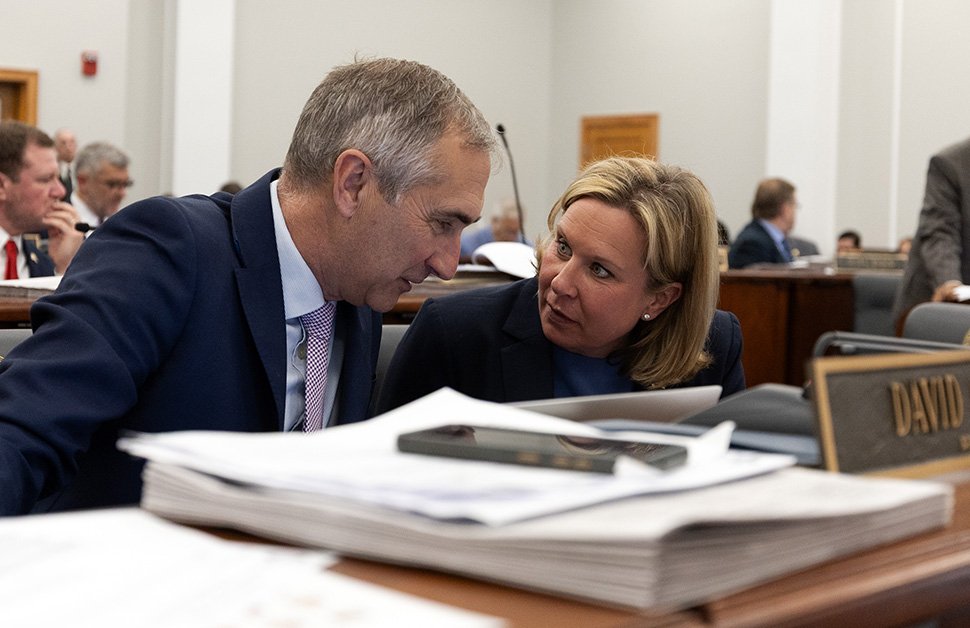
“We want every kid in the commonwealth to have people who believe in them as much as you all do,” commission co-chair Sen. Amanda Mays Bledsoe, R-Lexington, who led Wednesday’s meeting, told the educators.
Beginning in 2027, eligible taxpayers can receive a dollar-for-dollar federal income tax credit of up to $1,700 for qualifying cash contributions to listed scholarship-granting organizations, known as SGOs. Under the IRS’s proposed rules, married couples filing jointly could claim up to $3,400 based on each spouse’s qualifying contributions. The credit is nonrefundable, meaning it is limited to the taxpayer’s federal income tax liability. Unused credit may carry forward for up to five years.
Those organizations award scholarships to eligible students to cover educational expenses. HB 1 does not appropriate money from Kentucky’s education budget or change the SEEK funding formula. Fiscal analysis found that HB 1 is not expected to reduce state General Fund revenues.
For Will Hodges, a former Green County Schools superintendent now advising the Kentucky Education Fund, the opportunity comes down to confidence in his own community.
“I do feel like my local school system and my community school will do a better job of managing those dollars than Washington, D.C., does,” Hodges said.
Hodges was responding to Sen. Lindsey Tichenor, R-Smithfield, who asked what concerns he was hearing from public-school leaders as they prepare to participate.
Hodges described scholarships that could help eligible families with tutoring, educational equipment, technology and other qualifying expenses. The Kentucky Education Fund is working with the state’s 15 area development districts to connect schools, donors and communities ahead of the program’s launch.
Bowling Green Independent Schools Superintendent Gary Fields said his district plans to partner with the fund, initially focusing on helping families afford dual-credit courses and Advanced Placement exams. These opportunities can help students earn college credit and prepare for careers while still in high school.
“If it can help our kids, we’re going to do it,” Fields said.
At Louisville’s West End School, President and Head of School Gregory Ross described a different need: sustaining full scholarships for students whose families otherwise could not afford the school.
Ross said every student receives a full scholarship and the school must raise roughly $5 million annually to support its work. He described students overcoming homelessness and other hardships with consistent academic support, structure and high expectations.
“When we talk about the importance of something like an SGO, it’s a lifeline for us,” Ross said.
Tichenor lauded the school’s work before asking how it would participate in the scholarship program.
“It really is incredibly impressive what you guys are doing,” she told Ross.
The testimony showed how the same federal program can support students in different educational settings.
Public-school students can get help with qualifying expenses, while eligible private-and home-school students can pursue support tailored to their educational needs.
Democratic governors in Colorado and New York have also embraced participation, citing opportunities to help public-school students.
New York Gov. Kathy Hochul recently announced her state would participate, saying, “I’m not going to leave money on the table when it could help our kids.”
Public-school advocates are preparing to participate, too. NPR reported Oct. 20 that the Southern Education Foundation, which previously opposed the program, is launching an alliance of scholarship-granting organizations to support public-school students.
Kentucky’s participation means students here can qualify for scholarships supported by the federal credit. Without it, Kentuckians could still claim the credit for qualifying donations benefiting students in participating states elsewhere.
Secretary of State Michael Adams and his staff outlined preparations for 2027, including reviewing new federal rules and compiling Kentucky’s list of participating organizations. Michael Wilson, the office’s director of business services and deputy general counsel, updated the number of organizations that have filed declarations to 17 as of Wednesday morning.
Federal requirements include income verification, scholarships for at least 10 students who do not all attend the same school and spending at least 90 percent of SGO income on scholarships. Eligible students generally must live in households earning no more than 300 percent of area median gross income, adjusted for family size.
Organizations seeking to participate should review the secretary of state’s program information and filing guidance. Officials identified Nov. 30 as the initial declaration deadline under Kentucky’s proposed regulation.
###
Sen. Amanda Mays Bledsoe, R-Lexington, represents the 12th Senate District, which includes Boyle, Mercer, and Woodford Counties and part of Fayette County. She is vice chair of the Senate Appropriations and Revenue and Families and Children Committees. She co-chairs the Commission on Race and Access to Opportunity.
During the interim, Bledsoe serves on the Interim Joint Committees on Appropriations and Revenue; Families and Children; Licensing, Occupations, and Administrative Regulations; Local Government; and State Government. As Senate budget vice chair, she holds ex officio roles on multiple budget review subcommittees.
Visit https://legislature.ky.gov/Legislators Full Res Images/senate112.jpg for a high-resolution .jpeg of Bledsoe.
Sen. Lindsey Tichenor, R-Smithfield, represents the 6th Senate District, including Oldham and Trimble Counties and part of Jefferson County. She serves on the Interim Joint Committees on Education; Health Services; Local Government; State Government; and Veterans, Military Affairs, and Public Protection. She is also a member of the Commission on Race and Access to Opportunity and the Education Assessment and Accountability Review Subcommittee. Additionally, she is a liaison member of the Budget Review Subcommittee on Health and Family Services.
Please visit https://legislature.ky.gov/Legislators Full Res Images/senate106.jpg for a high-resolution JPEG file of Tichenor.
Visit Legislature.ky.gov for information on Senate Majority Caucus members, legislative committees, and additional resources.
During the 2026 Interim period, committees meet to study policy issues, review implementation of recently passed legislation, and begin evaluating proposals for the 2027 Regular Session, which begins Tuesday, Jan. 5.
The full 2026 Interim Calendar is available here. A weekly schedule with meeting times, topics, and agendas is available here.
Live coverage of interim legislative meetings is available at KET.org/legislature and on the LRC YouTube channel.
You can follow the Kentucky Senate Majority Caucus on X, Facebook, Instagram, and BlueSky. For additional member information and press releases, visit KYSenateRepublicans.com.