
“THIS ISN’T JUST A RESOLUTION, IT’S A REVOLUTION”
MEREDITH’S MEDICAID REFORM MEASURE APPROVED BY HOUSE HEALTH SERVICES COMMITTEE
SCR 9 moves to full House for consideration
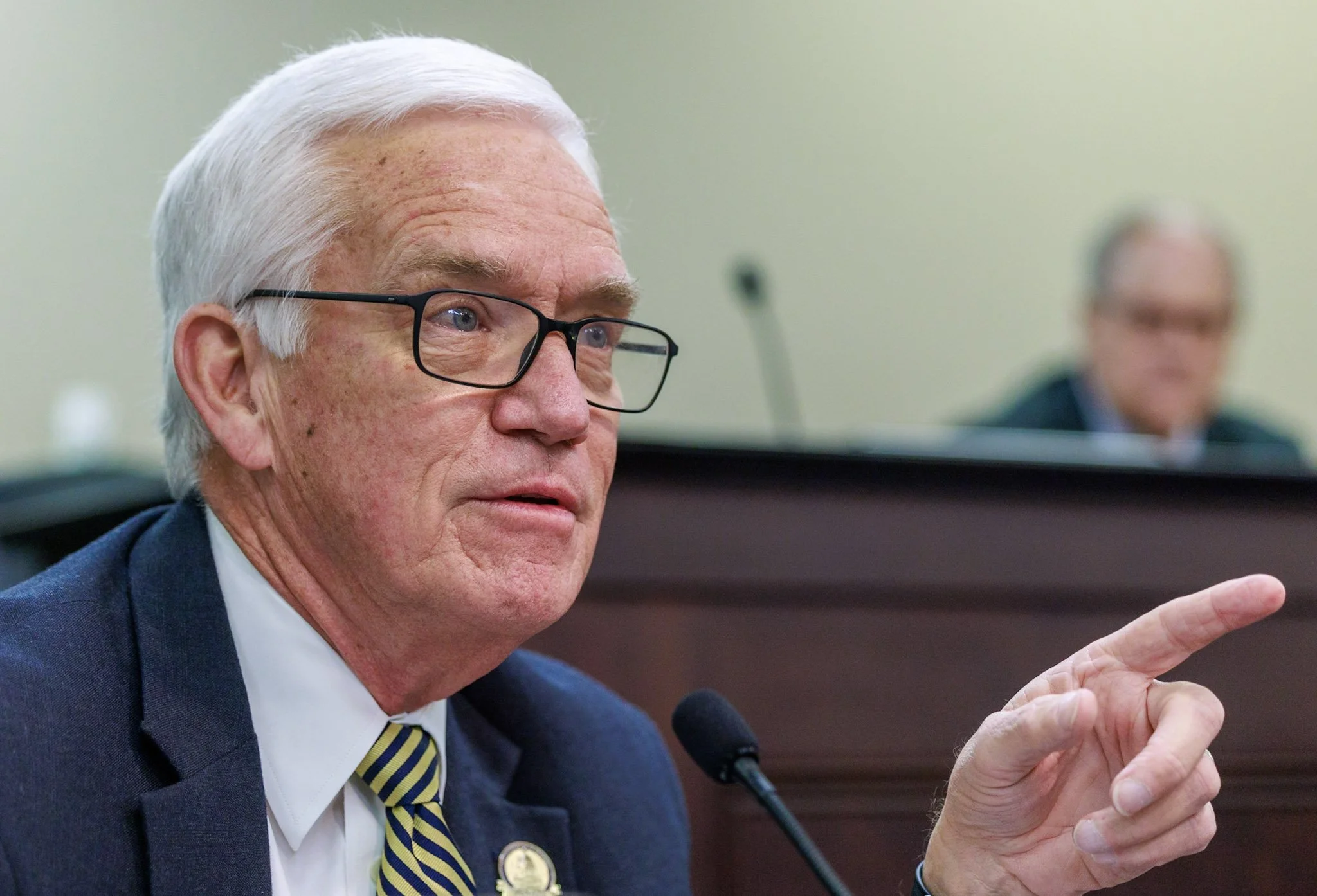
FRANKFORT, Ky. (Feb. 26, 2026) — Senate Concurrent Resolution (SCR) 9, sponsored by Sen. Stephen Meredith, R-Leitchfield, was unanimously approved today by the House Standing Committee on Health Services after Meredith urged lawmakers to confront what he described as a health care cost crisis threatening Kentucky families and the state budget.
“This isn’t just a resolution, it’s a revolution,” Meredith told committee members. “If we continue down the same path, Medicaid costs will continue to rise while outcomes remain stagnant. We have to be willing to think differently.”
SCR 9 directs the Legislative Research Commission to procure an independent vendor to conduct a feasibility study on implementing an Accountable Communities for Health (ACH) Medicaid delivery model pilot project.
Since Kentucky transitioned to a managed care model in 2010, Medicaid enrollment has increased by roughly 50 percent. During that same period, program costs have surged by nearly 400 percent. Meredith argued that the current structure has created layers of bureaucracy, strained provider reimbursement and failed to produce meaningful improvements in population health.
“We are spending over $20 billion a year,” Meredith said. “Yet our providers are frustrated, our rural communities are struggling with access and we still rank near the bottom nationally in key health indicators. That tells me the system itself deserves a hard look.”
Under the current managed care structure, private companies administer Kentucky’s Medicaid benefits under contracts that guarantee a medical loss ratio of 90 percent — allowing up to 10 percent of contract value for administrative costs and profit. Meredith told lawmakers that while those companies are fulfilling their contractual obligations, their financial incentives are not aligned with reducing overall system costs.
“If the only way profits grow is when spending grows, then the incentives are working against us,” Meredith said. “We have to align financial incentives with improving health outcomes and lowering long-term costs.”
The proposed feasibility study would evaluate accountable care models operating in other states, assess opportunities to reduce administrative overhead, improve care coordination, and address social determinants of health. Meredith’s proposal envisions a locally driven, nonprofit, community-based structure that places providers and communities—not outside corporations—at the center of care decisions.
If implemented following the study, the pilot would be known as the “20 by 30 Accountable Care Pilot Project,” reflecting Meredith’s goal of achieving significant improvements in population health and measurable cost reductions by 2030.
Meredith emphasized that SCR 9 does not immediately dismantle the current system but instead ensures lawmakers have comprehensive, data-driven analysis before pursuing structural reforms.
“We cannot afford to be passive,” Meredith said. “If we improve the health of our population and reduce unnecessary bureaucracy, we can protect taxpayers, strengthen providers and put money back into Kentucky families’ pockets. But it starts with being willing to ask bold questions.”
SCR 9 now advances to the full Kentucky House of Representatives for further consideration.
Learn more about bills, committees, and other important updates on the 2026 Regular Session at www.kylegislature.gov.