
FAYETTE COUNTY SENATE DELEGATION ANNOUNCES VARIOUS FUNDING AWARDS BENEFITING LEXINGTON, FAYETTE COUNTY
Members of the Fayette County Senate delegation are highlighting significant investments included in the General Assembly’s final budget legislation, which includes the biennial road plan, House Bill (HB) 502, transformative one-time spending allocations from the state’s budget reserve trust fund, HB 900, and other various budget documents.
ONE-TIME TRANSFORMATIVE FUNDING SECURED FOR FAYETTE COUNTY
HB 900 allocates funding from Kentucky’s budget reserve trust fund to support one-time, transformative investments across the commonwealth, including the following major projects relevant to the entire bluegrass region.
Economic regional growth set to take flight
Twenty million dollars are allocated in the bill to support the Central Kentucky Business Park Authority, a strategic partnership between Lexington-Fayette Urban County Government, Madison County, Scott County and the City of Berea to drive regional economic development along the Interstate 75 corridor—Kentucky’s most significant economic artery—to strengthen job creation, industrial growth and long-term competitiveness across the region.
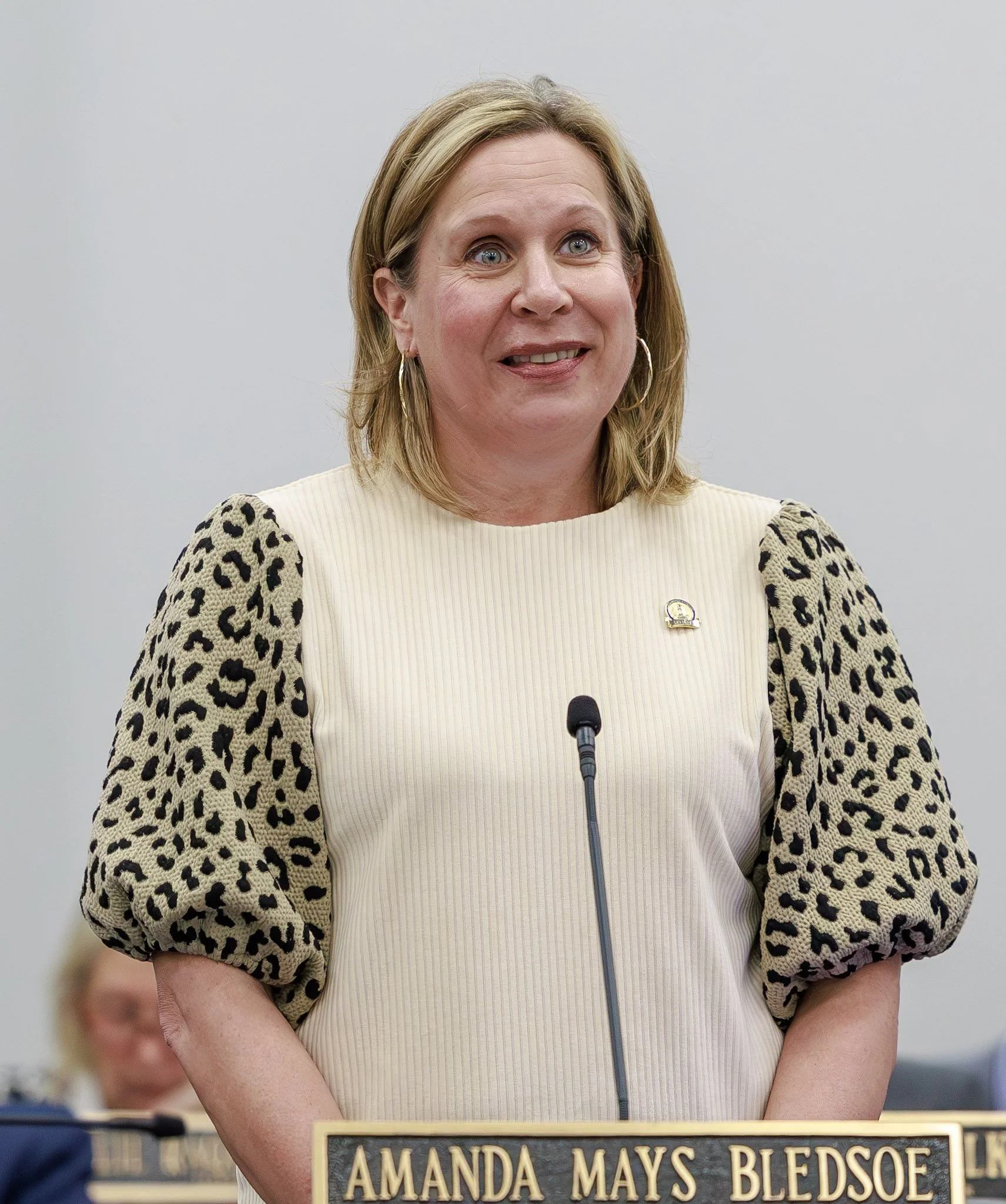
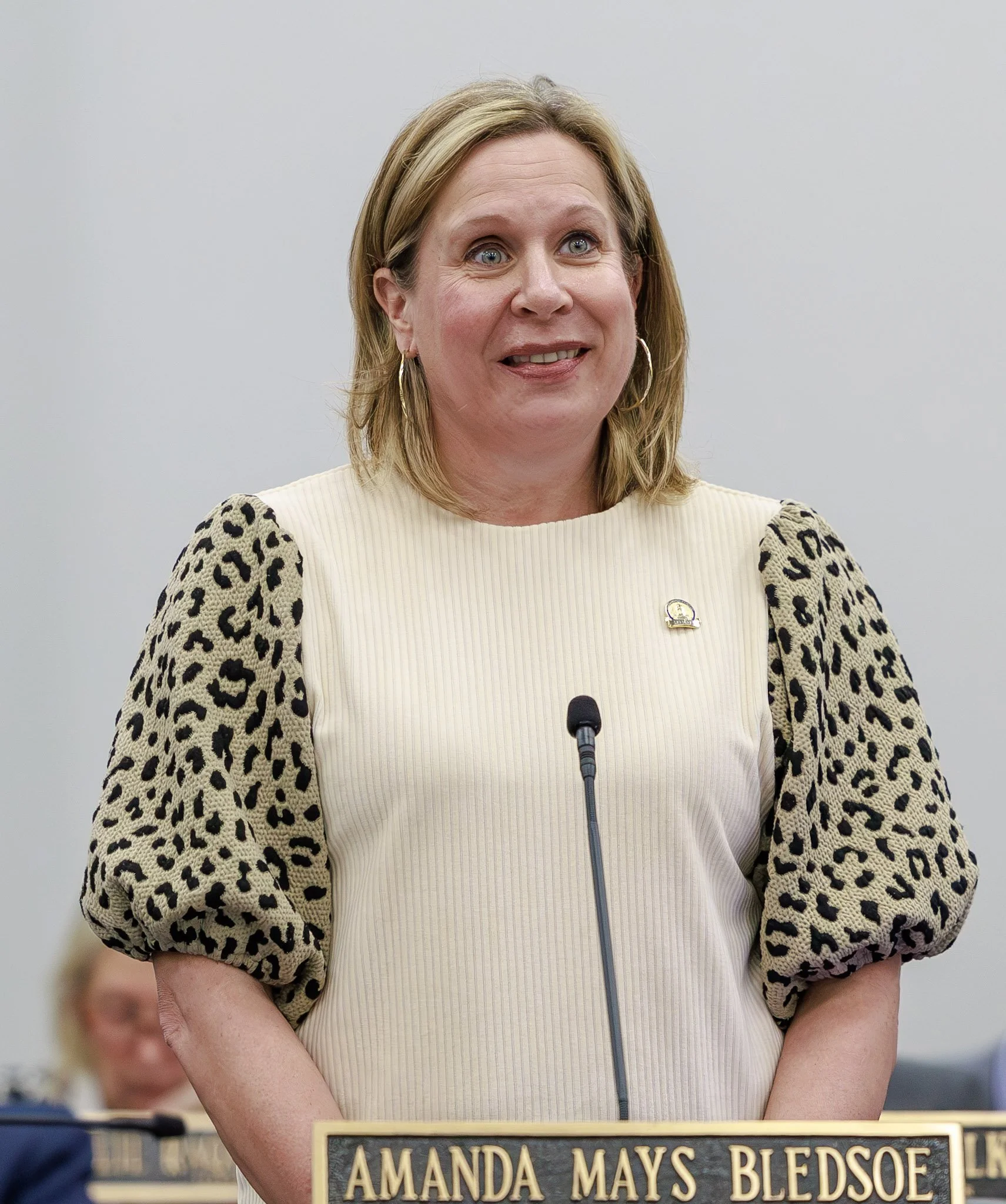
Members also highlighted a $5 million statewide investment to support Kentucky tech start-up companies through the Kentucky Economic Development Finance Authority. These funds help provide early-stage capital to innovative businesses, supporting commercialization efforts and connecting entrepreneurs to resources across the state’s growing innovation ecosystem. In Lexington, that ecosystem includes organizations like Awesome Inc. and the University of Kentucky’s Advanced Science and Technology Commercialization Center which help launch and grow high-tech startups and position the region as a hub for innovation and entrepreneurship. This funding item was backed by Amanda Mays Bledsoe and Fayette delegates as well as Senate Majority Floor Leader Max Wise. R-Campbellsville, and Senate Economic Development, Tourism and Labor Committee Chair Phillip Wheeler, R-Pikeville.
A critical allocation of $19.98 million is being made to expand the terminal at Blue Grass Airport to increase capacity and improve the passenger experience. Additionally, the airport will benefit from $5 million in HB 900 to support the relocation of the air traffic control tower and other infrastructure.
“These projects in particular have received a lot of support, and I think the collaboration behind them has been really important,” said Bledsoe, R-Lexington, Senate Budget vice chair and member representing western Fayette County. “Kentucky itself is a regional hub for travel, manufacturing and so much more, so strengthening our airport has to remain a priority if we want to continue to see our city grow. I want to commend Lexington Mayor Linda Gorton and everyone involved in creating a three-county partnership focused on regional economic development, because while there are boundary lines that divide counties, our future success is uniquely linked.”
Sen. Matt Nunn, R-Sadieville, who represents a portion of northwestern Fayette County, has past private sector experience with Toyota Tsusho America. He spoke about how the Blue Grass Airport and county partnership are interconnected.
“You can’t look at the success of the partnership with Toyota here in Kentucky and say that happens without an airport like Blue Grass Airport and vice versa,” Nunn said. “I don’t think the demand for more investment in Blue Grass Airport is the same without manufacturing powerhouses like Toyota. When I look at this partnership between Scott County, which I represent, and Fayette and Madison counties, I think you’re seeing a prime opportunity for additional investments similar to Toyota's. I can’t commend Scott County Judge/Executive Joe Pat Covington and all the leaders in Scott County enough for the yeoman's work they’ve done alongside Mayor Gorton and Madison County officials.”
Additional Fayette County projects include the following
$3 million to support Goodwill Kentucky’s expansion to a second Fayette County location, strengthening workforce training and job placement services
$5.85 million to expand the Lexington Children’s Museum to enhance educational and community programming
$4 million to establish a state-of-the-art aerospace education center through the Aviation Museum of Kentucky
$4 million to support pediatric cancer research through the Pediatric Cancer Research Trust Fund
$2 million to advance Kentucky’s space economy through investments coordinated with Space Tango
$1.5 million to provide scholarships through the Ed Brown Society to expand educational opportunity
$1.5 million to support facility repairs and improvements at Lexington Children’s Theatre
$1 million support services for veterans through Kentucky Valor
$250,000 to support the Next Generation Workforce Development Project in Lexington
Building on housing successes
Lexington has placed a significant focus on addressing its growing affordable housing challenges amid a widening gap between supply and demand. In the 2024 one-time spending bill utilizing funds from the state’s budget reserve trust fund, lawmakers allocated $10 million in 2025 to support Lexington-Fayette Urban County Government’s transformational Housing Affordability Partnership. This investment comes as local leaders and advocacy groups warn that the city faces a shortfall of more than 22,000 housing units—a number projected to exceed 30,000 by 2030 without substantial policy changes and new construction. Rising demand has already driven rents up by nearly 50 percent in recent years, intensifying pressure on working families and underscoring the need for coordinated public investment.
Though not a direct allocation to Fayette County, lawmakers also committed $5 million over the next biennium to Kentucky’s Affordable Housing Trust Fund, a statewide program that provides critical financing for the development and preservation of affordable housing. The fund supports activities such as new construction, rehabilitation of existing units and assistance for low- and moderate-income households, helping communities across the commonwealth expand housing access and stabilize vulnerable populations. Together, these investments reflect a broader recognition at both the state and local levels that addressing housing affordability will require sustained funding, strategic planning and long-term collaboration.
UNIVERSITY OF KENTUCKY AND INNOVATION INVESTMENTS
Lawmakers also highlighted significant investments supporting the University of Kentucky and its role as a leader in research, workforce development and innovation across the commonwealth.
The enacted budget includes substantial ongoing support for the University of Kentucky, totaling more than $9.2 billion in fiscal year 2027 and more than $10.1 billion in fiscal year 2028 across all funding sources. Within that funding, the General Assembly continues to invest in key programs including the Cooperative Extension Service, the Kentucky Agricultural Experiment Station, the Center for Applied Energy Research, the Sanders-Brown Center on Aging and the Kentucky Cancer Registry, among others.
In addition, lawmakers supported targeted research and health initiatives connected to the university including funding for cancer research and screening, spinal cord and head injury research and ovarian cancer screening programs. These investments support ongoing collaboration between the University of Kentucky and the University of Louisville while expanding access to life-saving research and care.
HB 900 further strengthens these efforts by investing $4 million in the Pediatric Cancer Research Trust Fund to support expanded clinical trials and research at the University of Kentucky.
“The University of Kentucky is a real treasure in our state, but it’s also a premier university nationally in regard to its role as a provider of health care and research,” said Dr. Donald Douglas, R-Nicholasville, the state senator who represents the southwestern portion of Fayette County. “The work happening at UK is vital, and the findings and efforts taking place there are truly cutting-edge. I’m pleased by the continued investment by the legislature to support the university in the work it does better than anywhere else, and the General Assembly looks forward to continuing to partner with the university on future research projects.”
The budget also includes forward-looking policy initiatives designed to position Kentucky as a national leader in emerging industries. A Nuclear Reactor Site Readiness Pilot Program allows for up to $75 million in support for permitting and development of future nuclear energy projects, while a Kindergarten Readiness Performance-Based Child Care Incentive Pilot Program, administered through the University of Kentucky’s College of Education, supports early childhood development and school readiness.
Sen. Steve West, R-Paris, chair of the Senate Education Committee, emphasized the importance of these investments in advancing Kentucky’s leadership in innovation and workforce development.
“The University of Kentucky is at the forefront of preparing our workforce for the industries of the future,” West said. “Through efforts like the Nuclear Reactor Site Readiness Pilot Program and our work to expand nuclear energy education, we are positioning Kentucky to lead in next-generation energy production and advanced research. These investments build on the university’s strengths and ensure our students are prepared for high-demand, high-skill careers.”
West also pointed to Senate Concurrent Resolution 66, which encourages the University of Kentucky and the University of Louisville to expand nuclear energy education programs and pursue federal partnerships through the United States Department of Energy.
“This is about making sure Kentucky is not just participating in the future of energy, but leading it,” West added. “We have the talent, the institutions and the momentum to compete nationally and globally. When I’m looking at what universities in other states are doing, I don’t see any reason why we can’t do the same. UK has been a great partner in Kentucky nuclear energy development efforts, and they will continue to play a big role in the future.”
Sen. Jared Carpenter, R-Berea who represents southern Fayette County, says the targeted investments in Fayette County align well with and work in tandem with road project funding secured in the state’s two-year road plan.
“A top-notch university and growing industrial parks don’t do any good if you don’t have the infrastructure to support them,” Carpenter says. “In this year’s budgets, especially in the responsible road plan we put together, I think we’ve done a good job making investments that have a return on investment and that aren’t money spent and money gone. We’ve put dollars into things that will churn in our community and in our economy, and that’s the way tax dollars should be invested.”
INVESTMENTS IN FAYETTE COUNTY INFRASTRUCTURE
US 25 (Georgetown Road Corridor)
$41.2 million to reconstruct and widen Georgetown Road from Spurr Road to Iron Works Pike. The project is to be completed in two phases from Kearney Road to Iron Works Pike and the second section from Kearney Road to Spurr Road. The project is supported with $36.2 million in high-growth county funding, general fund dollars provided by the General Assembly in 2024 for high-growth areas.
Interstate 64/75 Improvements
$15 million for construction to replace the I-75 southbound bridge and approaches from the northern I-64/75 split to Newton Pike Exit
$7.5 million to begin utilities relocation and construction on improving the interstate between Newtown Pike and the northern I-64/75 split
$4.207 million for rehabilitation and replacement of I-75 southbound bridge over North Broadway and North Limestone Street
$1.98 million for paving I-64 between mile points 71 to 74
New Circle Road (KY 4) Improvements
$6.82 million for right-of-way acquisition to reduce congestion on New Circle Road from Trade Center to the railroad bridge north of Palumbo Drive
$6.6 million to improve Liberty Road from Graftons Mill Lane to New Circle Road and improve intersection with New Circle Road
$4.67 million of state matching funds and federal grant funds to improve New Circle Rd between Boardwalk and Bryan Station Road
$2.48 million for design work to improve New Circle Road from Harrodsburg Road to Versailles Road
Additional priority projects in Fayette County
$14 million of state matching funds and federal grant funds to Replace RJ Corman Railroad Overpass and improve drainage on North Broadway (US 27).
$13.5 million from construction to improve the Red Mile Corridor between South Broadway and Versailles Road
$4.06 million for construction to extend Citation Boulevard from Russell Cave Road to Newtown Pike
$3.14 million for right-of-way and utilities work to address congestion and improve US 60 (Winchester Rd) from Polo Club Boulevard to Haley Road
$3.03 million for right-of-way and utilities work to improve Versailles Road from Viley Road to the west end of Norfolk Southern railroad bridge
$2.515 million in design funds to construct a new access road from Sir Barton Way to Polo Club Boulevard including a new underpass beneath I-75.
The plan also includes $223,000 through the Local Assistance Road Program to resurface Berea Road, a project identified as a priority by local officials.
Sen. Greg Elkins, R-Winchester, who represents Clark and Montgomery counties and a portion of eastern Fayette County, drew on his experience as a former Clark County magistrate to emphasize that investments in local roads are just as critical as large-scale infrastructure projects.
“When we secure tens of millions of dollars for major projects that improve traffic flow and safety on our interstates and highways, that’s a great thing,” Elkins said. “But I’ll tell you, what lawmakers hear about more than anything else is blacktop. That’s what we hear from our constituents, from county judges, mayors, magistrates and city leaders.”
Lawmakers noted that these types of investments are part of a broader commitment to local infrastructure, with significant funding directed to counties and cities to support resurfacing, bridge improvements and other critical transportation needs. Expanded support through the Local Assistance Road Program ensures that the most deteriorated roads are addressed, while direct funding gives local communities the flexibility to prioritize the projects that matter most to their residents.
“We have so many people who commute from surrounding counties into Fayette County and Lexington, so the investments we are making in surrounding counties like Clark, Bath and Menifee in my district are also investments in Fayette County,” Elkins added. “A rising tide lifts all ships and, and over the past two budgets we’ve done a whole lot to help Lexington and Fayette County rise up.”
DOWN THE ROAD
The state’s budget document outlining prioritized projects for the next four years after the biennium, House Joint Resolution 75, identifies a number of major long-term infrastructure priorities for Fayette County focused on congestion relief, safety improvements and capacity expansion along the region’s most heavily traveled corridors.
Key priorities include continued widening and modernization of U.S. Highway 25 between Lexington and Georgetown, long-term improvements to New Circle Road across multiple segments to reduce congestion and improve safety, and significant upgrades along U.S. Highway 27, including access management improvements along Nicholasville Road. The plan also prioritizes major investments along U.S. Highway 60, including widening, intersection improvements and multimodal upgrades along both the Winchester Road and Versailles Road corridors.
Additional projects include capacity improvements along I-75 and I-64, including bridge replacements and interchange upgrades as well as a series of targeted improvements to local connectors such as Man o’ War Boulevard, Tates Creek Road, Alumni Drive and Old Todds Road to improve traffic flow and support continued growth.
The plan further includes numerous bridge repair and replacement projects across Fayette County, along with smaller-scale safety, operational and multimodal improvements designed to enhance connectivity and reduce congestion throughout the region.
Collectively, these projects equate to hundreds of millions of dollars in anticipated future infrastructure investment, with individual projects ranging from early design and planning phases to major construction efforts exceeding $50 million. Lawmakers noted that inclusion in the six-year plan positions these projects for future funding as resources become available and reflects the continued growth and infrastructure needs of Fayette County.
BACKGROUND ON THE STATE ROAD PLAN
Kentucky’s next two-year road plan includes a $4.6 billion total for road, bridge and highway projects, along with a $7 billion transportation operating budget, ensuring that projects can move forward without delays or overpromising state resources.
The biennial road plan is fully funded with no overprogramming of state dollars so projects included in the plan can be completed within the budget cycle. Lawmakers noted that prior proposals eclipsed available funding by more than 400 percent, which created unrealistic expectations and delays. The final plan ensures that projects receiving funding are positioned to move forward as intended.
Kentucky continues to leverage approximately $1.1 billion annually in federal transportation funding, matched with state dollars, to maximize investment while maintaining fiscal responsibility.
###