BOSWELL’S SB 39 PASSES GENERAL ASSEMBLY, HEADS TO GOVERNOR’S DESK TO PROTECT PRIVATE PROPERTY RIGHTS FOR POND AND LAKE OWNERS

BOSWELL’S SB 39 PASSES GENERAL ASSEMBLY, HEADS TO GOVERNOR’S DESK TO PROTECT PRIVATE PROPERTY RIGHTS FOR POND AND LAKE OWNERS

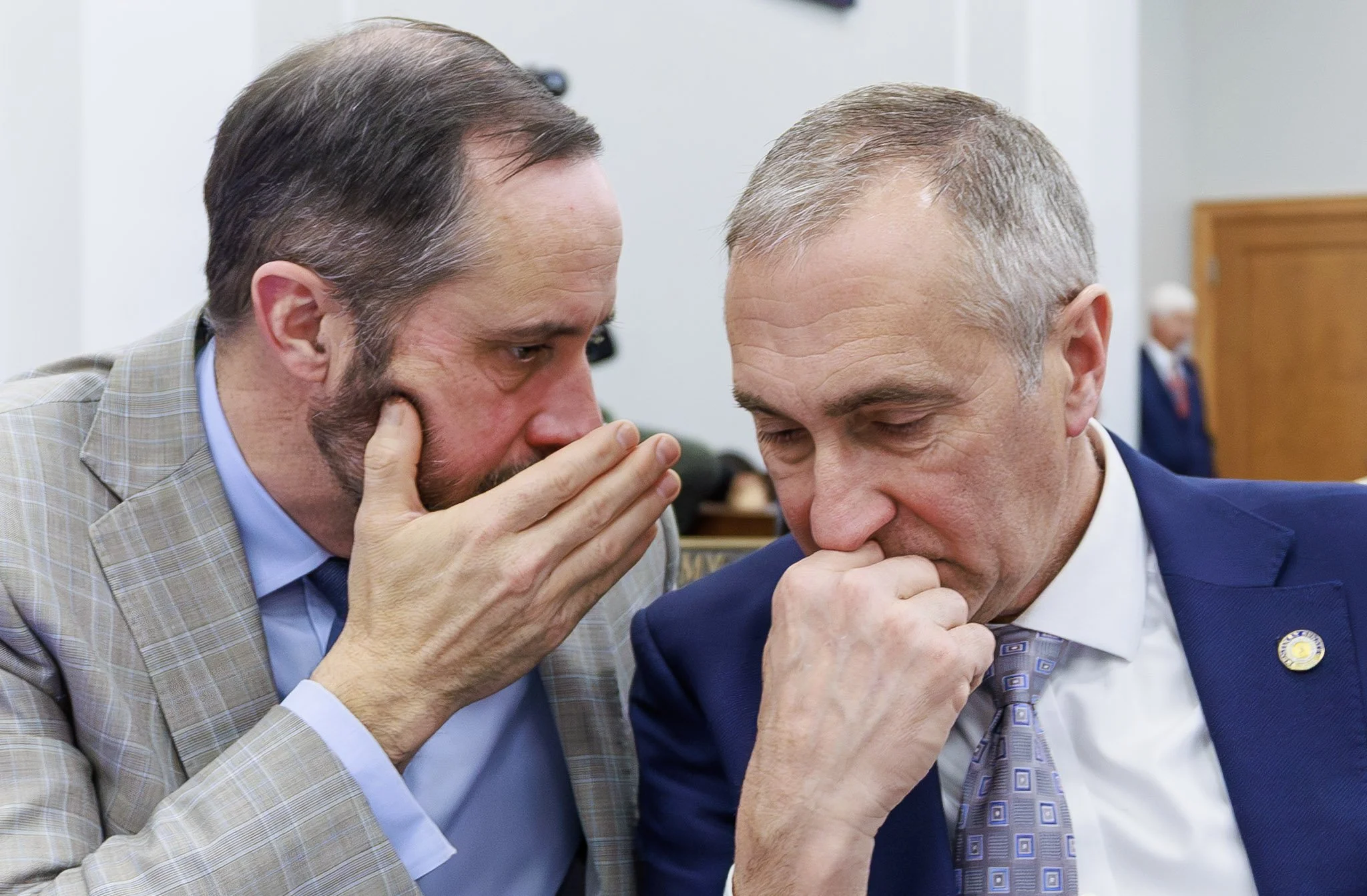
FRANKFORT, Ky. (March 31, 2026) — The Kentucky General Assembly has passed Senate Bill 39, legislation sponsored by Sen. Gary Boswell, R-Owensboro, to reaffirm private property rights by clarifying fishing and stocking rules for privately owned lakes and ponds. 

Senate Bill 39 ensures private landowners are not subject to state limits on creel size, possession or methods of take when fishing in privately owned lakes or ponds located on their property. The bill also allows landowners to extend those fishing privileges to others through written or electronic permission.

The legislation further clarifies that private pond owners are exempt from state stocking requirements, except for invasive species, and confirms that certain largemouth bass, including first-generation F1 bass, are not considered invasive for stocking purposes.

“This is about respecting private property and common sense,” Boswell said. “If someone owns the land and the water, they should have clear authority over how it’s used, while still protecting against truly invasive species.”

Senate Bill 39 focuses on landowner rights, outdoor traditions and regulatory clarity without affecting public waters or conservation enforcement.

The House adopted changes to the legislation, and the Senate has concurred. Senate Bill 39 now heads to the governor’s desk for his signature.

For more information on SB 39 and other legislative updates, visit Legislature.ky.gov.

GENERAL ASSEMBLY APPROVES STORM BILL TO COMBAT COPPER THEFT, PROTECT INFRASTRUCTURE

GENERAL ASSEMBLY APPROVES STORM BILL TO COMBAT COPPER THEFT, PROTECT INFRASTRUCTURE 

FRANKFORT, KY. (March 31, 2026) — Legislation sponsored by Sen. Brandon J. Storm, R-London, aimed at cracking down on metal theft and modernizing oversight of secondary metals recyclers has cleared the General Assembly and now heads to the governor’s desk.

The Kentucky Senate voted to concur with House changes to Senate Bill (SB) 291, finalizing the measure after it passed both chambers.

SB 291 modernizes Kentucky’s laws governing secondary metals recyclers by creating a uniform statewide licensing system under the Kentucky Motor Vehicle Commission and strengthening reporting requirements for metals transactions. The legislation is intended to address the growing theft of copper and other infrastructure materials that can disrupt telecommunications, broadband, utilities, and public safety communications.

“Metal theft isn’t just a property crime," Storm said. “It can disrupt essential services that communities rely on every day. This legislation strengthens oversight of recyclers, improves transaction reporting and gives law enforcement better tools to track stolen materials and hold bad actors accountable. It’s a practical step toward protecting critical infrastructure while ensuring legitimate recyclers can continue operating under clear, consistent rules.”

During consideration in the House, lawmakers adopted a committee substitute that retains the bill’s core framework while reflecting additional collaboration between the recycling industry and telecommunications providers.

The House changes require law enforcement agencies to provide recyclers with lists of individuals convicted of thefts involving metals and clarify that information reported through the LeadsOnline database—used to track metals transactions—may only be accessed by law enforcement agencies and regulatory bodies.

Rep. John Blanton, R-Salyersville, who carried the bill in the House, said the legislation strengthens efforts to deter infrastructure theft while maintaining cooperation with the recycling industry.

"Copper theft and other metal-related crimes threaten our power lines, communications systems, and other critical infrastructure. Senate Bill 291 gives law enforcement the tools they need to track stolen materials and hold offenders accountable. This builds on last year’s efforts to ensure our infrastructure and communities are better protected and I appreciate Sen. Storm’s work on this bill."

SB 291 also updates and consolidates several sections of Kentucky law to streamline regulation of recyclers and improve statewide oversight.

Because the measure includes an emergency clause, it will take effect immediately upon the governor’s signature.

Learn more about bills, committees, and other important updates on the 2026 Regular Session at www.kylegislature.gov

WHEELER BILL TO REORGANIZE WORKERS’ CLAIMS SYSTEM PASSES HOUSE, MOVES TO GOVERNOR’S DESK

WHEELER BILL TO REORGANIZE WORKERS’ CLAIMS SYSTEM PASSES HOUSE, MOVES TO GOVERNOR’S DESK

Measure aims to strengthen oversight and administration of  workers’ compensation programs

FRANKFORT, KY. (March 31, 2026)— Legislation sponsored by Sen. Phillip Wheeler, R-Pikeville, to preserve and strengthen Kentucky’s workers’ compensation administrative system has passed the Kentucky House of Representatives.

Senate Bill (SB) 343 restructures the Department of Workers’ Claims by establishing it as an entity administratively attached to the Office of the Governor. The change restores the department’s independence while maintaining the administrative framework that supports Kentucky’s workers’ compensation system.

Kentucky’s current system, first established in 1987, is widely recognized among administrative law practitioners as a national model and has served as the basis for workers’ compensation systems adopted in more than 20 other states.

“Kentucky’s workers’ compensation system has long been considered a model across the country,” Wheeler said. “This legislation preserves the structure that has made it successful while strengthening accountability and ensuring the department has the independence needed to continue serving workers and employers effectively.”

House Judiciary Committee Chair Rep. Daniel Elliott, R-Danville, carried the measure in the House.

“Sen. Wheeler brought forward a thoughtful bill that protects a workers’ compensation system Kentucky has spent decades getting right,” Elliott said. “This measure restores the independence of the Department of Workers’ Claims, sets clear expectations for its leadership, and keeps the system largely funded by the employers and insurers who rely on it rather than the general taxpayer. I appreciate his leadership on this issue and was glad to carry the bill in the House.”

Under the legislation, the Department of Workers’ Claims will be led by a commissioner appointed by the governor and confirmed by the Senate. The bill also establishes qualifications for the position, requiring at least eight years of legal experience in workers’ compensation and demonstrated knowledge of administrative law and public administration.

The measure also ensures continued coordination among agencies involved in the workers’ compensation system while maintaining oversight of administrative spending.

SB 343 contains an emergency clause, meaning it would take effect immediately upon passage and approval by the governor or upon otherwise becoming law.

Learn more about bills, committees, and other important updates on the 2026 Regular Session at www.kylegislature.gov

FAMILY PRESERVATION AND ACCOUNTABILITY ACT PASSES GENERAL ASSEMBLY

FAMILY PRESERVATION AND ACCOUNTABILITY ACT PASSES GENERAL ASSEMBLY

Legislation advances with collaborative updates strengthening mental health treatment and child safety protections

FRANKFORT, KY. (March 31, 2026)— Legislation sponsored by Sen. Julie Raque Adams, R-Louisville, aimed at strengthening families, improving mental health treatment options and enhancing protections for children and victims has passed the Kentucky General Assembly following final Senate concurrence with House changes.

Senate Bill (SB) 122, the Family Preservation and Accountability Act, allows courts to consider whether a defendant is the primary caretaker of a dependent child during sentencing and, when appropriate, impose structured alternative sentences focused on treatment, accountability and family stability.

Adams said the legislation reflects months of collaboration across both chambers to ensure courts have better tools to address complex family and public safety issues.

“I’m very pleased to see this legislation reach final passage after thoughtful collaboration throughout the process,” Adams said. “The goal has always been to give judges a clearer framework to consider the real impact incarceration can have on children while still ensuring accountability and prioritizing public safety. When we look at the long-term outcomes for families and communities, it’s important that our justice system has the flexibility to respond in ways that reduce recidivism, strengthen families where appropriate and ultimately support better futures for Kentucky’s children.”

The House adopted additional provisions that expand the legislation to include updates to Kentucky’s assisted outpatient treatment and involuntary hospitalization laws for individuals with serious mental illness. These changes allow courts to order outpatient treatment plans, appoint treatment providers, monitor compliance through multidisciplinary teams and provide additional oversight in cases involving involuntary hospitalization.

Adams said those additions strengthen the overall bill and address another critical need facing many Kentucky families.

“Mental health challenges often intersect with the justice system and family stability,” Adams said. “The House additions strengthen our state’s ability to ensure individuals receive appropriate treatment while maintaining accountability and protecting the public. I appreciate the work of members in both chambers who helped refine and strengthen this legislation.”

The bill also includes new safeguards in family court proceedings involving domestic violence or abuse. These provisions require courts to make written findings on abuse allegations before determining custody, strengthen training requirements for professionals involved in custody and protection order proceedings, and establish additional protections when repeated abuse has occurred.

Rep. Nick Wilson, R-Williamsburg, carried the bill on the House floor and worked closely with Adams as the measure moved through the legislative process.

“Children should not pay the price for a parent’s mistake, especially when public safety can still be protected,” Wilson said. “Senate Bill 122 gives judges the flexibility to keep families together when appropriate, while ensuring accountability and stronger protections for victims and children. By recognizing the impact of parental incarceration, this legislation helps break cycles of hardship and supports healthier outcomes for kids and families.”

With final passage by both chambers, SB 122 now heads to the governor for consideration.
REED’S BILL TO REHIRE EXPERIENCED TROOPERS DELIVERED TO GOVERNOR

REED’S BILL TO REHIRE EXPERIENCED TROOPERS DELIVERED TO GOVERNOR

Senate Bill 102 allows experienced troopers to return to workforce

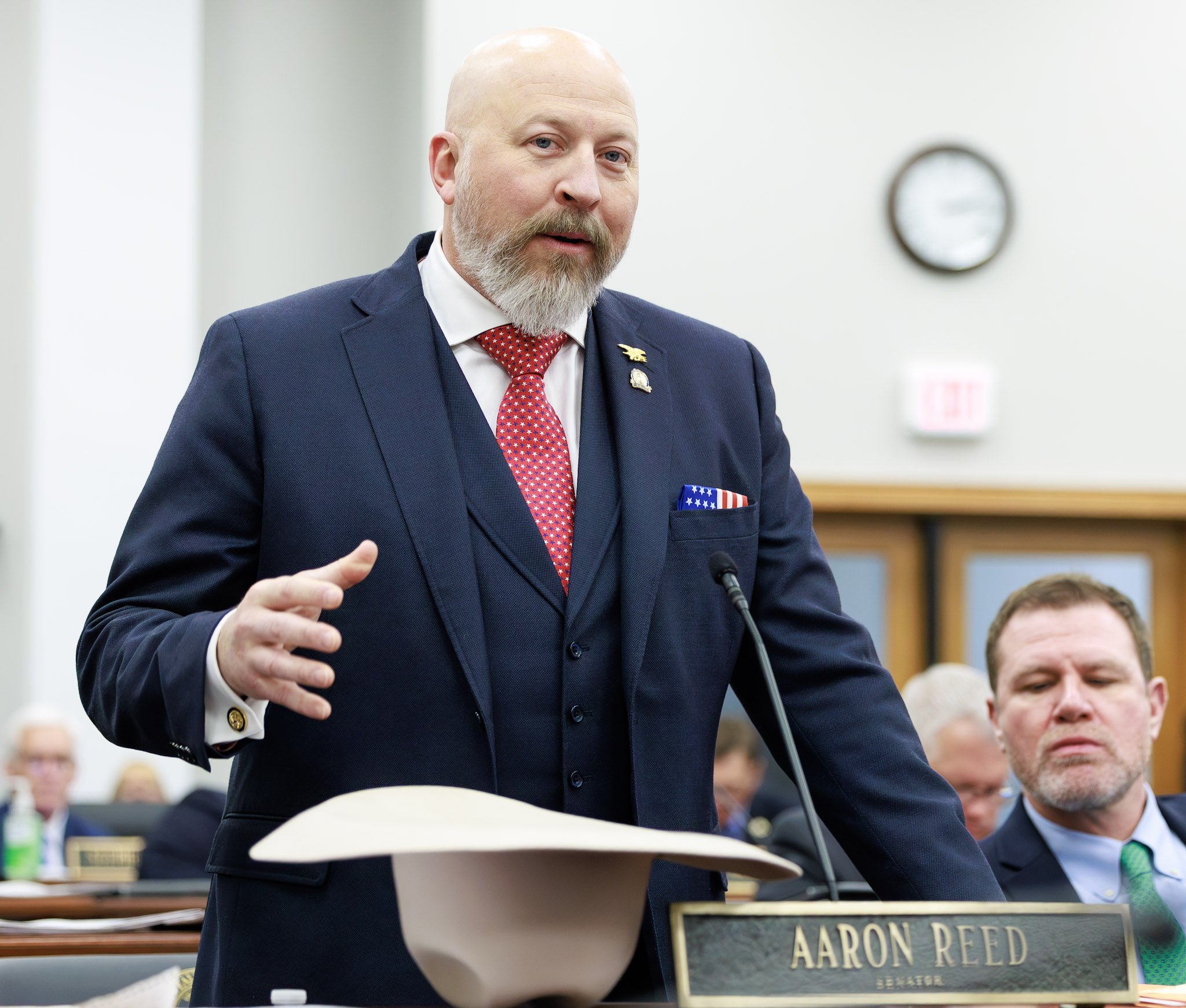
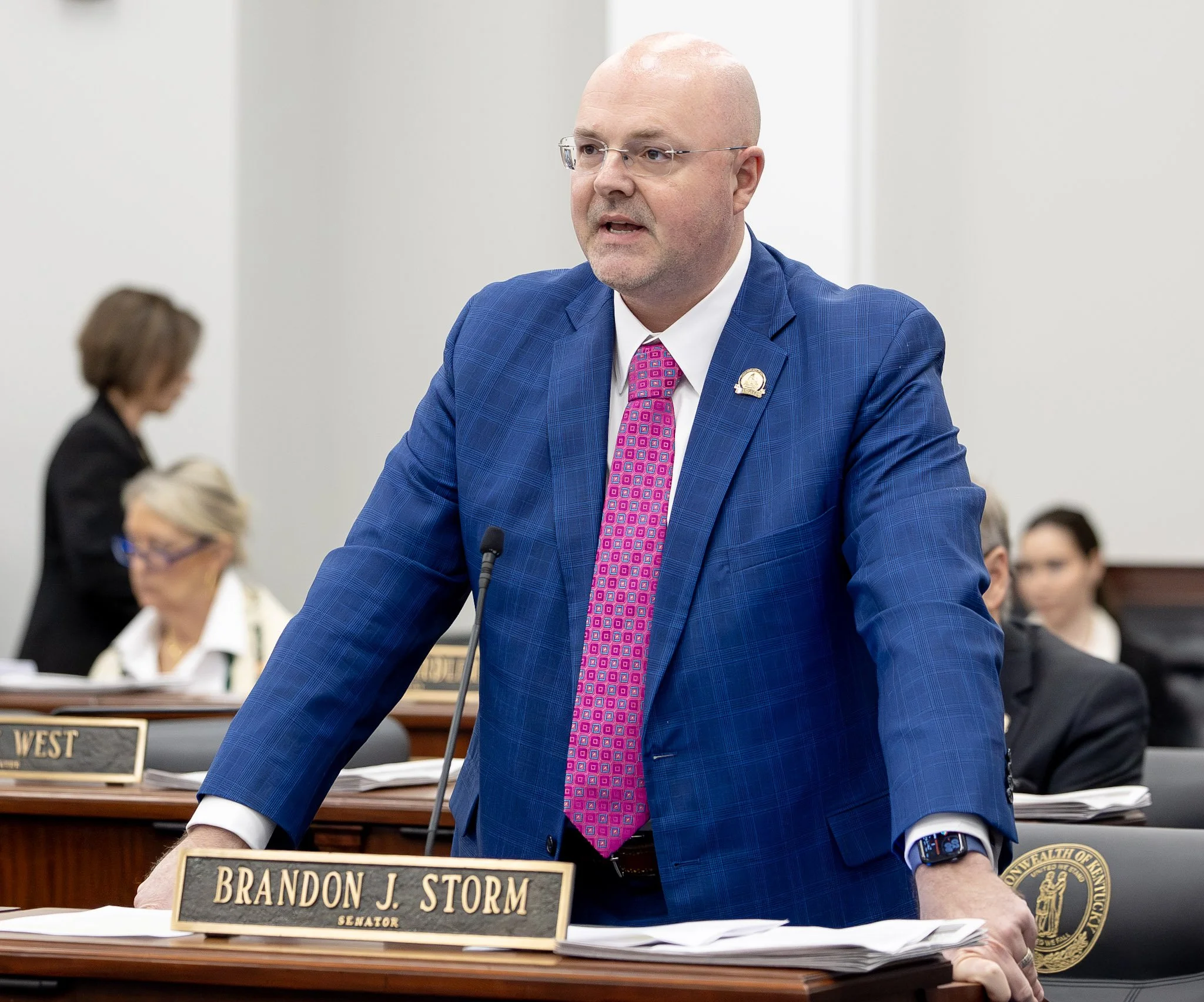
FRANKFORT, Ky. (March 31, 2026) — Senate Bill (SB) 102, sponsored by Sen. Aaron Reed, R-Shelbyville, achieved final passage today and will be delivered to the governor. SB 102 will allow retired Kentucky State Police (KSP) troopers to return to duty, offering a practical solution to strengthen public safety and address statewide staffing shortages.

SB 102 allows individuals previously appointed to the Trooper R Class or Commercial Vehicle Enforcement R Class to return to service with KSP after at least one month and less than 60 months following their most recent separation.

“These are experienced, highly trained professionals who are ready to serve. As a former Navy SEAL, I’ve seen firsthand the importance of committing yourself to something greater than your own interests," said Reed. “Bringing these troopers back strengthens public safety while honoring that same spirit of service. They already know the job, they know the communities and they’re prepared to step in and make a difference. It’s a smart, responsible way to address workforce shortages without lowering our standards.”

Under current law, restrictions limit when and how former troopers can be reappointed. SB 102 removes unnecessary barriers and helps KSP retain critical institutional knowledge, especially in high-need and rural areas.

“SB 102 promotes public safety by allowing experienced, qualified Kentucky State Police Troopers to continue serving the Commonwealth, helping ensure our communities have the skilled law enforcement they need,” said Rep. Chris Fugate, R-Chavies. “I appreciate Sen. Reed’s efforts on this issue and his support of our Kentucky State Police.”

STATEMENT RELEASE BLEDSOE ISSUES STATEMENT FOLLOWING SENATE’S APPROVAL OF LOGAN’S LAW

STATEMENT RELEASE

BLEDSOE ISSUES STATEMENT FOLLOWING SENATE’S APPROVAL OF LOGAN’S LAW

Legislation honors memory of Logan Tipton of Woodford County

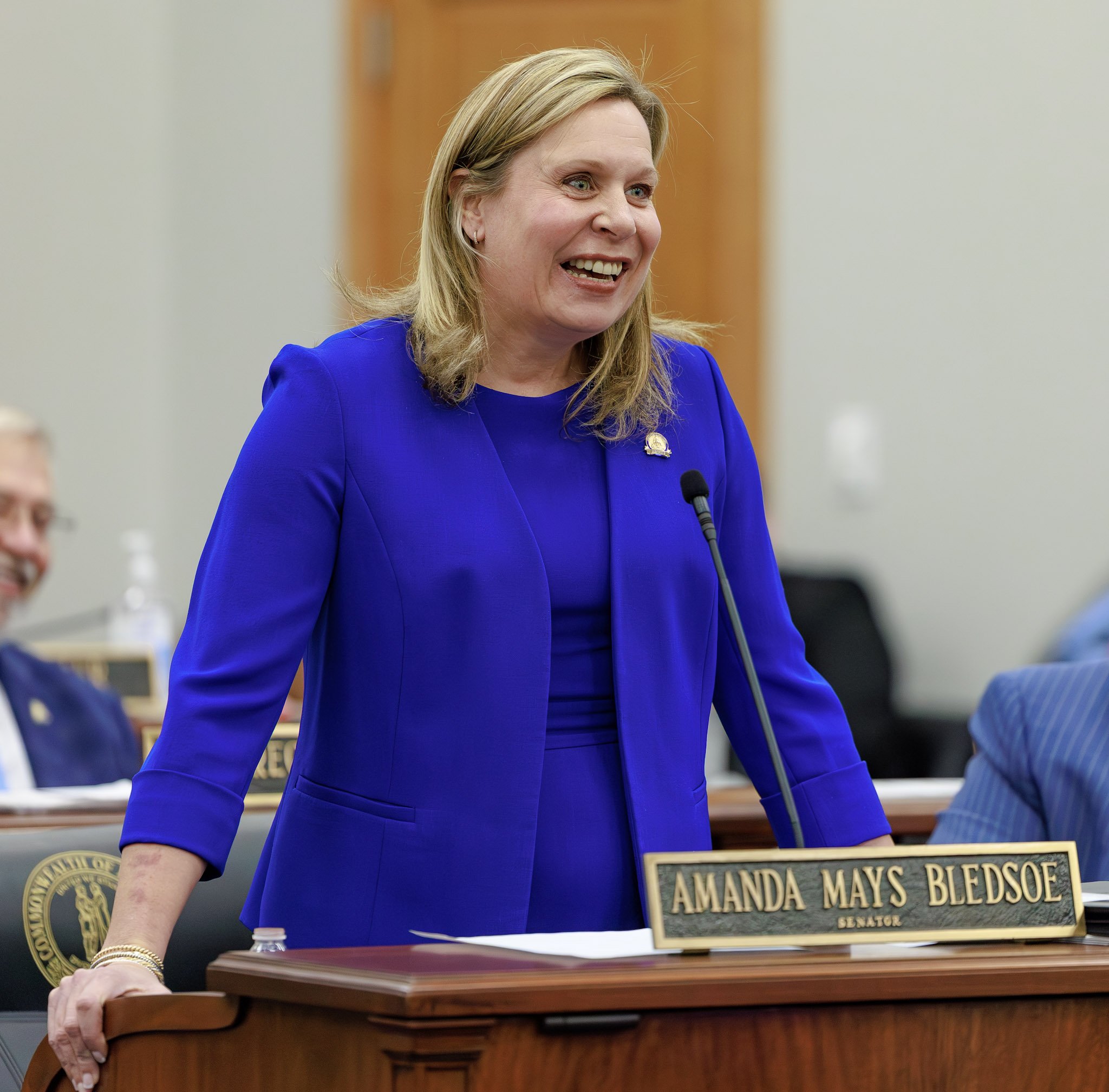
FRANKFORT, Ky. (March 31, 2026)The following is a statement from Sen. Amanda Mays Bledsoe, R-Lexington, whose district includes all of Woodford County, and who carried Logan’s Law to passage in the Senate on Tuesday.

“The reason for Logan’s Law is that families should never have to question whether justice will hold. This legislation comes from a tragedy in Woodford County that left a young boy dead and a family forever changed. What followed only deepened that pain when the person responsible was released earlier than many believed justice required.

“As a mother, I cannot put into words what that kind of loss feels like. It’s a fear and uneasiness that parents hold deep inside them, hoping it will never have to come to the surface or become their reality. But I do know this: our laws should never leave families wondering if the system will protect them or stand with them in tragic cases such as that out of Woodford County that has forever changed the course of the lives of the Tipton family.

“Logan’s Law aims to restore trust in our justice system. It takes a hard look at where our system fell short and makes clear that we can do better. At its core, House Bill 422 is about making sure our justice system reflects the seriousness of violent crime, protects our communities and gives families the certainty they deserve.

“When life is taken, justice cannot be uncertain.

“I consider it an honor to have carried this bill to passage in the Senate, but I only wish it were not necessary and that Logan Tipton’s story was not one that we have to tell. My prayers remain with the Tipton family, and I am grateful to Rep. Dan Fister for sponsoring this bill, Senate Judiciary Committee chair Brandon Storm for helping get it in the right place and to all who helped bring it forward in Logan’s memory.”

___

BACKGROUND

The need for the legislation was prompted by developments in 2025 related to the early release of Ronald Exantus, who killed young Logan Tipton.

Legislative provisions

House Bill 422, as amended by Senate Committee Substitute 1 and a floor amendment, strengthens Kentucky’s criminal justice statutes by updating the definition of violent offender and increasing minimum parole ineligibility periods for certain serious offenses. The bill clarifies that mandatory reentry supervision does not apply to inmates who are ineligible for parole, those convicted of capital, Class A or Class B felonies or violent offenders denied discretionary parole. It revises the legal standard for criminal responsibility in cases involving mental illness or intellectual disability and maintains treatment requirements for individuals found guilty but mentally ill. The legislation also updates sentencing provisions to ensure parole ineligibility is clearly reflected in the record and improves transparency for victims, prosecutors and parole authorities. 

HB 422 must now return to the state House of Representatives for concurrence or non-concurrence with the Senate's revisions.

The case

In 2015, Logan Tipton, a 6-year-old boy from Woodford County, was fatally stabbed in his home by Ronald Exantus during a violent attack that also left other family members injured. The case drew widespread attention not only for the brutality of the crime but also for the legal outcome that followed. A jury found Exantus not guilty by reason of insanity on the murder charge, while convicting him of multiple assault offenses tied to the attack on Logan’s family. He was ultimately sentenced to 20 years in prison, with time served and other credits applied. After serving roughly seven years, Exantus was released in 2025 under Kentucky’s mandatory reentry supervision law, despite being denied parole. That release, required under existing statute, raised serious concerns among lawmakers and the public about gaps in how violent offenders, particularly those with complex mental health determinations, are managed after conviction.

GENERAL ASSEMBLY PASSES GIRDLER’S BILL TO EXPAND ACCESS TO PROSTHETIC CARE

GENERAL ASSEMBLY PASSES GIRDLER’S BILL TO EXPAND ACCESS TO PROSTHETIC CARE

Unanimous bipartisan measure strengthens insurance coverage standards for Kentuckians who rely on prosthetic and orthotic devices

FRANKFORT, KY. (March 31, 2026)—The Kentucky General Assembly has given final approval to Senate Bill (SB) 97, sponsored by Sen. Rick Girdler, R-Somerset, to strengthen insurance coverage standards for prosthetic and orthotic devices.

The bill passed both chambers with unanimous bipartisan support and now heads to the governor’s desk. SB 97 establishes clearer statewide standards to help ensure Kentuckians who rely on prosthetic limbs and orthotic devices can access the equipment needed for daily life and specialized activities.

The House made several changes to align the bill with federal requirements and existing insurance standards. The revised version removes short-term limited duration plans from the definition of a health benefit plan and replaces the requirement to offer two in-network providers with a requirement that insurers maintain a reasonably adequate provider network consistent with Kentucky’s existing network adequacy standards.

The House version also removes certain out-of-network referral and reimbursement provisions and directs the Kentucky Department of Insurance to determine whether the coverage requirement would trigger federal cost-defrayal obligations for qualified health plans. That determination must be submitted to the U.S. Department of Health and Human Services. If federal officials do not respond within one year, the determination will be considered accepted. The effective date was also moved from Jan. 1, 2027, to Jan. 1, 2028.

Girdler said the legislation reflects months of collaboration among patient advocates, health care professionals, insurers, and lawmakers working to reach a thoughtful and balanced solution.

“Advancements in prosthetic and orthotic technology are allowing people to live fuller, more active lives after devastating injuries or illnesses,” Girdler said. “This legislation helps ensure coverage policies keep pace with those advancements while maintaining a responsible and workable framework for patients, providers and insurers.”

Rep. Michael Meredith, R-Oakland, who carried the bill in the House, said clearer coverage standards will benefit Kentuckians who rely on prosthetic and orthotic devices.

"This is an important step toward ensuring that Kentuckians who rely on prosthetic and orthotic devices have the support they need to live active, independent lives,” he said. “Clearer coverage standards will make a real difference for patients, helping them access the right devices for both daily living and specialized activities. I want to thank Sen. Girdler for his leadership and dedication in championing this measure, and for listening to the voices of those whose lives will be directly impacted."

With concurrence on House changes complete, SB 97 now moves to the governor’s desk for final consideration.

Learn more about bills, committees, and other important updates on the 2026 Regular Session at www.kylegislature.gov

SEN. JASON HOWELL’S RESPONSE TO THE GOVERNOR’S VETO OF SENATE BILL 199

SEN. JASON HOWELL’S RESPONSE TO THE GOVERNOR’S VETO OF SENATE BILL 199

FRANKFORT, Ky. (March 31, 2026) – The following is a statement from Senator Jason Howell on the veto override of Senate Bill 199, a bill establishing that a pesticide label approved by the U.S. Environmental Protection Agency (EPA) under federal law is deemed a sufficient warning label under Kentucky law for purposes of state duty-to-warn claims.

“I’m glad to see the Kentucky legislature once again stand up for our farmers.” 

“By overriding the governor’s veto of this much-needed bill, we reaffirmed our commitment to Kentucky’s agriculture community and a commonsense approach that protects both agriculture and public health by relying on EPA guidance for pesticide use.”

BACKGROUND

Senate Bill 199 aligns Kentucky’s pesticide labeling standards with federal law and provides clarity for manufacturers, retailers and consumers operating in Kentucky.

The EPA has exclusive control over all aspects of pesticide management including the content of warning labels. SB 199 establishes that a pesticide label approved by the U.S. Environmental Protection Agency (EPA) under federal law is deemed a sufficient warning label under Kentucky law for purposes of state duty-to-warn claims.

By recognizing EPA-approved labels as meeting state requirements, the bill ensures consistency with federal standards and protects Kentucky farmers from product price increases by limiting frivolous lawsuit exposure. 

The legislation provides regulatory certainty while maintaining strong consumer protections. The measure preserves accountability by maintaining liability in cases where a manufacturer knowingly withholds or misrepresents material safety information. 

The bill has earned broad support from Kentucky’s agricultural and forestry communities. Kentucky Farm Bureau, Modern Ag Alliance, and Kentucky Department of Forestry Rep. Ryan Bivens, R-Hodgenville, a farmer representing the 24th House District, were all supportive of the bill.

The complete bill may be found on the Legislative Research Committee website here

HOUSE PASSES BLEDSOE’S BILL SUPPORTING LOCAL GOVERNMENTS AND STRENGTHENING COMMUNITY ACCOUNTABILITY

HOUSE PASSES BLEDSOE’S BILL SUPPORTING LOCAL

GOVERNMENTS AND STRENGTHENING COMMUNITY ACCOUNTABILITY

FRANKFORT, Ky. (March 30, 2026) — The state House of Representatives has approved Senate Bill (SB) 192, legislation sponsored by Sen. Amanda Mays Bledsoe, R-Lexington, designed to help local governments meet required audit standards while strengthening accountability at the community level. The measure was carried in the House by Rep. Josh Bray, R-Mount Vernon. 

SB 192 addresses a growing shortage of certified auditors across the commonwealth that has made it increasingly difficult for smaller cities and local governments to complete required financial audits in a timely manner. The bill creates a pathway to ensure audits can still be conducted efficiently without compromising transparency or oversight, helping communities remain compliant with state requirements and maintain public trust.

SB 192 carried the support of stakeholders, including the Kentucky League of Cities. 

In addition to addressing audit challenges, the House adopted an amendment sponsored by House Speaker Pro Tem David Meade, R-Stanford, to reinforce local representation and accountability in fire protection governance. The amendment requires members of fire district boards and certain nonprofit fire department boards to reside within the areas they serve, ensuring that those making decisions on taxes and fees are directly connected to the communities impacted. The amendment also establishes that any board member who does not reside within the district or service area will be deemed to have vacated the position, outlines a process for filling vacancies and includes an emergency clause to allow the provisions to take effect immediately upon enactment.

Bledsoe says SB 192 provides a practical solution to a statewide workforce challenge while maintaining strong financial oversight and reinforcing the principle that local governance should remain rooted in the communities it serves.

The bill will return to the Senate for concurrence before being delivered to the governor for consideration. 
MADON RECEIVES 2026 HOUSING HERO AWARD FROM HOME BUILDERS ASSOCIATION OF KENTUCKY

MADON RECEIVES 2026 HOUSING HERO AWARD FROM HOME BUILDERS ASSOCIATION OF KENTUCKY

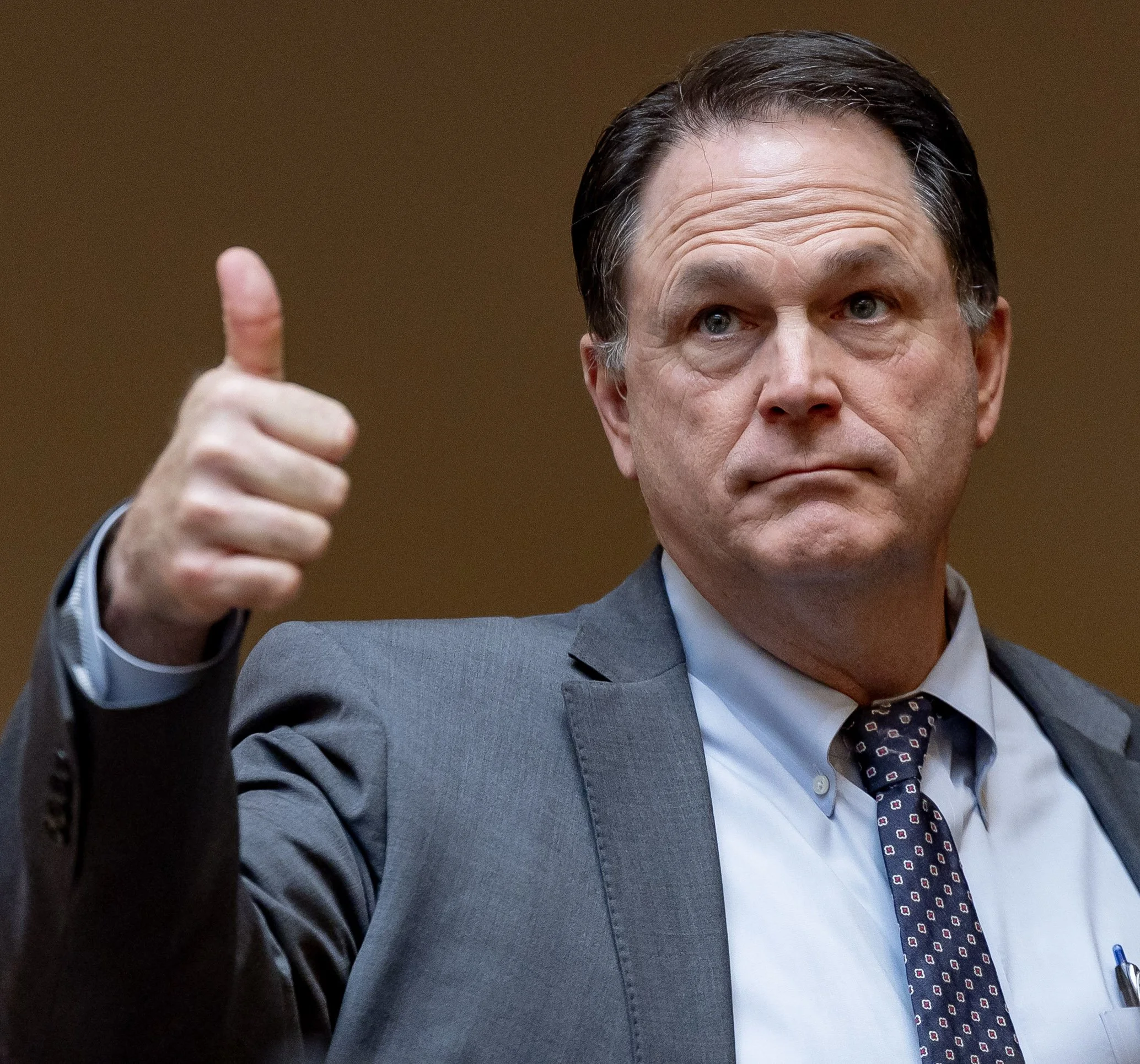
FRANKFORT, Ky. (March 30, 2026) — Sen. Scott Madon, R-Pineville, has been recognized by the Home Builders Association of Kentucky (HBAK) with the 2026 Housing Hero Award for his leadership on housing policy during the 2025 legislative session.

The award was presented during the HBAK Winter Meeting and Housing and Building Industry Day at the Capitol, where builders and industry leaders from across the state gathered to discuss housing challenges, legislative priorities, and opportunities to strengthen Kentucky’s housing market.

Madon received the recognition for his work on Senate Bill (SB) 89, legislation aimed at supporting housing development and addressing issues affecting home construction and availability across Kentucky.

More than 45 members of the Home Builders Association of Kentucky participated in meetings with lawmakers at the Capitol during the event, discussing policies that impact housing affordability, workforce needs and community growth.

Madon said he was honored to receive the award and emphasized the importance of ensuring Kentucky families have access to safe and affordable housing.

“Housing is one of the most basic building blocks of strong communities,” Madon said. “I’m grateful to the Home Builders Association of Kentucky for this recognition, and I appreciate the work builders and industry professionals do every day to create opportunities for families across our state. I’ll continue working with them to support responsible growth and make sure Kentucky remains a great place to live, work and raise a family.”

During the event, HBAK members also met with legislative leaders including Senate President Robert Stivers and House Speaker David Osborne to discuss policy priorities and the future of Kentucky’s housing industry.

The Home Builders Association of Kentucky represents builders, remodelers, and housing industry professionals across the state and advocates for policies that support housing availability and economic development. More information can be found HERE

SEN. BRANDON SMITH, KENTUCKY SENATE HONORS FORMER SEN. NICK BAKER

SEN. BRANDON SMITH, KENTUCKY SENATE 

HONORS FORMER SEN. NICK BAKER 

Senate recognizes a legacy of service and a law that changed opportunities for generations of Kentucky girls

FRANKFORT, Ky. (March 27, 2026) — The Senate on Thursday adopted Senate Resolution 174, filed and sponsored by Sen. Brandon Smith, R-Hazard, honoring the life and legacy of former state Sen. Henry Nicholas “Nick” Baker and recognizing his lasting impact on communities across the commonwealth.

The resolution highlights Baker’s service in the Kentucky Senate from 1970 to 1978 and his decades-long legal career, as well as his deep commitment to family, faith and public service.

A native of Hazard who later made Louisville his home, Baker served his state both in uniform and in office. He joined the U.S. Army in 1959 and continued in the reserves until 1965 before building a 50-year career in law.

During his time in the Senate, Baker introduced Senate Bill 73, legislation that required schools receiving state funds for men’s basketball to establish programs for women. The measure restored girls basketball to Kentucky high schools after more than four decades and expanded access to education and opportunity for young women across the state.

“Senator Baker saw something that needed to change and he did something about it,” said Smith. “Because of that one decision, girls across Kentucky got the chance to play, to compete and to build a future they might not have had otherwise. That is a legacy that still shows up in gyms and communities all over this state.”

The resolution also recognizes Baker’s lifelong faith, his service to Calvary Episcopal Church in Louisville and his devotion to his family. He is survived by his wife of 51 years, Susan Henen Baker, their children, grandchildren and extended family.

Smith and the Senate adopted the resolution formally expressing their sympathy and honoring a life that left a lasting mark on Kentucky.

STATEMENT RELEASE SEN. MATT NUNN ISSUES REBUTTAL OF GOVERNOR ANDY BESHEAR’S EFFORT TO MISCHARACTERIZE SENATE BILL 183

SEN. MATT NUNN ISSUES REBUTTAL OF GOVERNOR ANDY BESHEAR’S EFFORT TO MISCHARACTERIZE SENATE BILL 183

Governor's veto of Senate Bill 183 expected to be overridden by the legislature next week

FRANKFORT, Ky. (March 27, 2026)The following is a statement from Sen. Matt Nunn, R-Sadieville, in response to Gov. Andy Beshear’s veto of Senate Bill (SB) 183, legislation strengthening transparency and accountability standards for proxy advisory firms influencing shareholder voting decisions.

“Governor Beshear’s veto of Senate Bill 183 is disappointing, but not surprising. When you read his veto message, it’s clear he’s arguing against something this bill doesn’t even do.

“SB 183 is simple. It’s about transparency for proxy advisory firms that influence billions of dollars in shareholder votes, including decisions that affect Kentucky pensions and retirement savings. All it says is if you’re giving advice that moves that kind of money, folks deserve to know whether it’s based on financial facts or something else.

“Instead of addressing that, the governor leans on a dishonest hypothetical about churches and nonprofits. Let’s be clear, a church is not a proxy advisory firm, and this bill does not regulate churches. That argument is misleading, and he knows it.

“And even if you take that argument at face value, the bill already addresses it. SB 183 specifically exempts nonprofit organizations that provide advisory services and receive less than $500,000 in revenue for those services. In other words, the very groups the governor claims to be worried about are already protected under this law. Further, he oddly ignores the real concern. There are plenty of other nonprofits that have been set up specifically to avoid accountability while pushing ideological agendas like ESG and DEI through corporate decision-making. That’s exactly the kind of influence this bill is meant to bring into the light.”

“We’re talking about protecting billions of dollars that Kentucky workers are counting on for retirement. That ought to matter more to the governor than chasing counterfeit hypotheticals.

“SB 183 includes clear definitions and safeguards to make sure it’s narrowly applied and responsibly enforced. This is about transparency, plain and simple. Kentuckians work too hard to have their retirement investments influenced without accountability. They deserve better than this.

“I’m proud to stand with my colleagues to override this veto and get this into law. Once again, the legislature will stand with the people of Kentucky and their investments, even if the governor won’t.” 
___

Click here to learn more about SB 183.

RAWLINGS BILL TO ENFORCE BAN ON TAXPAYER-FUNDED BALLOT ADVOCACY PASSES HOUSE

RAWLINGS BILL TO ENFORCE BAN ON TAXPAYER-FUNDED BALLOT ADVOCACY PASSES HOUSE

FRANKFORT, Ky. (March 26, 2026) — The Kentucky House of Representatives has passed Senate Bill 59 (SB 59), legislation sponsored by Sen. Steve Rawlings, R-Burlington, to strengthen enforcement of Kentucky’s existing ban on the use of taxpayer funds to influence ballot questions.

Kentucky law already prohibits public funds from being used to advocate for or against ballot questions, but the statute currently lacks clear enforcement mechanisms. SB 59 addresses that gap by establishing civil and criminal penalties to ensure public institutions that violate the law can be held accountable.

“Taxpayer dollars belong to the people, not the government,” Rawlings said. “Citizens should never be forced to fund political messaging they may disagree with, especially when it comes from government entities.”

Rawlings said the legislation reinforces the principle that government institutions must remain neutral in elections and ballot campaigns.

“This bill ensures the rules we already have in place actually mean something,” Rawlings said. “When public resources are used for political advocacy, it erodes trust and undermines the integrity of the democratic process. SB 59 creates real consequences and helps restore confidence that the government will play by the rules.”

Rep. TJ Roberts, R-Burlington, who carried the bill on the House floor, said the legislation is a commonsense step to protect taxpayers and preserve trust in the electoral process.

“SB 59 is about making sure taxpayer dollars are used the way they’re meant to be,” Roberts said. “This bill strengthens the rules that already bar public funds from being used to sway ballot questions, including constitutional amendments and constitutional convention issues. By tightening up how those rules are enforced, SB 59 helps ensure that Kentuckians can make up their own minds at the ballot box without publicly funded influence. I appreciate Sen. Rawlings’s attention to this matter.”

SB 59 strengthens protections for taxpayers by ensuring public funds are used only for legitimate public purposes and not for political campaigning related to ballot questions.

For more information on SB 59 and other legislative updates, visit Legislature.ky.gov.

CARROLL’S LATEST MEASURE TO CHAMPION KENTUCKY NUCLEAR ENERGY PRODUCTION WINS HOUSE APPROVAL

CARROLL’S LATEST MEASURE TO CHAMPION KENTUCKY NUCLEAR ENERGY PRODUCTION WINS HOUSE APPROVAL

Senate Bill 57 to head to the governor for consideration

FRANKFORT, Ky. (Mar. 26, 2026) — Sen. Danny Carroll, R-Paducah, sponsor of Senate Bill (SB) 57, has obtained approval from both the Senate and House of Representatives, and the latest measure to further Kentucky’s nuclear development ambitions will soon be delivered to the governor for consideration.
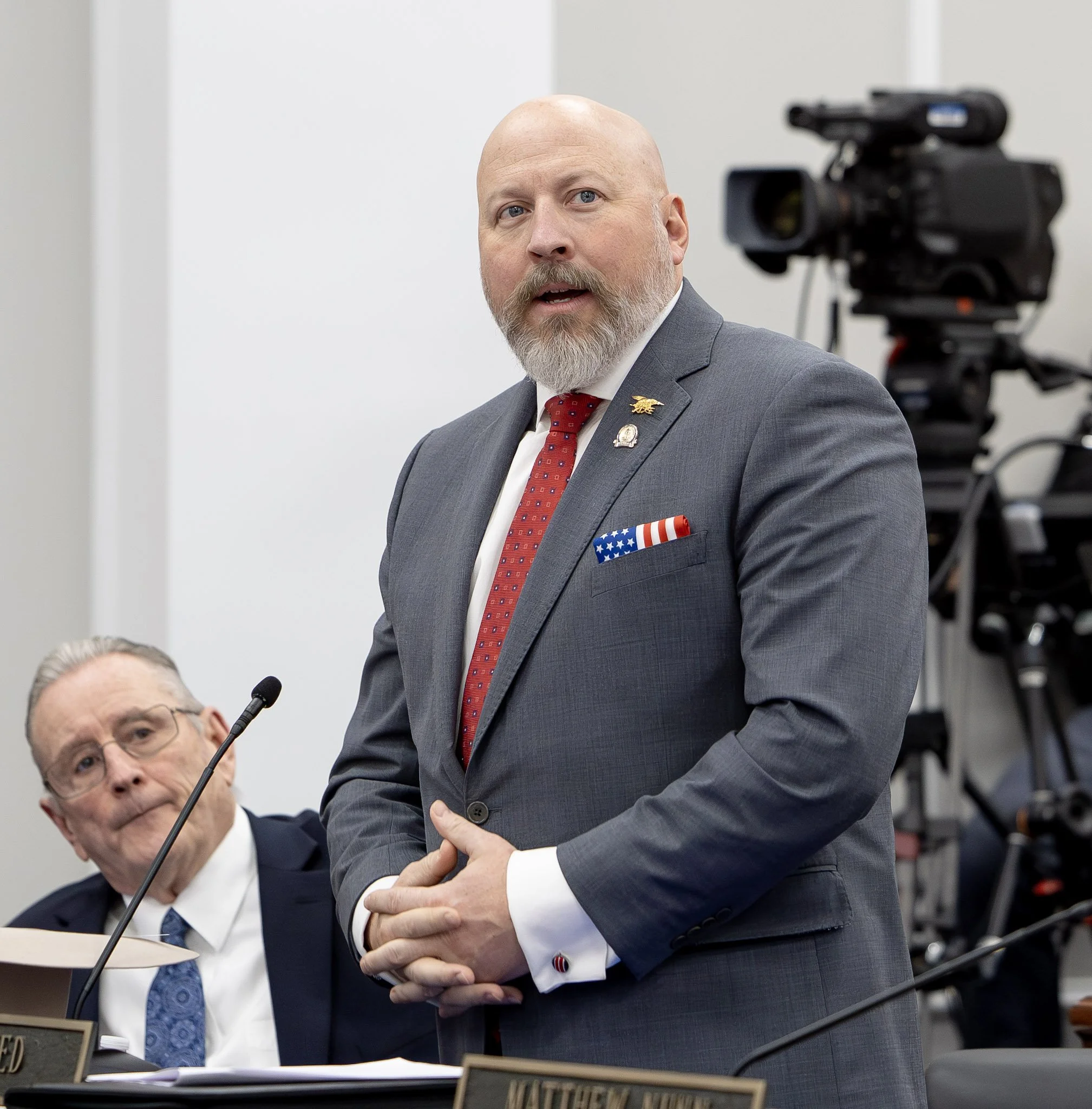
This legislation establishes the Nuclear Reactor Site Readiness Pilot Program. Carroll’s proposal seeks to accomplish many things, including state-backed funding for nuclear projects by assisting with federal permits—investing up to $25 million per approved project but ensuring taxpayer protection through surety bonds and milestone-based repayment. SB 57 would require communities to be “nuclear-ready” and final authorization for a project would remain with the Kentucky General Assembly.

The Nuclear Reactor Site Readiness Pilot Program organizes applications for permits and operating licenses, while also forming partnerships between the state, utilities and private-sector partners.

“Other states like Texas and Tennessee have already made significant investments in nuclear development, so Kentucky must stay competitive amid nationwide growth of advanced reactors,” Carroll said. “With no negative effect on taxpayers, this bill will allow our commonwealth to initiate nuclear generation, and we are positioned to bring tens of billions of dollars to our state if we make the investments we need to make today.”

Carroll says the pilot program would also create long-lasting economic opportunities in numerous regions across the state. He continues to advocate for funding support in the biennial budget, which is currently in free conference committee. The latest proposed budget provides access to necessary government expenditure funding of up to $25 million per project to support the siting and development of nuclear energy projects. 

The bill ties early cost recovery to large industrial users rather than households, shielding residential consumers from bearing the burden of development.

SB 57 was carried in the House by Rep. Randy Bridges, R-Paducah, who serves as a member of the Kentucky Nuclear Energy Development Authority alongside Carroll.

In presenting the bill, Bridges emphasised that Kentucky's competition, and its future, is in nuclear energy. He said the mission is to make Kentucky competitive for nuclear projects and the major industrial investments reshaping the national economy.

Find a full timeline and history of Carroll’s efforts to champion nuclear energy development in the commonwealth, along with the previous release from the Senate Majority Caucus detailing the original version of SB 57, by clicking here.

GENERAL ASSEMBLY GIVES FINAL PASSAGE TO WEST BILL NULLIFYING DEFICIENT ADMINISTRATIVE REGULATIONS

GENERAL ASSEMBLY GIVES FINAL PASSAGE TO WEST BILL NULLIFYING DEFICIENT ADMINISTRATIVE REGULATIONS

FRANKFORT, Ky. (March 26, 2026) — The Kentucky General Assembly has given final passage to Senate Bill (SB) 65, legislation sponsored by Sen. Steve West, R-Paris, that nullifies several administrative regulations identified as deficient through the legislature’s oversight process.

West serves as co-chair of the statutory Administrative Regulation Review Subcommittee (ARRS), which reviews regulations issued by state agencies to ensure they comply with statutory authority and reflect the intent of the Kentucky General Assembly.

SB 65 is designated as the legislature’s annual measure addressing regulations flagged during the review process. This year’s bill includes regulations related to Medicaid pharmacy policy and tobacco and vapor retailer licensing that raised concerns among lawmakers during committee review.

The legislation also reinforces the General Assembly’s authority to review administrative regulations and prevents agencies from reissuing regulations that are identical or substantially similar to those nullified for a specified period.

“As co-chair of the Administrative Regulation Review Subcommittee, I work each year to ensure state agencies implement the laws passed by the General Assembly as intended,” West said. “Senate Bill 65 reflects that ongoing responsibility and helps ensure regulations remain within the authority granted by statute.”

The bill includes an emergency clause and will take effect immediately upon becoming law.

SB 65 now heads to the governor for consideration. 
Learn more about bills, committees and other important updates on the 2026 Regular Session at www.kylegislature.gov.

SENATE APPROVES COLLABORATIVE PLAN TO SUPPORT KENTUCKY STATE UNIVERSITY

SENATE APPROVES COLLABORATIVE 

PLAN

TO SUPPORT KENTUCKY STATE UNIVERSITY

Senate Bill 185, offering a transformative reimagining of Kentucky's only public historically black college, moves to the state House for consideration

FRANKFORT, Ky. (March 26, 2026) — The Senate approved legislation on Thursday aimed at strengthening Kentucky State University (KSU), marking a collaborative step forward to support the commonwealth’s only historically Black university and position it for long-term success. Senate Bill (SB) 185 holds the support of KSU President, Dr. Koffi Akakpo and Council on Postsecondary Education President, Dr. Aaron Thompson.

The measure, sponsored by Senate Budget Chair Sen. Chris McDaniel, R-Ryland Heights, reflects ongoing coordination between legislative leaders, university officials and higher education stakeholders to address current challenges while building a stronger foundation for the future. The proposal is designed to support improved financial stability, operational transparency and long-term planning at KSU, while ensuring the university remains focused on its core mission of serving students and expanding opportunity. 

The detailed provisions of SB 185 are outlined below.


In explaining the bill, McDaniel expressed his gratitude for where stakeholders have arrived and noted that the future of KSU was uncertain at the start of the 2026 Legislative Session. 

"After spending time with Dr. Akakpo, reviewing the challenges at the university and hearing his vision for the future, we understand now is not the time to give up on KSU," McDaniel said. "SB 185 reflects a partnership redefining what this institution can be for our commonwealth. It recognizes the importance of a strong, vibrant HBCU in Kentucky, sets high standards and expresses our confidence in Dr. Akakpo's leadership. Together, we believe the university can return to the success it once knew."

Collaborative reimagining and bipartisan support

Stakeholders say the bill reflects months of review and engagement on how KSU can best and most realistically move forward and reimagine its role in the lives of the students it serves. Thompson and CPE issued a statement on SB 185 on Wednesday:

"This vision represents an opportunity to build a targeted polytechnic university while honoring KSU's historic mission and legacy," the statement read. "The legislation is the result of thoughtful collaboration among legislative leadership in both chambers, along with leadership at KSU and the council. Together, our work reflects a shared commitment to aligning postsecondary education with Kentucky's evolving workforce and economic needs, while preserving the enduring strengths that make KSU an important part of our state's future." 

Members of the Senate Democratic Caucus spoke in favor of SB 185 on Thursday. 

"We have an ability to have a new start and for KSU to be even more relevant in the future," Sen. Gerald Neal, D-Louisville and KSU alumnus, said in explaining his support for the bill. 

Neal said he sees this effort as a way to retain KSU's land-grant status, which dates back to the 19th century.

Sen. Keturah Herron, D-Louisville, voted in favor of the bill and described the status of KSU as a "state of emergency," and encouraged alumni to come together as a collective to ensure KSU is the premier university it can be. 

"I believe this is the best path forward for Kentucky State University," Herron said. 

In his closing remarks on the floor, McDaniel recognized Neal and Arnold Simpson, who was the first African-American to represent northern Kentucky in the state House of Representatives. Simpson served for 24 years. 

"These two people in particular are both colossal figures in the history of the General Assembly, and are also legislative mentors of mine," McDaniel said. "They have displayed not only the utmost of statesmanship, but also of gentlemanly conduct, and I really look up to them." 


Provisions of SB 185 include the following.

Empowers leadership to implement reforms and collect debts

As a result of the bill, Akakpo is authorized to implement reforms, manage campus operations, and make employment decisions to stabilize and strengthen the institution. The bill also empowers KSU to collect debts owed to the university and refer them to the Kentucky Department of Revenue (DOR). The bill stipulates that DOR must intercept the debts owed to KSU.

Provides for a transformational institutional reset

The proposed measure enables a transformational institutional reset at KSU while preserving its status as Kentucky’s only public historically Black land-grant institution, aligning its future with a workforce-focused mission. 

Advances a polytechnic, workforce-focused model

The measure establishes a transition toward a polytechnic model focused on applied sciences and career-aligned programs. It directs the university's board of regents to work with the Kentucky Council on Postsecondary Education (CPE) to conduct a thorough review of all academic programs. It expands access through online education opportunities and narrows academic focus to align the university with long-term sustainability. 

For five years beginning with the 2026-27 academic year—and excluding areas of study that are exclusively online, in the college of education or determined by CPE to be necessary for KSU’s mission as a polytechnic institution—KSU may offer no more than 10 academic areas of study

Strengthens student success and accountability standards

Under SB 185, new standards are set for students seeking admission to KSU, including a minimum cumulative unweighted high school grade point average of 2.5 and a composite ACT score of at least 18. Further, the bill stipulates that any individual with a balance owed to KSU in excess of $1,000 and more than 30 days past due shall not be admitted or re-admitted to the university or participate in any courses, seminars or programs. 

Establishes financial exigency and enhanced oversight

SB 185 officially declares a state of financial exigency resulting from past leadership failures and mismanagement. It maintains the existing oversight structure, including the CPE approval requirement over expenditures. 

A Senate floor amendment was adopted to the bill, raising the threshold to expenditures over $20,000.

Strengthens financial accountability and transparency

Further, the bill bolsters financial accountability by requiring balanced operations, prohibiting deficit spending, implementing EMARS financial tracking and enhancing real-time oversight.

Enhances oversight and reporting requirements

The bill's provisions require regular financial and operational updates to the CPE and the General Assembly. KSU must provide monthly reports on university finances to CPE in a format to be determined by CPE, and the council will provide quarterly updates to the General Assembly and the governor.

Establishes accountability for campus organization

McDaniel’s measure requires campus organizations and affiliated groups to meet updated expectations for recognition and alignment with university policies. 

By July 1, each fraternity or sorority must reapply to KSU for official recognition of the organization’s charter. If the KSU Board of Regents does not reaffirm the charter by August 1, the charter's recognition is revoked. 

Addresses legacy financial obligations

A provision of the bill is specifically designed to assist KSU in addressing an existing, burdensome legacy financial agreement and to incentivize renegotiation or restructuring of an existing contract. 

Proposes strategic investment in the university’s future

McDaniel, along with House and Senate leaders, is currently in conference committee discussions regarding the state’s next two-year spending plan, which includes general funds support for the commonwealth’s postsecondary institutions. 

Despite at least one misleading headline, there are no cuts to Kentucky State University’s funding in the proposed state budget. As Senate Budget Chair Chris McDaniel stated during the bill's committee presentation on Wednesday, the biennial budget will hold KSU's base funding steady and protect its core operations. In addition, the university’s top infrastructure priority, a new health sciences building, is positioned to receive authorized bond funding support in the second year of the budget, contingent on stable financial conditions. Discussions are ongoing about additional funding for asset preservation and support for KSU during this transition period.

SB 185 now advances to the House for consideration.

GENERAL ASSEMBLY APPROVES STORM BILL TO STRENGTHEN AND STREAMLINE CASA PROGRAM OPERATIONS

GENERAL ASSEMBLY APPROVES STORM BILL TO STRENGTHEN AND STREAMLINE CASA PROGRAM OPERATIONS

Legislation supporting court-appointed special advocate programs heads to governor’s desk

FRANKFORT, Ky. (March 26, 2026) —  Legislation sponsored by Sen. Brandon Storm, R-London, to update and streamline Kentucky’s Court-Appointed Special Advocate (CASA) program requirements has cleared the General Assembly and now heads to the governor’s desk for final consideration.

Senate Bill (SB) 17 makes several targeted updates to statutes governing CASA programs, which recruit and train volunteers to advocate for children involved in abuse, neglect, and dependency cases before Kentucky courts.

The legislation reduces the minimum number of board members required for local CASA programs from 15 to 12, helping communities maintain effective local leadership while easing administrative hurdles that can make it difficult for smaller programs to sustain volunteer boards.

SB 17 also updates statutory language to reference the Department for Community Based Services (DCBS) when outlining restrictions on employees who may not serve as CASA volunteers or staff. The bill removes outdated references to national CASA standards while maintaining oversight through Kentucky law and the Kentucky CASA Network.

Storm said the measure is designed to help CASA programs remain focused on their core mission of advocating for vulnerable children navigating the court system.

“CASA volunteers play a vital role in our courts by helping ensure the best interests of vulnerable children are represented throughout the legal process. Senate Bill 17 makes practical updates that help local programs continue recruiting volunteers and maintaining strong leadership so they can stay focused on advocating for children who need support the most.”

The legislation also includes technical and conforming updates to related child welfare statutes to ensure consistency across Kentucky law.

Rep. Stephanie Dietz, R-Edgewood, who carried the bill in the House of Representatives, said:

“This bill is an important step in continuing to provide children living through unimaginable circumstances a voice. By formally recognizing the Court Appointed Special Advocate (CASA) Network in statute, streamlining local boards to meet community needs, and updating program standards under state oversight, we strengthen CASA’s ability to protect children and ensure their safety.” Rep. Stephanie Dietz (R-Covington)

SB 17 received bipartisan support in both chambers and now awaits the governor’s signature.

Learn more about bills, committees, and other important updates on the 2026 Regular Session at www.kylegislature.gov.

HOWELL SENATE BILL 158 ACHIEVES FINAL PASSAGE

HOWELL SENATE BILL 158 ACHIEVES FINAL PASSAGE

Bill provides clearer guidelines around unnecessary, hidden costs when purchasing a vehicle

FRANKFORT, Ky. (March 25, 2026)— Senate Bill (SB) 158, sponsored by Senate Agricultural Committee Chair Jason Howell, R-Murray, achieved final passage and will be delivered to the governor for signature.

SB 158 will protect Kentucky consumers by establishing clear standards for optional financial products offered when buying a vehicle.

The measure ensures that add-on products such as debt cancellation coverage or vehicle value protection plans, remain strictly optional for consumers. These products must now be clearly disclosed and priced separately from loan interest, preventing lenders or dealers from making them a condition of financing or completing a vehicle sale.

A House Committee Substitute strengthened the bill by clarifying that vehicle value protection agreements are not insurance products and must be disclosed. The updated version also brings these agreements under enforcement provisions of the Kentucky Consumer Protection Act and establishes additional regulatory standards to ensure transparency and accountability.

“Buying a vehicle is already a significant decision, and this bill helps make that process clearer and less stressful by ensuring straightforward pricing, full disclosure and the freedom to choose what’s right for each individual without hidden costs or unnecessary extras,” Howell said. “SB 158 is about transparency as a consumer protection measure to keep Kentuckians from being pressured into additional costs when they are already making a major purchase.“

The legislation also creates a new regulatory framework for personal property insurance, including limits on coverage, consumer disclosure requirements, and oversight by the Kentucky Department of Insurance.

“This measure puts common-sense protections in place for consumers,” Rep. Matt Lockett, R-Nicholasville. By setting clear standards for optional vehicle financial products, we help people manage risks from wear, damage, or unexpected costs while making sure these products are fair and transparent.” 

The bill establishes consistent standards for contracts and will apply to all new agreements beginning Jan. 1, 2027.

REED’S BILLS TO REHIRE EXPERIENCED TROOPERS, PROVIDE FOR OFF-DUTY EMPLOYMENT PASSES OUT OF HOUSE COMMITTEE

REED’S BILLS TO REHIRE EXPERIENCED TROOPERS, PROVIDE FOR OFF-DUTY EMPLOYMENT PASSES OUT OF HOUSE COMMITTEE

SB 102, SB 278, clear next legislature hurdle, will boost public safety and ease workforce shortages

FRANKFORT, Ky. (March 25, 2026)—Two bills sponsored by Sen. Aaron Reed, R-Shelbyville, passed out of the House Veterans, Military Affairs, & Public Protection Committee Tuesday. 

SB 102 will allow retired Kentucky State Police (KSP) troopers previously appointed to the Trooper R Class or Commercial Vehicle Enforcement R Class to return to duty, offering a practical solution to strengthen public safety and address statewide staffing shortages.

The other measure, SB 278, authorizes certain types of law enforcement-related off-duty employment for troopers and establishes formal policies and procedures governing that work.

Troopers will be able to use uniforms and equipment, when troopers are working in an off-duty capacity. The measure ensures off-duty work remains professional, transparent and consistent across the agency while helping meet public safety needs in communities across the commonwealth.

Reed, a veteran United States Navy SEAL, said both bills reinforce the valuable role trained troopers can play when returning to service after retirement or providing security and other services outside their regular duties.

“We’re strengthening public safety by expanding opportunities for retired troopers to continue serving their communities,” Reed said. “With SB 278, we’re establishing a clear, consistent standard for off-duty employment across the Kentucky State Police to ensure that work reflects the high expectations of those who wear the uniform.”

SB 278 clarifies that troopers may use uniforms, equipment and motor vehicles when engaged in approved off-duty employment and directs agency leadership to establish comprehensive policies to ensure accountability and oversight.

To follow the progress of either of these bills and other legislative updates, visit Legislature.ky.gov.

SENATE COMMITTEE ADVANCES COLLABORATIVE PLAN TO SUPPORT KENTUCKY STATE UNIVERSITY

SENATE COMMITTEE ADVANCES COLLABORATIVE 

PLAN TO SUPPORT KENTUCKY STATE UNIVERSITY

FRANKFORT, Ky. (March 25, 2026) — The Senate Appropriations and Revenue Committee has advanced legislation aimed at strengthening Kentucky State University (KSU), marking a collaborative step forward to support the commonwealth’s only historically Black university and position it for long-term success.

“I want to thank the leadership of the Senate and the House, and Chairman McDaniel, for helping us reach this point," Akakpo said. "The path here has not been easy, but we have found a way forward together. The work ahead will require your continued support as we reposition Kentucky State University to be one of the country's premier HBCUs. The past two years have been difficult, but I see the light at the end of the tunnel, and I am confident good things are ahead for this institution.”

The measure, sponsored by Senate Budget Chair Sen. Chris McDaniel, R-Ryland Heights, reflects ongoing coordination between legislative leaders, university officials and higher education stakeholders to address current challenges while building a stronger foundation for the future. The proposal is designed to support improved financial stability, operational transparency and long-term planning at KSU, while ensuring the university remains focused on its core mission of serving students and expanding opportunity.

Provisions of SB 185 include the following.

Empowers leadership to implement reforms and collect debts

As a result of the bill, Alakpo is granted targeted authority to implement reforms, manage campus operations and make employment decisions necessary to stabilize and strengthen the institution [Section 2, (5)]. The bill also empowers KSU to collect debts owed to the university and to refer those debts to the Kentucky Department of Revenue (DOR) [Section 4 (1) (a-c)]. The bill stipulates that DOR must intercept the debts owed to KSU [Section 4 (2)].

McDaniel and many others have expressed high confidence in Akakpo’s ability and willingness to lead the university into a new era. Akakpo has emphasized the importance of partnership and shared commitment in moving the university forward

In a recent floor speech, McDaniel commended the leadership and dedication he has witnessed in Akakpo

“Dr. Akakpo is leading Kentucky State with integrity and focus under some of the most challenging circumstances imaginable, and his work deserves our full support,” McDaniel acknowledged. “To those who have not met Dr. Akakpo nor seen what he is doing at Kentucky State, you are missing a leader who is performing admirably under some historically daunting circumstances.”

Provides for a transformational institutional reset

The proposed measure enables a transformational institutional reset at KSU while preserving its status as Kentucky’s only public historically Black land-grant institution, aligning its future with a workforce-focused mission. 

Advances a polytechnical, workforce-focused model

The measure establishes a transition toward a polytechnical model focused on applied sciences and career-aligned programs [Section 1 (1)]. It directs the university's board of regents to work with the Kentucky Council on Postsecondary Education (CPE) to conduct a thorough review of all academic programs. It expands access through online education opportunities and narrows academic focuses to align the university with long-term sustainability [Section 2 (1)]

For five years beginning with the 2026-27 academic year—and excluding areas of study that are exclusively online, in the college of education or determined by CPE to be necessary for KSU’s mission as a polytechnical institution—KSU may offer no more than 10 academic areas of study [Section 2 (4) (a-c)]. 

Strengthens student success and accountability standards

Under SB 185, new standards are set for students seeking admission to KSU, including a minimum cumulative unweighted high school grade point average of 2.5 and a composite ACT score of at least 18 [Section 3 (1) (a-b)]. Further, the bill stipulates that any individual with a balance owed to KSU in excess of $1,000 and more than 30 days past due shall not be admitted or re-admitted to the university or participate in any courses, seminars or programs [Section 3 (2)]

Establishes financial exigency and enhanced oversight

SB 185 officially declares a state of financial exigency resulting from past leadership failures and mismanagement [Section 3 (3)]. It maintains the existing oversight structure, including the CPE approval requirement over expenditures.

Strengthens financial accountability and transparency

Further, the bill bolsters financial accountability by requiring balanced operations, prohibiting deficit spending, implementing EMARS financial tracking and enhancing real-time oversight [Section 1 (4)].

Enhances oversight and reporting requirements

The bill's provisions require regular financial and operational updates to the CPE and the General Assembly. KSU must provide monthly reports on university finances to CPE in a format to be determined by CPE, and the council will provide quarterly updates to the General Assembly and the governor [Section 1 (3) (b)].

Establishes accountability for campus organization

McDaniel’s measure requires campus organizations and affiliated groups to meet updated expectations for recognition and alignment with university policies. 

By July 1, each fraternity or sorority must reapply to KSU for official recognition of the organization’s charter. If the KSU Board of Regents does not reaffirm the charter by August 1, the charter's recognition is revoked [Section 6]

Addresses legacy financial obligations

A provision of the bill is specifically designed to assist KSU in addressing an existing, burdensome legacy financial agreement and to incentivize renegotiation or restructuring of an existing contract [Section 1 (6)]. 

Sen. Gerald Neal, D-Louisville, voted in favor of the bill.

"I think this is a huge opportunity here," Neal said in committee. "We have the right leader in place, we have strong support from the Council on Postsecondary Education and now we need the right policies to get to the objective we all embrace. I have confidence in Dr. Akakpo's leadership and his committement to the future of this instituion. I encourage continued partnership so we can achieve the results we want for Kentucky State."

Sen. Cassie Chambers Armstrong, D-Louisville, commended stakeholders "trying to achieve outcomes together."

Collaborative reimagining

Stakeholders say the bill reflects months of review and engagement on how KSU can best and most realistically move forward and reimagine its role in the lives of the students it serves. SB 185 is a meaningful expression of the legislature’s commitment to providing the university with the opportunity to course-correct and thrive by providing the tools and support needed to usher in long-overdue reforms. 

CPE President Aaron Thompson joined the committee’s discussion on SB 185 and recognized McDaniel and the leadership of the majority and minority caucuses for their work to craft SB 185.

Like McDaniel and many others, Thompson also commended Akakpo's leadership.

“Working with Dr. Akakpo has been a blessing, and his leadership at Kentucky State University is important as we move forward," Thompson said. "Building a strong campus means investing in both the physical infrastructure and the human infrastructure, and I appreciate the General Assembly’s willingness to partner in that effort.”

McDaniel notes it was a priority to bring people together to develop solutions that support students, the university and the commonwealth as a whole.

“This is about doing what is needed to help KSU survive and thrive,” McDaniel said. “With these steps, I believe we are providing structure and support. “I have a fundamental belief in Dr. Akakpo and that he will make the most of this opportunity and will set KSU on a course to a brighter future.”

Proposes strategic investment in the university’s future

McDaniel, along with House and Senate leaders, is currently in conference committee discussions regarding the state’s next two-year spending plan, which includes general funds support for the commonwealth’s postsecondary institutions. 

The state budget is expected to hold KSU's funding steady, and McDaniel has proposed budget language to support campus asset preservation, the transition to a polytechnical institution and the funding to support KSU’s highly prioritized health sciences building, contingent on clean financial reports.

SB 185 now advances to the Senate floor for consideration.