GIRDLER BILL TO UPDATE SPEECH-LANGUAGE PATHOLOGY LICENSURE PASSES SENATE

GIRDLER BILL TO UPDATE SPEECH-LANGUAGE PATHOLOGY LICENSURE PASSES SENATE

SB 177 modernizes licensure standards and aligns Kentucky law with interstate compact requirements

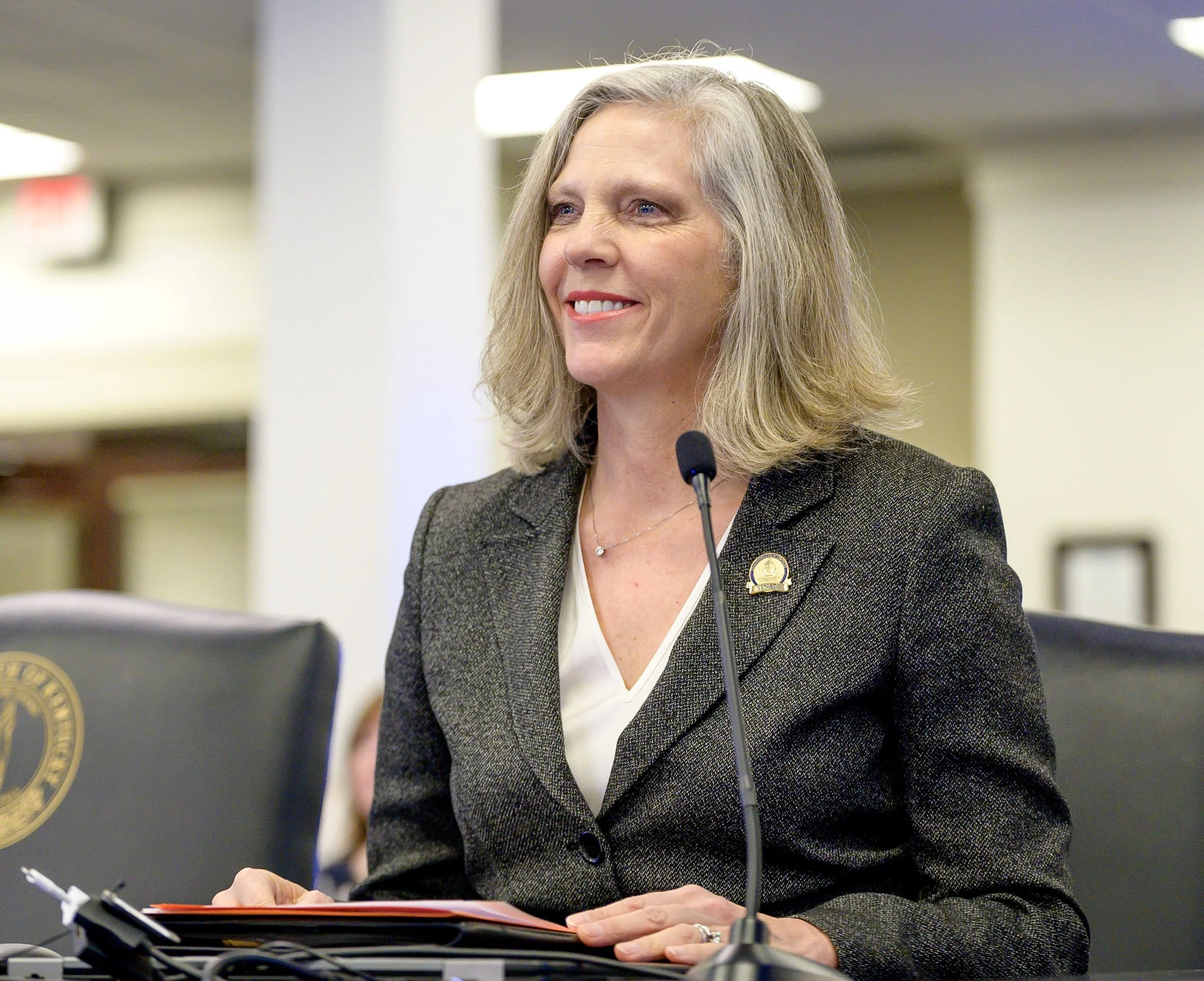
FRANKFORT, KY. (March 6, 2026) — Legislation sponsored by Sen. Rick Girdler, R-Somerset, to modernize Kentucky’s licensing framework for speech-language pathologists and assistants has passed the Kentucky Senate. 

Senate Bill (SB) 177 updates statutes governing licensure requirements for speech-language pathology professionals and makes technical changes to ensure Kentucky law reflects current professional standards and workforce practices.

The bill removes outdated statutory language requiring postgraduate professional experience to be completed under the supervision of a Kentucky-licensed speech-language pathologist, while maintaining oversight by the Kentucky Board of Speech-Language Pathology and Audiology.

The legislation also clarifies requirements for professionals seeking to practice under the Audiology and Speech-Language Pathology Interstate Compact, ensuring applicants complete and document at least three months of postgraduate professional experience as determined by the board.

Girdler said the measure helps ensure Kentucky’s licensure statutes remain current while maintaining strong professional standards.

“This legislation helps update our statutes so they reflect current professional practices while maintaining appropriate oversight,” Girdler said. “Speech-language pathologists provide critical services to children and adults across Kentucky, and it’s important that our licensing framework supports that workforce while maintaining clear standards.”

SB 177 now moves to the House of Representatives for further consideration.

FROMMEYER JOINT RESOLUTION ESTABLISHING KENTUCKY AS FOOD IS MEDICINE STATE SERVED UP TO HOUSE HEALTH SERVICES COMMITTEE

FROMMEYER JOINT RESOLUTION ESTABLISHING KENTUCKY AS FOOD IS MEDICINE STATE SERVED UP 

TO HOUSE HEALTH SERVICES COMMITTEE

Nationally recognized approach is leading Kentucky to healthier lives and driving a more robust rural economy

FRANKFORT, Ky. (Feb. 27, 2026) — Sen. Shelley Funke Frommeyer, R-Alexandria, successfully testified before the House Health Services Committee on Senate Joint Resolution (SJR) 23, groundbreaking legislation declaring Kentucky’s commitment to a “Food Is Medicine” strategy that strengthens both patient health and rural economies yesterday.

SJR 23 is the first Food Is Medicine resolution of its kind in the nation. While other states have pursued program-specific legislation focused largely on Medicaid waivers, Kentucky’s approach is a statewide declaration aligning policy, education and innovation around the role of nutrition and local agriculture in improving health outcomes.

Kentucky’s Food Is Medicine initiative brings together the Kentucky Department of Agriculture and the Kentucky Hospital Association to create impact across industries. The initiative is designed to encourage and enable private-sector partnership in community health, workforce wellness and chronic disease management by addressing the root causes of diet-related risk factors.

“Our strategy is about educating the commonwealth on what Food Is Medicine means and how it’s already working in Kentucky,” Frommeyer said. “By using local food as a primary health intervention, we can improve patient outcomes while promoting rural prosperity.”

The resolution positions Kentucky to follow the newest federal guidance as a best-in-class, forward-leaning leader aligned with agriculture and health care. The goal is straightforward: better health outcomes through evidence-based clinical nutrition guidance paired with agricultural economic development that drives rural prosperity.

SJR 23 is a direct result of the work of the Make America Healthy Again (MAHA) Kentucky Task Force that met in the 2025 Interim.  

Kentucky’s model was featured as an example for federal duplication in the America First Policy Institute’s “Driving Responsible Nutrition Policy” paper released in May 2025 and has inspired similar conversations in neighboring West Virginia, Virginia and Ohio.

“We were so pleased to learn about the successful passage of the Kentucky Food is Medicine resolution,” said Martin Tull of the American College of Lifestyle Medicine. “It stands as a unique act of leadership to help unify local food conversations with the health care innovation work underway.”

Frommeyer said the resolution ensures Kentucky remains proactive as federal agencies continue advancing nutrition-focused health strategies.

“This is about leading, not following,” she said. “Kentucky is demonstrating that agriculture and health care are not separate conversations but together, they are a powerful strategy for healthier families and stronger rural communities.”

HB1 WILL BRING MORE FEDERAL EDUCATION DOLLARS TO KENTUCKY’S PUBLIC SCHOOLS

HB1 WILL BRING MORE FEDERAL EDUCATION DOLLARS TO KENTUCKY’S PUBLIC SCHOOLS

Kentucky failing to opt in to federal tax credit program will send Kentucky’s education dollars to other states

This week the General Assembly passed House Bill (HB) 1, legislation for Kentucky to formally opt-in and participate in the federal education tax credit program.  

Under this program, taxpayers may contribute up to $1,700 to a scholarship granting organization (SGO). Those organizations then provide scholarships or assistance to families with children in K-12 public or private schools for approved educational expenses such as tuition, fees, tutoring, special needs services, books, supplies, technology, and transportation. In return, the taxpayer receives a dollar-for dollar federal tax credit, up to $1,700, reducing what they would otherwise send to Washington. 

Federal law requires states to affirmatively opt in to participate. To date, 23 governors have chosen to do so, and additional states are expected to follow. Even in states that decline to opt in, taxpayers may still contribute to SGOs in participating states and receive the federal tax credit, meaning those charitable dollars would simply flow elsewhere. 

This exciting opportunity is receiving bipartisan support, as evidenced by Colorado Governor Jared Polis, also a Democrat and potential 2028 presidential candidate:

“I think most, if not all, Democratic governors will get there as they learn about the chance to boost charitable contributions in their state.  If there are states that don’t, for some reason, people in those states can still give to charities in states like Colorado.  In other words, taxpayers everywhere will be able to get the tax credit.  But if a particular state doesn’t opt in, then the donors in that state would be giving out of state.  I do believe states will opt in as they see the opportunity for additional donations to help at-risk kids and middle-class kids in their state…I think many of them will choose to do it because it’s free money.” 

The federal education tax credit presents a historic opportunity for Kentuckians to direct dollars that would otherwise go to Washington toward students and families in their own communities. Children in struggling schools could receive additional support. Public school leaders and advocates may establish SGOs to generate new scholarship funding and resources. As one House member, a public school teacher, noted during debate, “If we are very intentional, we can ensure that this money can transfer to our public education students…it’s really powerful.” 

I am grateful that federal law provides Kentucky a clear, voluntary option to participate, and the General Assembly moved swiftly to ensure we do not leave this opportunity on the table. If we fail to act, those charitable dollars will simply flow to other states. I urge the Governor to sign HB 1 and encourage leaders statewide to help educate families about its potential. When fully understood and embraced, this program can provide meaningful support for Kentucky students and families.

HOWELL’S SENATE BILL 157 EARNS PASSAGE OUT OF THE FULL SENATE

HOWELL’S SENATE BILL 157 EARNS 

PASSAGE OUT OF THE FULL SENATE

Bill brings Kentucky in line with federal standards

FRANKFORT, Ky. (Feb. 26, 2026) — Senate Bill (SB) 157, sponsored by Sen. Jason Howell, R-Murray, will clarify Kentucky law governing certain mortgage loans and ensure greater consistency with federal lending standards. SB 157 passed off the Senate floor today and may now be taken up by the House of Representatives.


Under the Old Kentucky law, the cost of buying down your interest rate was included as a cost under the fee cap, making it harder for the home buyer to buy down your interest rate. under the federal qualified mortgage fee structure, the cost of buying down your interest rate is excluded from the cap, making it much easier for a consumer to buy down their interest rate on the front end. 


By aligning Kentucky statute with federal requirements, the measure promotes uniform standards in the lending process while maintaining important consumer protections.


“Clear and consistent lending standards are essential for both borrowers and lenders,” Howell said. “Senate Bill 157 aligns Kentucky law with federal guidelines, strengthens transparency in the mortgage process, and helps ensure consumers are protected while maintaining access to responsible lending options.”


SB 157 would amend Kentucky’s mortgage loan company and broker statute, one that has not been updated since 2008. Current Kentucky law states that there are limits of total net income generated by a lender and its affiliates to the greater of $2,000 or four percent of the total loan amount, which aligns with federal standards. This would apply to both first and second mortgages.


The bill applies to mortgage contracts entered into after its effective date, providing clarity for lenders and borrowers moving forward without affecting existing agreements.


SB 157 is part of Howell’s ongoing efforts to support sound financial policy and promote fair practices and stability in Kentucky’s housing market.


To stay updated on the next steps for SB 157, follow along at Legislative.ky.gov.

WHEELER’S RURAL ECONOMIC DEVELOPMENT BILL ADVANCES FROM SENATE COMMITTEE

WHEELER’S RURAL ECONOMIC DEVELOPMENT BILL ADVANCES FROM SENATE COMMITTEE

SB 197 strengthens tools to attract jobs to heritage communities across Kentucky

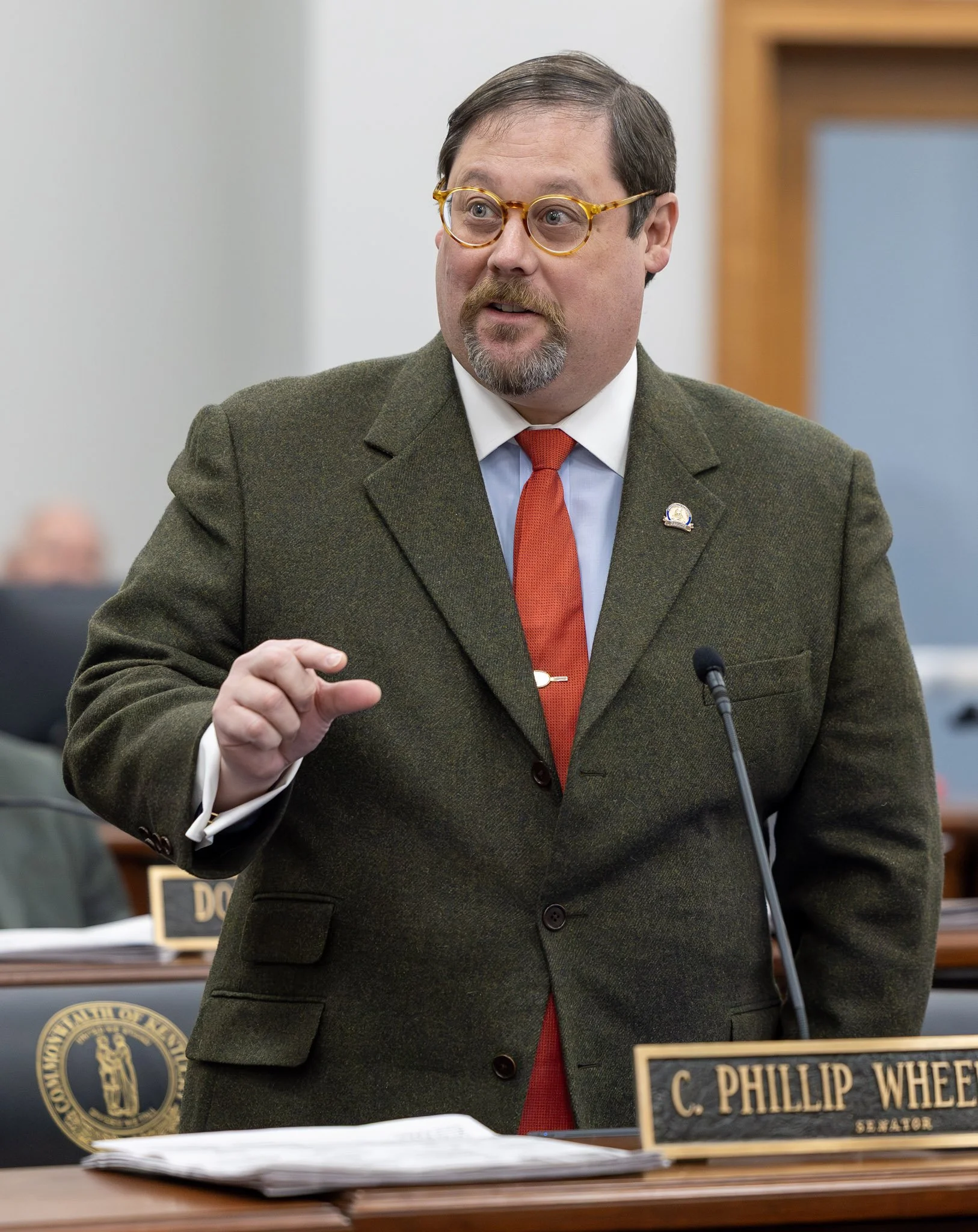
FRANKFORT, KY. (Feb. 26, 2026) —Senate Bill (SB) 197, sponsored by Sen. Phillip Wheeler, R-Pikeville, passed the Senate Economic Development, Tourism, and Labor Committee today with bipartisan support.

The measure creates a four-tier economic incentive structure designed to direct additional tools and flexibility to counties experiencing population loss and higher unemployment. The goal is to promote more balanced economic growth across Kentucky.

“Kentucky has seen record private-sector investment in recent years, but that growth has not been evenly distributed,” Wheeler said. “SB 197 gives our Cabinet for Economic Development the tools it needs to better compete for projects in rural communities and heritage counties that have faced long-term population and job loss.”

The outline of SB 197 emerged over the interim committee meetings and discussions between Wheeler, Senator Scott Madon, R-Floyd, and members of Eastern Kentucky’s House Delegation including Representatives John Blanton, R-Salyersville , Bobby McCool, R-Paintsville, Mitch Whitaker, R-Whitesburg, Scott Sharp, R-Ashland, and Aaron Thompson, R-Greenup. The legislators heard testimony in committee over the summer from OneEastKY Executive Director Colby Kirk and OneEast Board Chair Tyler Burkeand met on multiple occasions to work out the details of the SB 197, which is based on proven economic development initiatives tried in other states. Secretary Jeff Noel of the Kentucky Cabinet for Economic and his team provided additional suggestions following the roll-out of the bill to make the legislation even more robust for rural Kentucky.  

Under the legislation, counties would be ranked using a formula that combines five-year average unemployment data and population metrics. Based on those rankings, counties would fall into one of four tiers. Tier three and tier four counties would qualify as “heritage communities,” and receive enhanced incentive opportunities.

The bill restores the Kentucky Business Investment program’s wage assessment rate to maintain competitiveness and expands eligible industries beyond manufacturing to include research and development, corporate headquarters and other high-skill sectors. It also increases incentive caps and workforce training flexibility in qualifying communities.

Wheeler noted that eastern Kentucky alone has experienced significant population decline over the past several decades.

“If we do not take deliberate action, projections show that some of our largest counties could lose nearly half their population by mid-century,” Wheeler said. “This legislation is about giving rural Kentucky a fair shot. It is not a silver bullet, but it provides practical tools to attract investment and create opportunity.”

Secretary Jeff Noel of the Kentucky Cabinet for Economic Development testified in support of the measure, calling it a broader and more competitive economic development toolkit.

“When your toolbox is missing tools, it is difficult to fix anything,” Noel told the committee. “This legislation helps ensure we have the right tools to support communities across the commonwealth.”

SB 197 now advances for consideration by the full Senate.

Learn more about bills, committees, and other important updates on the 2026 Regular Session at www.legislature.ky.gov.

HOWELL’S SENATE BILL 214 STRENGTHENS DEPARTMENT OF AGRICULTURE’S ABILITY TO SECURE, MANAGE FUNDING

HOWELL’S SENATE BILL 214 STRENGTHENS DEPARTMENT OF AGRICULTURE’S ABILITY TO SECURE, MANAGE FUNDING

FRANKFORT, Ky. (Feb. 26, 2026) — Sen. Jason Howell, R-Murray, Senate Bill (SB) 214 enhancing Kentucky Department of Agriculture’s (KDA) ability to secure, administer and manage non-federal funds supporting farmers, agribusinesses and rural communities was passed out of the senate today and may now be taken up by the House of Representatives.


SB 214 authorizes KDA to accept nonfederal funds and grants from any public or private source that benefit its programs. It also clarifies the department’s authority to receive federal funds, commodities and other resources made available through acts of Congress, as well as funds appropriated by the Kentucky General Assembly.


“Agriculture is foundational to Kentucky’s economy, and this legislation ensures our Department of Agriculture has the clear authority and flexibility to pursue and manage funding from federal, state, and private partners,” Howell said. “By streamlining that process, we’re maximizing resources, strengthening our agricultural economy, and being proactive in supporting a vital industry and the rural communities that depend on it.”


SB 214 also ensures the department has clear authority to disburse funds according to state and federal law. It allows the department to accept and administer non-federal grants, gifts, donations, or devices from public or private sources to further support agriculture-related initiatives.


Under the bill, the commissioner of agriculture would be authorized to enter into agreements and carry out their terms with federal departments, as well as state and local public agencies.

“THIS ISN’T JUST A RESOLUTION, IT’S A REVOLUTION” MEREDITH’S MEDICAID REFORM MEASURE APPROVED BY HOUSE HEALTH SERVICES COMMITTEE

“THIS ISN’T JUST A RESOLUTION, IT’S A REVOLUTION”

MEREDITH’S MEDICAID REFORM MEASURE APPROVED BY HOUSE HEALTH SERVICES COMMITTEE

SCR 9 moves to full House for consideration 

FRANKFORT, Ky. (Feb. 26, 2026) — Senate Concurrent Resolution (SCR) 9, sponsored by Sen. Stephen Meredith, R-Leitchfield, was unanimously approved today by the House Standing Committee on Health Services after Meredith urged lawmakers to confront what he described as a health care cost crisis threatening Kentucky families and the state budget.


“This isn’t just a resolution, it’s a revolution,” Meredith told committee members. “If we continue down the same path, Medicaid costs will continue to rise while outcomes remain stagnant. We have to be willing to think differently.”

SCR 9 directs the Legislative Research Commission to procure an independent vendor to conduct a feasibility study on implementing an Accountable Communities for Health (ACH) Medicaid delivery model pilot project.

Since Kentucky transitioned to a managed care model in 2010, Medicaid enrollment has increased by roughly 50 percent. During that same period, program costs have surged by nearly 400 percent. Meredith argued that the current structure has created layers of bureaucracy, strained provider reimbursement and failed to produce meaningful improvements in population health.

“We are spending over $20 billion a year,” Meredith said. “Yet our providers are frustrated, our rural communities are struggling with access and we still rank near the bottom nationally in key health indicators. That tells me the system itself deserves a hard look.”

Under the current managed care structure, private companies administer Kentucky’s Medicaid benefits under contracts that guarantee a medical loss ratio of 90 percent — allowing up to 10 percent of contract value for administrative costs and profit. Meredith told lawmakers that while those companies are fulfilling their contractual obligations, their financial incentives are not aligned with reducing overall system costs.

“If the only way profits grow is when spending grows, then the incentives are working against us,” Meredith said. “We have to align financial incentives with improving health outcomes and lowering long-term costs.”

The proposed feasibility study would evaluate accountable care models operating in other states, assess opportunities to reduce administrative overhead, improve care coordination, and address social determinants of health. Meredith’s proposal envisions a locally driven, nonprofit, community-based structure that places providers and communities—not outside corporations—at the center of care decisions.

If implemented following the study, the pilot would be known as the “20 by 30 Accountable Care Pilot Project,” reflecting Meredith’s goal of achieving significant improvements in population health and measurable cost reductions by 2030.

Meredith emphasized that SCR 9 does not immediately dismantle the current system but instead ensures lawmakers have comprehensive, data-driven analysis before pursuing structural reforms.

“We cannot afford to be passive,” Meredith said. “If we improve the health of our population and reduce unnecessary bureaucracy, we can protect taxpayers, strengthen providers and put money back into Kentucky families’ pockets. But it starts with being willing to ask bold questions.”

SCR 9 now advances to the full Kentucky House of Representatives for further consideration.

Learn more about bills, committees, and other important updates on the 2026 Regular Session at www.kylegislature.gov.

SENATE COMMITTEE ADVANCES ADAMS’S SB 156 TO CLOSE REMAINING CHILD MARRIAGE LOOPHOLE

SENATE COMMITTEE ADVANCES ADAMS’S SB 156 

TO CLOSE REMAINING CHILD MARRIAGE LOOPHOLE

Survivor testimony emphasizes need for stronger enforcement of Kentucky’s child marriage ban

FRANKFORT, KY. (Feb. 26, 2026)— Senate Bill (SB) 156, sponsored by Sen. Julie Raque Adams, R-Louisville, passed the Senate Veterans, Military Affairs and Public Protection Committee this morning following powerful testimony from a survivor of child marriage.

SB 156 builds upon SB 48, the 2018 law sponsored by Adams that ended legal child marriage in Kentucky. While that law established 18 as the legal age for marriage, it included a limited judicial exception for 17-year-olds. According to testimony presented in committee, that exception has not been consistently followed and, in some cases, has been exploited.

SB 156 removes that remaining exception and establishes 18 as the clear, enforceable minimum age for marriage in Kentucky.

During the hearing, Donna Simmons, a survivor of generational child marriage and childhood trauma, shared her personal experience of being married as a minor and the long-term consequences that followed. Simmons described systemic failures across multiple institutions and emphasized how legal loopholes can enable abuse to continue under the cover of a marriage license.

“This is not theoretical,” Simmons told lawmakers. “This is my life.”

Adams said the legislation is focused on ensuring the law is clear and consistently enforced.


“Ending child marriage in 2018 was an important step for protecting our children, but what we have seen is that the remaining exception has not always been adhered to,” Adams said. “SB 156 simply closes that loophole and makes the law clear: marriage in Kentucky begins at 18.”

Committee members acknowledged the difficult testimony and expressed appreciation for Simmons’s willingness to speak publicly.

SB 156 now advances for consideration by the full Senate.

WHEELER’S WELDING SAFETY BILL PASSES SENATE

WHEELER’S WELDING SAFETY BILL PASSES SENATE

FRANKFORT, KY. (Feb. 26, 2026) —The Kentucky Senate has passed Senate Bill (SB) 98, legislation sponsored by Sen. Phillip Wheeler to strengthen safety and quality standards for structural steel welding across the Commonwealth.

SB 98 establishes clear statewide requirements to ensure structural steel welding on commercial and infrastructure projects is performed by properly tested and certified professionals and meets nationally recognized industry standards.

“Structural steel welding is foundational to the safety of our buildings and infrastructure,” Wheeler said. “This legislation ensures that when projects require nationally recognized welding codes, the work is performed by qualified professionals who meet those standards.”

Under the bill, welders performing structural steel welding on projects that specify industry welding codes must be tested and certified by an accredited facility or an individual certified through the American Welding Society. The measure also requires that welding work meet established national standards, including those developed by the American Society of Mechanical Engineers where applicable.

The legislation applies to commercial and large-scale structural projects and does not apply to welding performed by homeowners or farmers on their own property.

Wheeler noted the bill reinforces workforce quality while protecting public safety.

“When we set consistent expectations and uphold proven standards, we protect workers, businesses, and the public,” Wheeler said. “This is about ensuring quality work and long-term confidence in the structures our communities depend on every day.”

SB 98 now advances to the House of Representatives for consideration. 

Learn more about bills, committees, and other important updates on the 2026 Regular Session at www.kylegislature.gov.

MEREDITH’S PROVISIONAL MEDICAL LICENSE BILL PASSES SENATE HEALTH SERVICES COMMITTEE

MEREDITH’S PROVISIONAL MEDICAL LICENSE BILL PASSES SENATE HEALTH SERVICES COMMITTEE

FRANKFORT, Ky. (Feb. 25, 2026) — Senate Bill (SB) 137, sponsored by Sen. Stephen Meredith, R–Leitchfield, passed the Senate Health Services Committee this morning.

SB 137 creates a three-year provisional medical license to help attract experienced physicians to Kentucky, particularly in rural and underserved communities where provider shortages remain a persistent challenge.

The legislation allows qualified physicians who completed medical training outside the United States or Canada, have practiced for at least five years, and have secured employment with a licensed Kentucky health care sponsor to practice under a provisional license. After three years of good standing and continuous employment with the sponsoring entity, the provisional license automatically converts to a full, unrestricted medical license.

The Kentucky Board of Medical Licensure retains authority to revoke a provisional license if the physician loses sponsorship or engages in misconduct, preserving accountability and patient protection standards.

“Kentucky’s physician shortage is real, particularly in rural areas. SB 137 allows us to responsibly expand our workforce by recognizing experienced physicians who are already practicing safely elsewhere, while ensuring they meet Kentucky’s standards.”

SB 137 now moves to the full Senate for consideration.

Learn more about bills, committees, and other important updates on the 2026 Regular Session at www.kylegislature.gov.

STORM FILES SB 221 TO STRENGTHEN PENALTIES FOR ABUSE OF A CORPSE

STORM FILES SB 221 TO STRENGTHEN PENALTIES FOR ABUSE OF A CORPSE

FRANKFORT, KY. (Feb. 25, 2026) Sen. Brandon Storm, R-London, recently filed Senate Bill (SB) 221 to strengthen Kentucky law relating to abuse of a corpse and to ensure greater accountability in handling and final disposition of human remains. 


SB 221 amends KRS 525.120 to clarify and expand criminal penalties for individuals who violate the trust placed in them during funeral and burial arrangements. The bill makes it a Class D felony to knowingly accept payment for the preparation, burial, or cremation of a body and then deliberately fail to carry out those services in accordance with the contract.

The legislation also prohibits the purchase, sale, or transfer of a corpse or any part of a corpse for compensation once final disposition has been authorized through burial or cremation.

“When families entrust someone with the care of their loved one, that trust must never be violated,” Storm said. “This legislation strengthens accountability and ensures that those who exploit grieving families or mishandle human remains face serious consequences.”

Abuse of a corpse remains classified as a Class D felony under Kentucky law. SB 221 reinforces that standard and clarifies specific conduct that constitutes criminal behavior.


SB 221 has been filed and is pending further action by the Kentucky General Assembly. 

Learn more about bills, committees, and other important updates on the 2026 Regular Session at www.legislature.ky.gov.

WEST’S SB 162 PASSES SENATE TO REFORM KENTUCKY’S JUVENILE DIVERSION PROCESS

WEST’S SB 162 PASSES SENATE TO REFORM KENTUCKY’S JUVENILE DIVERSION PROCESS

FRANKFORT, Ky. (Feb. 25, 2026) — The Kentucky Senate has passed Senate Bill (SB) 162, sponsored by Sen. Steve West, R-Paris, to improve and streamline the state’s juvenile diversion process.

SB 162 removes the mandatory “Family Accountability, Intervention and Response (FAIR) Team” requirement in certain cases, primarily those involving status offenses such as habitual truancy, running away, and being beyond parental or school control. The FAIR Team model was established in 2014 with the goal of keeping children out of court and connecting families with community-based services.


West said that while the original intent was sound, the process has often become slow and inconsistent in practice.


“Over the years, we’ve listened carefully to superintendents, prosecutors and court officials who work in this system every day,” West said. “SB 162 is about making the process more responsive and more effective to ensure that students receive appropriate intervention sooner while maintaining diversion as a meaningful option.”


The bill preserves discretion for court designated workers to continue collaborating with parents, schools, and community partners when appropriate, but removes the requirement that a FAIR Team be convened in every applicable case.


SB 162 now moves to the House of Representatives for consideration.


Learn more about bills, committees and other important updates on the 2026 Regular Session at www.kylegislature.gov.

BLEDSOE'S PROPOSAL LOWERING COSTS AND CUTTING RED TAPE FOR SMALL CITIES APPROVED BY SENATE COMMITTEE

BLEDSOE'S PROPOSAL LOWERING COSTS AND CUTTING RED TAPE FOR SMALL CITIES APPROVED BY SENATE COMMITTEE

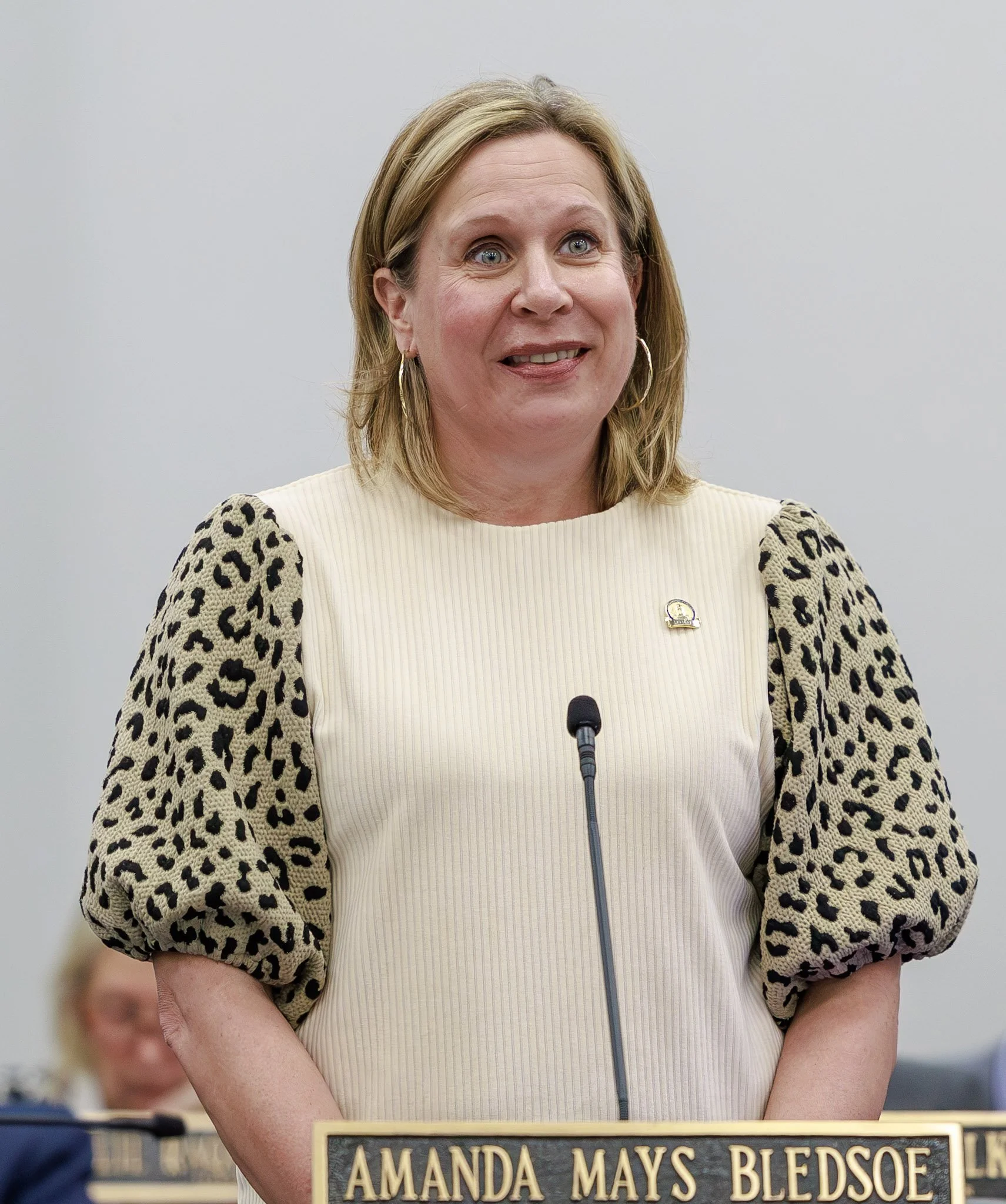
FRANKFORT, Ky. (Feb. 25, 2026) — The Senate State and Local Government Committee has approved Senate Bill (SB) 192, legislation sponsored by Sen. Amanda Mays Bledsoe, R-Lexington, that modernizes financial reporting requirements for Kentucky’s smaller cities while strengthening transparency and accountability.

SB 192 updates outdated one-size-fits-all mandates that require small municipalities to follow complex accounting standards designed for much larger governments.

Under current law, many smaller cities are subject to complex audit requirements designed for much larger governments. Bledsoe told the committee the existing approach has become increasingly costly, particularly as the number of certified public accountants available to perform municipal audit work has declined in recent years.

Bledsoe’s SB 192 allows cities receiving or expending less than $15 million annually from all sources to complete an agreed-upon procedures engagement in certain circumstances, performed by a certified public accountant or the Auditor of Public Accounts.To qualify, a city must not have been subject to a special examination in the prior fiscal year or the year to be audited and must not be required by state or federal law to undergo a more stringent audit.

Like traditional audits, agreed-upon procedures engagements must be completed and presented to the city’s legislative body by March 1, submitted to the Department for Local Government (DLG) by April 1 and published publicly. The measure also requires cities to publish a budget-to-actual comparison for the general fund and submit reports to the Auditor of Public Accounts.

As Senate Budget vice chair and a former member of the Lexington-Fayette Urban County Council, Bledsoe said she understands the pressure state mandates place on small communities.

“Taxpayers expect accountability, but they also expect common sense,” Bledsoe said. “When small cities divert limited resources to comply with rules designed for much larger governments, that money comes straight out of essential services. This bill protects transparency while giving local officials the flexibility to meet standards in a way that fits the size of their community and respects taxpayer resources.”

SB 192 establishes guardrails for agreed-upon procedures engagements, requires adherence to professional standards and maintains public reporting requirements. The bill authorizes the Auditor of Public Accounts to establish additional criteria through administrative regulation and allows DLG to step in when a city falls behind on required audits. It also includes a “catch-up” provision allowing cities more than two years behind on required audits or financial statements to regain compliance through an agreed-upon procedures engagement, subject to oversight by DLG.

Committee members voiced support for the bill.

Sen. Greg Elkins, R-Winchester and committee vice chair, called the legislation “long overdue” and said it would help smaller cities better manage accounting and audit costs while maintaining necessary oversight.

Senate Majority Caucus Chair Robby Mills, R-Henderson, also expressed support for the measure, noting his familiarity with municipal finance matters and emphasizing the importance of practical solutions for city governments.

The bill reflects collaboration and support from the Auditor of Public Accounts, the Kentucky League of Cities and the Kentucky Society of Certified Public Accountants.

SB 192, as amended by committee substitute, passed the Senate State and Local Government Committee and now advances to the full Senate for consideration during the 2026 Regular Session. Click here to find SB 192 in full. 

ELKINS LEGISLATION TO REQUIRE SOUND SCIENCE IN STATE REGULATIONS PASSES COMMITTEE

ELKINS LEGISLATION TO REQUIRE SOUND SCIENCE IN STATE REGULATIONS PASSES COMMITTEE

FRANKFORT, Ky. (Feb. 25, 2026) — Legislation sponsored by Greg Elkins, R-Winchester, to require state agencies to rely on sound science when developing administrative regulations has advanced out of the Senate committee on Natural Resources and Energy and now heads to the full Senate for consideration.


Senate Bill 178 establishes clear standards to ensure that regulations impacting public health, safety and the environment are grounded in reliable, unbiased and peer-reviewed science. The measure requires certain state regulations to be based on the “best available science” and directs agencies to consider the full weight of scientific evidence before adopting new standards.

“Moving this bill out of committee is an important step toward restoring confidence in the regulatory process,” Elkins said. “Kentuckians deserve to know that when new rules are imposed, they are based on credible data and transparent analysis, not just speculation or shifting political priorities.”

SB 178 defines key terms such as “best available science” and “weight of scientific evidence” to create consistency across agencies. It requires the use of generally accepted scientific and technical practices when developing regulations related to chemical substances, pollutants and environmental standards. The legislation also aligns state regulatory authority with existing federal standards when applicable, offering greater clarity for businesses, communities and regulated entities.

Elkins emphasized that the bill strengthens protections for public health and the environment.

“Effective protections depend on credible evidence,” he said. “By setting clear expectations for how scientific information is evaluated and applied, this legislation ensures regulations are responsible, defensible and rooted in fact.”

Senate Bill 178 now advances to the Senate floor for a vote.

MOMENTUM MATTERS. SENATE BILL 7 OFFERS A PATH FORWARD FOR DRIVERS' LICENSING SERVICES

MOMENTUM MATTERS. SENATE BILL 7 OFFERS A PATH FORWARD FOR DRIVERS' LICENSING SERVICES

MOMENTUM MATTERS. SENATE BILL 7 OFFERS A PATH FORWARD FOR DRIVERS' LICENSING SERVICES

Kentuckians, especially in rural areas, know what it feels like to take a day off work, spend money on gas and drive long distances just to renew a driver’s license. That frustration is real. It affects people across the state. We hear it every day when we talk with folks in our communities.

That’s why Senate Bill 7 was filed this session. As we said on the Senate floor, this bill is not a permanent fix. It’s a practical first step the Senate has taken to give Kentuckians relief now while we work toward long-term improvements in how the state delivers driver licensing services.

SB 7 gives local communities the option to help their residents with basic renewal services. It allows one of four local offices—circuit court clerks, county clerks, sheriffs or judges/executives—to take on renewals and duplicate licenses if they choose. If none of those local officials opt in, the county can enter into an agreement with a neighboring county to better serve its constituents. SB 7 gives people more access without taking anything away.

Under SB 7, if your county doesn’t offer local services, you can still renew online or by mail if eligible. Pop-up services may continue in many communities. The Senate proposal gives counties another tool to bring basic services closer to home. 

The Senate quickly passed the bill, reflecting the concerns we hear daily from Kentuckians. It had 29 co-sponsors in a chamber of just 38 members. That kind of early support does not happen often. It shows how serious this issue is and how ready Senators are to act. The Senate quickly passed the bill, to the overwhelming approval of Kentuckians. 

Some have argued that the bill doesn’t do enough, and we understand those frustrations. But we deal with the art of the possible, and Senate Bill 7 is more than possible. This year, the Senate put one forward in Senate Bill 7, a bill that carries significant momentum.

Some have called for all driver licensing services to return fully to Circuit Court Clerks. We understand that desire. However, that approach would require a heavy-handed mandate from Frankfort with no flexibility on implementation.

Facts matter, as do the realities of truly governing.

The issue came into focus in 2017, when Kentucky reluctantly moved to comply with the federal REAL ID Act. As implementation progressed, Circuit Court Clerks made clear they could not meet the new federal security and technology requirements, and that equipping all 120 clerk offices would place an overwhelming cost on local governments and ultimately our taxpayers. In response, clerks requested that the Kentucky Transportation Cabinet become the sole provider of driver licensing services. That request led to House Bill 453, which Governor Andy Beshear signed into law in 2020 after it passed the House 81–19 and narrowly cleared the Senate 21–17.

SB 7 respects constitutional boundaries and confronts political reality with a reasonable proposal. It offers a voluntary step toward something better than we have now.

We also want to be clear. We share the public’s frustration with how long it has taken to fix Kentucky's driver licensing system. 

Since 2020, the General Assembly has approved funding, opened more regional offices and passed numerous reforms. We passed laws that allow mail-in and online renewals. We approved third-party renewals through organizations like AAA. To date, that change still has not been implemented.

SB 7 is only halfway through the process. The Senate moved quickly and passed the bill to respond to years of concern from our constituents. That action created momentum. 

We strongly encourage our colleagues in the House to pick up the conversation the Senate started and move it forward. Kentuckians have long asked for change. Let’s aim for better, as perfection is not possible.

We respect the legislative process and the House’s role in it. We also believe now is the time to act.

Let’s give SB 7 a fair hearing. Let’s give Kentuckians the relief they need. Let’s keep working together to find solutions that reflect what good public service looks like: listening, taking action and delivering results for the people we represent.
KY SENATE APPROVES WHEELER BILL TO STABILIZE ELECTRIC RATES AND IMPROVE FUEL COST REVIEWS

KY SENATE APPROVES WHEELER BILL TO STABILIZE ELECTRIC RATES AND IMPROVE FUEL COST REVIEWS

FRANKFORT, KY. (Feb. 12, 2026)— The Kentucky Senate has passed legislation sponsored by Sen. Phillip Wheeler, R-Pikeville, designed to promote greater stability in electric rates and strengthen oversight of utility fuel costs.

Senate Bill (SB) 172 updates Kentucky law governing electric utility fuel adjustment clauses, which allow utilities to recover fuel costs through customer rates. The bill provides the Kentucky Public Service Commission with additional flexibility to extend the recovery period for fuel adjustment costs when requested by a utility, helping reduce sharp month-to-month swings in electric bills and encouraging greater rate stability for customers.

The legislation also clarifies how fuel costs should be evaluated during commission reviews of fuel adjustment clauses. For fuel procurement contracts entered into on or after July 1, 2021, the commission is required to assess the reasonableness of fuel costs and competing bids based on the cost of fuel net of any coal severance tax imposed by another jurisdiction. This ensures a clearer, more accurate comparison of fuel options when regulators review utility purchasing decisions.

“Kentucky families and businesses deserve predictability when it comes to their utility bills,” Wheeler said. “This bill gives regulators tools to reduce unnecessary volatility while ensuring fuel costs are reviewed in a fair and transparent way. It’s about stability, accountability, and common-sense oversight.”

Wheeler cautioned that the bill is not a silver bullet that would immediately solve the high energy prices facing Kentucky consumers.

“The challenge that the Kentucky legislature faces is that the current energy prices are the result of a series of bad energy policies passed in Washington during the Obama and Biden Administrations,” Wheeler said. “By taking coal off the table as a source of reliable baseload energy, they have left Kentucky ratepayers at the mercy of more volatile natural gas markets. The only way to return to cheap energy prices is for Congress to work with the President to adopt an ‘all of the above’ energy strategy that includes fossil fuels, nuclear and renewables to provide maximum flexibility for power generation.”

SB 172 now heads to the Kentucky House of Representatives for consideration.

RICHARDSON FILES SB 195 TO MODERNIZE KENTUCKY’S LEGAL LIABILITY SYSTEM AND CODIFY ETHICAL STANDARDS INTO LAW

RICHARDSON FILES SB 195 TO MODERNIZE KENTUCKY’S LEGAL LIABILITY SYSTEM AND CODIFY ETHICAL STANDARDS INTO LAW

FRANKFORT, Ky. (Feb. 12, 2026)— Sen. Craig Richardson, R-Hopkinsville, today filed Senate Bill 195, comprehensive legal liability reform legislation designed to modernize Kentucky’s civil litigation system, restore balance and codify clear ethical standards into state law.

SB 195 represents one of the final major policy initiatives for Kentucky’s legislative supermajorities as they build on years of reforms that have strengthened the economy, improved education, lowered taxes, and made Kentucky more competitive for businesses, jobs, and health care access.

“Kentucky has made historic progress,” Richardson said. “We’ve delivered income tax reduction, education reform, right-to-work protections, and pro-growth policies that have helped bring opportunity to all communities across the commonwealth. Modernizing our legal liability system, while putting clear ethical rules into statute, is the next and necessary step to keep that momentum going.”

Kentucky’s current civil litigation framework is outdated and imbalanced, creating higher costs for families, businesses, and healthcare providers. National rankings consistently place Kentucky near the bottom for legal liability climate. This reality drives up insurance premiums, increases healthcare costs, and discourages investment.

SB 195 establishes a package of smart, proven reforms that modernize Kentucky’s civil litigation system while fully protecting constitutional rights. The legislation also codifies clear ethical rules into law and ensures transparency, fairness, and consistency in how claims are brought, evaluated, and resolved.

“These reforms are about fairness,” Richardson said. “They protect the right to a jury trial, hold bad actors accountable, and ensure our system works for everyone: patients, consumers, families, small businesses, and health care providers.”

By reducing unnecessary litigation, improving predictability, and reinforcing ethical standards, SB 195 will help contain insurance costs, expand access to care, encourage competition, and strengthen Kentucky’s ability to attract and retain employers.

“Kentucky has worked too hard to lose the momentum we’ve built,” Richardson said. “This legislation helps finish the job and ensures our legal system works fairly for families, workers, patients, and businesses alike.”

HOWELL’S SB 110 MODERNIZES ELECTRONIC TITLING, STREAMLINES COUNTY CLERK OPERATIONS

HOWELL’S SB 110 MODERNIZES ELECTRONIC TITLING, STREAMLINES COUNTY CLERK OPERATIONS

FRANKFORT, Ky. (Feb. 11, 2026) — Senate Bill (SB) 110, sponsored by Sen. Jason Howell, R-Murray, advanced from committee this week with a Senate committee substitute that modernizes Kentucky’s electronic vehicle titling system, streamlines county clerk operations and cleans up outdated or duplicate statutes at the request of the Kentucky Transportation Cabinet (KYTC) and county clerks.

SB 110 builds on Kentucky’s transition to electronic titling and lien processing by setting clear timelines and procedures to ensure the system is fully operational, secure and user-friendly for vehicle owners, lenders and clerks.

“Senate Bill 110 is about making government work better for Kentuckians,” Howell said. “This legislation cleans up outdated requirements, supports county clerks and ensures our electronic titling and lien systems are ready, reliable and efficient before we fully transition.”

Beginning July 1, 2027, lienholders will be required to use the electronic lien application and registration system, with exemptions for smaller dealers who do not typically finance vehicles. The bill also requires KYTC to test and confirm that the electronic titling and centralized lien system is fully operational by Jan. 1, 2027.

Under the legislation, vehicle titles will no longer be automatically printed starting Jan. 1, 2027. Titles will instead be available electronically, with a clear process for owners to request a printed title for a $6 fee.

SB 110 also allows vehicle owners to receive registration renewal and state ad valorem tax notices by email or text message, if they choose, aligning Kentucky law with modern communication practices. Similar updates are made to boat registration notifications.

Additional provisions of the bill include:

  • eliminating late filing fees for title lien statements while maintaining the existing $12 lien notation fee structure,

  • establishing a clear definition and process for lien termination statements,

  • allowing county clerks to accept alternative forms of payment,

  • removing duplicate receipt requirements to KYTC and the Department of Revenue,

  • allowing joint vehicle owners who are not spouses to designate a transfer of ownership upon death,

  • permitting the use of a personal identification card to register a motor vehicle,

  • codifying long-standing KYTC practices, including weigh station bypass systems and electronic branding of hail-damaged vehicle titles, and

  • repealing low-use and outdated statutes, including special permits for hauling industrial materials.

The Senate committee substitute removes a provision from the original bill that would have eliminated the signature requirement for registering farm vehicles, preserving existing safeguards.

“County clerks and KYTC asked for many of these updates, and this bill reflects their real-world experience,” Howell said. “By cleaning up statute and modernizing processes, we’re saving time, reducing confusion and improving service for Kentuckians across the state.”

SB 110 may now be heard by the full Senate.

###

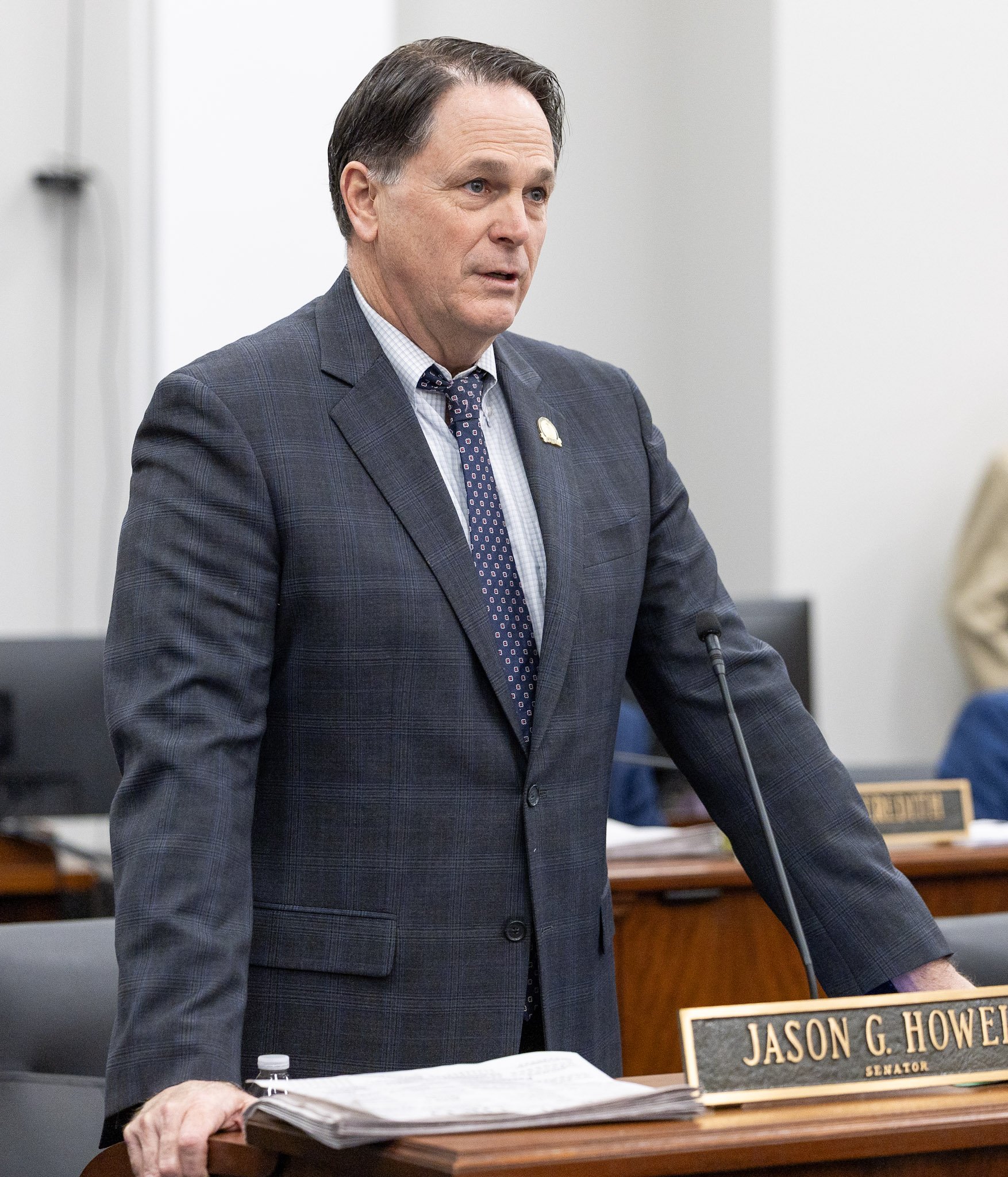
Sen. Jason Howell, R-Murray, represents the 1st Senate District, including Calloway, Crittenden, Fulton, Graves, Hickman, Lyon, and Trigg Counties. Howell serves as chair of the Senate Agriculture Committee and co-chairs the Tobacco Settlement Committee. He is vice chair on the License and Occupation Standing Committee and the Legislative Oversight and Investigations Committees. He is a member of the Senate Committees on Banking and Insurance, and Economic Development, Tourism, and Labor. Additionally, Howell serves on the Legislative Oversight and Investigations Committee and the Tobacco Settlement Agreement Fund Oversight Committee.

For a high-resolution .jpeg of Howell, please visit: https://legislature.ky.gov/Legislators Full Res Images/senate101.jpg.

MOTHER OF CAMBERLEIGH BURNS ENCOURAGES SUPPORT OF HIGDON’S SENATE BILL 28

MOTHER OF CAMBERLEIGH BURNS ENCOURAGES

SUPPORT OF HIGDON’S SENATE BILL 28

Measure filed in memory of 2-year-old killed by a distracted driver in 2022

FRANKFORT, Ky. (Jan. 6, 2026)The following is a statement attributable to Alyssa Burns, mother of Camberleigh Burns, who was tragically killed in an accident caused by a distracted driver in 2022, in support of Sen. Jimmy Higdon’s Senate Bill 28, the Phone Down Kentucky Act.

“I have asked that charges be filed against the person responsible for taking the life of my daughter, but it is painfully clear that our judicial system does not have the pieces in place to provide justice. Therefore, justice for Camberleigh is represented through this bill and through any legislation that ensures no one has the power to take a life without facing consequences.

“I know this bill won’t bring Camberleigh back, but in a way, it keeps her name and memory alive. She is not just a statistic on a piece of paper—she was a little girl with her whole life ahead of her.

“Camberleigh’s life was stolen on October 28, 2022. Since then, I have honored her each year with the ‘28 Days of Cammie’ throughout October. This bill number honors her. What was once a cherished month filled with Halloween joy is now a painful reminder of my worst nightmare. 

“But with this challenge comes the hope of awareness—and a way for me to feel closer to Camberleigh during a time that will never be the same.”

Find Senate Bill 28 at this link.

Click here to find interim session testimony on Senate Bill 28, which featured comments from Alyssa Burns.

###

SENATOR SHELLEY FUNKE FROMMEYER PARTICIPATES IN APPALACHIAN PROUD COMMISSIONERS’ SUMMIT

SENATOR SHELLEY FUNKE FROMMEYER PARTICIPATES IN APPALACHIAN PROUD COMMISSIONERS’ SUMMIT

FRANKFORT, Ky. (Nov. 14, 2025)— Sen. Shelley Funke Frommeyer, R-Alexandria, joined Agriculture Commissioner Jonathan Shell and leaders from six Appalachian states today at the Appalachian Proud Commissioners’ Summit, a strategic gathering focused on scaling rural economic opportunity through agriculture.

Hosted at the Kentucky Exposition Center in Louisville, the summit brought together commissioners from Kentucky, West Virginia, Tennessee, Virginia, Ohio, and Georgia to sign a multi-state compact and commit to a shared vision of agricultural advancement rooted in Kentucky’s proven models.

“This summit highlights what can be accomplished when we empower farmers, embrace conservative economic strategies, and lead with local solutions,” said Frommeyer. “Kentucky is at the forefront of shaping a healthier, more prosperous future for Appalachian communities, and I’m proud to play a role in that.”

Summit highlights:

  • Compact signing: Agriculture commissioners signed a joint agreement to expand the Appalachia Proud brand, a sub-brand of Kentucky Proud, as a regional force for agricultural marketing and economic growth.

  • Multi-state MAHA strategy: Aligns with the Make America Healthy Again agenda, promoting responsible nutrition, food infrastructure, and small business development.

  • ARC ARISE grant: The coalition will pursue a $10 million Appalachian Regional Commission (ARC) ARISE grant to replicate Kentucky’s Buy Local and POP marketing programs across the region.

  • Public-private collaboration: The summit showcased partnerships between agriculture, the Small Business Administration, conservative policy organizations, and local innovators.

The event reinforced Kentucky’s leadership in rural economic policy while building regional momentum for scalable, farmer-first solutions. It concluded with the Farm City Luncheon, part of the North American Livestock Expo, where Kentucky’s agribusiness success stories were on full display.

About Appalachia Proud

Launched in 2014, Appalachia Proud is a special designation under the Kentucky Proud program that celebrates and supports agricultural producers in eastern Kentucky’s 54-county Appalachian region. Members use the exclusive Appalachia Proud logo to showcase the origin and quality of their products, building trust with consumers and pride within their communities.

This regional brand embodies the values of hard work, innovation, and rural resilience, positioning Kentucky’s Appalachian farmers at the heart of a growing movement for economic development, improved nutrition, and community-based solutions.

As Kentucky leads the charge in expanding this model across state lines, Appalachia Proud continues to demonstrate that the mountains aren’t just full of beauty—they’re full of potential.

Learn more at kyagr.com.  

###

Sen. Shelley Funke Frommeyer, R-Alexandria, represents the 24th Senate District, including Bracken, Campbell, and Pendleton Counties and part of Kenton County. During the Interim, Frommeyer serves as co-chair of the Make America Health Again Kentucky Task Force. Frommeyer is the co-chair of the Capital Projects and Bond Oversight Committee and the Budget Review Subcommittee on Justice and Judiciary. She is a Senate member of the Interim Joint Committees on; Agriculture, Appropriations and Revenue; Economic Development and Workforce Investment; Families and Children; and Tourism, Small Business and Information Technology. Frommyer also serves on the Public Pension Oversight Board.

Visit https://legislature.ky.gov/Legislators Full Res Images/senate124.jpg for a high-resolution .jpeg of Funke Frommeyer.